What to Do About Wheat Excessive Growth Before Overwintering? Cause Analysis and Control Methods
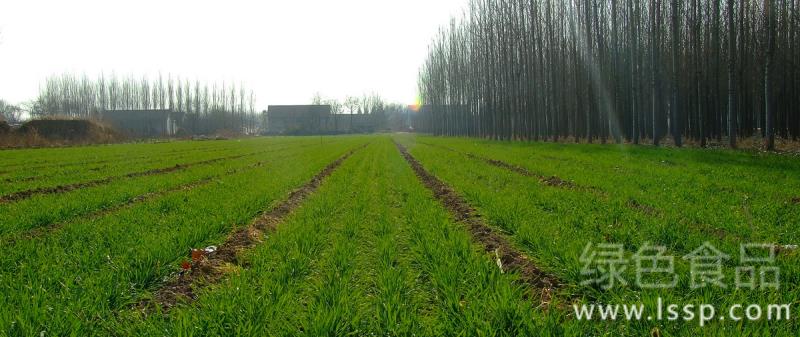
Pre-winter Management of Wheat
Excessive growth of wheat before winter is very harmful. First, the cold resistance of the plants is reduced, making them susceptible to freeze damage in winter and early spring; second, pests and diseases occur more severely; third, lodging is likely in the later stages; fourth, soil nutrients are consumed heavily, leading to easy nutrient depletion and premature aging. Therefore, management of excessively growing wheat fields must be effectively strengthened to control excessive growth and promote vigorous growth, so as to achieve overwintering with strong seedlings.
Generally speaking, for semi-winter wheat varieties, a seedling age of 7 leaves and 1 heart or more before mid-winter, and for spring wheat varieties, 6 leaves and 1 heart or more, with long and large leaves, long and thin leaf sheaths, long and flat pseudostems, spreading leaves, upright and tall plants, and a total tiller number of more than 800,000 per mu, and fields that appear to have closed rows with no visible inter-row space from a distance, can be regarded as excessively growing wheat fields. The management measures for excessively growing wheat fields include the following, which can be selected according to local conditions in production.
I. Causes of Excessive Growth in Wheat
1. Sowing too early. After summer corn harvest, the soil moisture was relatively good, and most farmers adopted sowing while moisture was available, concentrated in early October. Because temperatures were high after sowing, wheat seedlings tillered early and abundantly, and individual development was rapid, resulting in narrow and slender leaves, dense and crowded populations, forming a closed canopy in the field, growing more excessively the more they grew.
2. Excessive seeding rate. Some farmers were not accurate in understanding the characteristics of wheat varieties and did not reasonably determine the seeding rate according to variety characteristics and sowing date. Influenced by the traditional concept of "if you have money, buy seed; if not, buy seedlings," they blindly increased the seeding rate. Generally, farmers sowed 15-20 kg per mu, and some even more. After wheat growth and tillering, the seedlings became crowded, resulting in excessive growth.
3. Excessive fertilization. Some farmers applied excessive nitrogen fertilizers such as urea or ammonium bicarbonate in wheat fields with better water and fertilizer conditions, resulting in rampant growth of wheat seedlings and serious winter excessive growth.
II. Harm of Excessive Growth in Wheat
1. Susceptibility to freeze damage in winter and early spring. Excessive growth easily accelerates the wheat growth process, making wheat seedlings tender, with many stems, insufficient sugar storage in tillering nodes, and especially after young spike differentiation enters the double-ridge stage, cold resistance is significantly weakened, making them highly susceptible to winter freeze damage and late spring cold damage. In mild cases, leaves wither and tillers die; in severe cases, young spikes freeze to death.
2. Easy lodging in the middle and late stages. Excessive seedlings grow luxuriantly, with many stems and tillers, large leaves, poor ventilation and light penetration in the population, tender and weak plants, long basal internodes, thin stem walls, low dry matter accumulation, and poor root development, with few secondary roots and shallow soil penetration. If there is more rain in spring or storms in the middle and late stages, both root lodging and stem lodging will occur simultaneously, causing heavy losses.
3. Susceptibility to diseases. Under conditions of higher temperatures in autumn and winter, the overwintering base of pathogens is large. In addition, the poor quality of excessive seedlings themselves and decreased disease resistance make them highly susceptible to diseases such as sheath blight, powdery mildew, and root rot under suitable conditions (rainy spring, insufficient light).
III. How to Determine Excessively Growing Wheat Fields
Whether wheat is growing excessively before overwintering can be judged from individual morphology, population status, and growth indicators. Looking closely at wheat seedlings, the leaves are long and large, leaf sheaths are long and thin, pseudostems are long and flat, leaves are spreading, and plants are very tall; from a distance, the field is lush and green, with closed rows and no visible inter-row space; wheat fields with a total tiller number of more than 700,000 can be regarded as excessively growing wheat fields.
IV. Measures to Control Excessive Growth in Wheat
1. Early intertillage to cut part of the root system. When it is determined that wheat seedlings are growing vigorously and have a tendency toward excessive growth, early and deep intertillage should be carried out in a timely manner, hoeing 6-8 cm deep between wheat rows to cut part of the root system, reduce nutrient absorption, control excessive aboveground growth, and help cultivate strong wheat seedlings.
2. Delay winter irrigation. If winter irrigation is too early, because temperatures are relatively high, it can accelerate wheat seedling growth and easily cause excessive growth. The time for winter irrigation of wheat fields is generally around Xiaoxue, starting when the daily average temperature is 8°C-7°C and ending at 5°C-4°C. The field standard is preferably "freezing at night and thawing during the day." It is necessary both to ensure safe overwintering of wheat and to prevent excessive growth.
3. Pressing. For wheat fields showing signs of excessive growth, pressing can be carried out timely according to conditions after wheat seedlings tiller. Pressing causes a certain degree of damage to wheat seedlings, temporarily delaying the growth of wheat leaves and leaf sheaths, controlling excessive tiller increase, and at the same time breaking clods, closing cracks, preserving temperature and moisture, and promoting root development. Stone rollers or machinery can be used, on sunny days after 10 a.m., when there is no frost, for pressing. The number of pressings depends on seedling conditions; generally, pressing 1-2 times in excessively growing wheat fields is sufficient. When pressing, care should be taken to follow one direction and not press repeatedly.
4. Chemical regulation. Spraying paclobutrazol on excessively growing wheat seedlings has a significant regulatory effect. Use 40-50 grams of 15% paclobutrazol wettable powder per mu, dilute with water according to the mixing instructions, and spray. This can dwarf the plants, widen and thicken the leaves, enhance photosynthesis, prevent excessive growth, promote tillering, and shorten stem nodes. When using it, the pesticide concentration must be strictly controlled according to the instructions, because this type of growth regulator is different from insecticides and is more sensitive to concentration. Once phytotoxicity occurs, it is very difficult to take effective methods to reverse it.