Precautions for Ripening Tomatoes to Bring Them to Market Early and Increase Profits
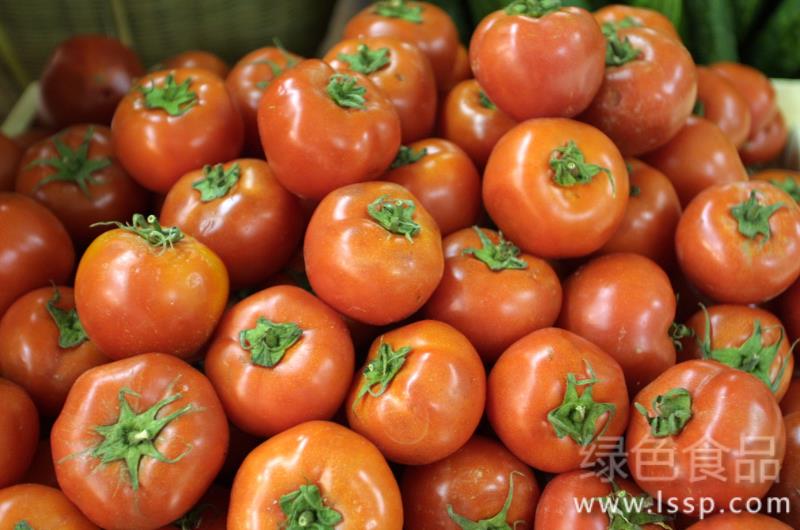
Tomato
To bring tomatoes to market early and increase profits, vegetable growers often use ripening methods in production, but they must master the methods and precautions well, and should do the following points well.
I. Spring early-maturing or open-field cultivated tomatoes
During the color-turning stage of the fruit, wipe the fruit surface with a 300—400 times aqueous solution of 40% ethephon, which can advance the marketing period by 5—8 days.
II. Autumn delayed cultivation tomatoes
When the temperature in the later stage drops to a daily average close to 8°C, harvest the white-ripe fruits and store them in a room with a temperature not lower than 10°C. 5—6 days before marketing, spray the fruits with a 1000 mg/kg ethephon aqueous solution, then cover them tightly with plastic film. By the time they are marketed, the fruits will have turned color, with an attractive appearance and good flavor.
III. Ripening during cultivation
After the number of fruits to be retained is determined, spray the plants with a 5000 mg/kg daminozide aqueous solution, which helps promote the ripening of tomato fruits.
IV. Precautions
First, ripening should not be done too early. Generally, the best ripening effect is achieved when the fruit has fully grown. If the fruit has not yet fully grown and ripening is rushed, uneven coloring and stiff fruits are likely to occur. If ethephon is used for ripening, it is only effective during the white-ripe stage of the fruit. Fruits treated with ethephon before the white-ripe stage will not only fail to turn color, but will also taste numb and astringent and be inedible.
Second, the concentration of the agent should not be too high. Most tomato ripening uses 40% ethephon, with 50 ml of ethephon mixed with 4 kg of water, and used after even mixing. If the solution concentration is too high, obvious phytotoxicity will occur.
Third, control the temperature well. The suitable temperature range for ethephon ripening is 10—32°C. Within this range, as the temperature rises, the ripening effect accelerates, and the best ripening effect is at about 25°C. After white-ripe fruits are soaked in 2000 mg/kg ethephon, at 25°C, they can turn color in 5—7 days.
Fourth, the number of tomato fruits ripened per plant each time should not be too many. Generally, 1—2 fruits per plant per treatment is appropriate, because if too many fruits are ripened on a single plant at one time, the plant receives too large a dose and is prone to phytotoxicity.
Fifth, the solution must not touch the leaves. If the solution touches the leaves, the leaves will turn yellow and fall off. Sixth, master the specific operation method of ripening. A small piece of sponge should be dipped in the solution and applied to the surface of the fruit, or a cotton yarn glove can be worn, dipped in the solution, and used to apply it to the fruit surface. Only in this way will the effect be good.