Comprehensive Winter Management Techniques for Apple Trees: Building Strong Tree Vigor Is Key
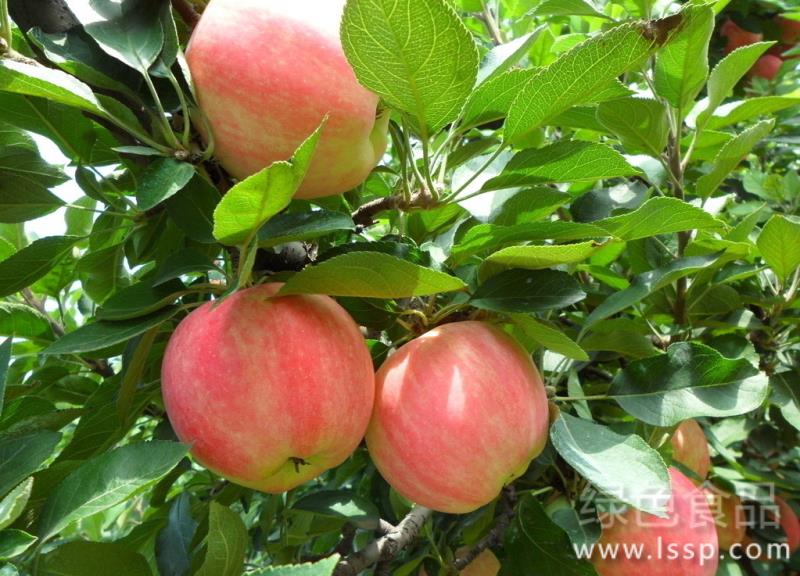
Apple treebumper harvest
In the management of apple trees in autumn and winter, how can we keep working even when the trees are dormant, so as to build strong tree vigor, delay aging, eliminate pests and diseases, regulate alternate bearing, and improve fruit quality? The commonly used methods are:
I. Pruning
The suitable period for winter pruning of apple trees should be flexibly determined according to variety, tree age, tree vigor, site conditions, and so on. If pruning is done too early, the cut surfaces are prone to frost damage and form dead stubs; if pruning is done too late, it will weaken tree vigor and affect yield. Therefore, different apple trees should be pruned at the appropriate time.
(1) Pruning essentials
1. Pruning of young trees should follow the principle of "mainly light pruning, with equal emphasis on training and fruiting, promoting early yield increase." (1) For 2-4 year old young trees, on the premise of properly arranging the scaffold branches, the focus of pruning is to clear out one layer of dense branches and shape the tree well. According to planting density, the small-crown open-center layered form (fewer than 80 trees per mu) and the free spindle form (more than 80 trees per mu) can be promoted. Small-crown open-center layered form: select and retain 3-4 primary branches in the first layer, and after selection clear out the dense branches that affect the growth of scaffold branches, clearing 1-2 each year, striving to finish clearing within 2 years. Free spindle form: select and retain 3-4 small primary branches each year, with 20 cm spacing between primary branches, clearing 2-3 each year, striving to finish clearing within 3 years. After several years of adjustment and clearing, the small-crown open-center layered form retains usable primary branches and 1-2 auxiliary nurturing branches, while the free spindle form retains 10-13 primary branches.
2. Pruning of mature trees. The purpose of pruning mature trees is to "improve light, improve branch quality, and stabilize high-quality yield increase." The focus of pruning is to gradually thin out the large auxiliary nurturing branches, large lateral branches, and large branch groups above the second layer that were previously too dense, and try to make the large branches retained above the second layer extend outward, with the total branch volume accounting for less than 20% of the total branch volume of the whole tree, so as to facilitate light in the inner canopy of the first layer. If the canopy is too tall, the head should be gradually lowered and opened according to the strength of tree vigor, controlling tree height below 3.5 m; if the canopy has already closed, the crowded peripheral branch groups should be thinned out or transformed into small branch groups, the extension branches should be shortened to promote inward growth while slowing outward growth, or the method of transferring the leader and changing the head should be used to change the direction and angle of the primary and lateral branches, so that they are staggered from top to bottom and left to right, with crown groups maintained at about 1 m, so as to improve population and individual light conditions.
(2) Cutting out diseased and insect-infested branches. According to investigations, many kinds of apple tree pests and diseases overwinter on branches. For pests and diseases that overwinter on the tree, thoroughly cutting out diseased and insect-infested branches during winter pruning and burning them in a centralized manner or burying them deeply can significantly reduce damage the following year.
(3) Scraping off rough old bark. Large amounts of overwintering pathogens and pests often lurk in the rough old bark of fruit trees and in the cracks of trunks. Scraping off the rough old bark and burning it or burying it deeply has a good control effect on many pests and diseases, and sometimes can even completely eliminate certain pests.
II. Replanting
(1) Tree form selection
1. Young trees (1-7 years old), whether standard or dwarf apple trees. At this stage, the target tree form should be the slender spindle or free spindle. New orchards must be established according to standards. Planting density must not exceed 55 trees per mu.
2. Full-bearing trees (8-15 years old). Standard orchards should gradually be transformed to a central leader form and transition toward an open-center form.
(2) Technical key points
1. Thinning: that is, digging out. In all orchards where trees severely cross each other between plants and rows are severely closed, affecting normal operations and with high density, standard orchards at 2*3-4 m (8110 trees per mu) and dwarf orchards at 1.5*2-3 m (111-148 trees per mu) should adopt the "plum blossom" pattern or the method of digging out 1 every other 1 or 1 out of 2, either removing them all at once or removing every other row, to thoroughly solve the problem of population ventilation and light penetration. After transformation, 55-70 plants per mu should be retained; fruit trees over 15 years old should all be pruned to the open-center form, retaining no more than 55 trees per mu (in the year of thinning, the trunk may temporarily not be raised). Under other special circumstances, permanent and temporary plants may be designated, first thinning out the large branches on temporary plants that affect the growth of permanent plants, and leaving more fruiting branches on them, with one-time thinning completed within 2-3 years; after thinning, attention should be paid to retaining and extending the fruiting branches of the retained plants to promote growth and fruiting.
2. Raising the trunk: raise the trunk according to different target tree forms and density, and the trunk height should reach 1-1.2 m, with the minimum not less than 80 cm.
3. Branch thinning: For the spindle form, thin out overly thick branches, maintain a 1/3 thickness ratio, and thin out excessive, whorled, opposite, and overlapping thick branches to maintain uniform spiral arrangement. Remove overly thick and overly large fruiting branches on small primary branches to maintain single-axis extension. For the open-center form, permanently select and retain 3-5 permanent primary branches, and on them cultivate large, medium, and small staggered downward, semi-downward, and slow-release fruiting branches, gradually forming a three-dimensional fruiting layer curtain. Temporary plants, on the premise of not affecting permanent trees, should retain fruiting branches as much as possible and not retain reserve branches.
4. Canopy control: control canopy height and width. Tree height should be controlled at 80% of row spacing.
5. Drooping: induce fruiting branch groups to droop so that fruit shape is proper.
(3) Precautions
1. Pay attention to protecting wounds. During pruning, in addition to frequently disinfecting pruning tools, for slightly larger pruning and saw cuts, after applying fungicides such as carbendazim, seal them with white glue or paint or wrap them with plastic film, and whitewash the trunk in time.
2. Strengthen comprehensive management in all four seasons. In spring, notch and wipe buds; in summer, ring-cut; in autumn, bend branches; and strengthen soil and fertilizer management to ensure strong tree vigor.
III. Fertilization
The most common fertilization methods in orchards are: strip trench application, ring trench application, and radial trench application. The trenches dug should be 60-70 cm deep and 30-40 cm wide, and the amount of fertilizer applied depends on tree age or fertilizer type. After digging the trench, thoroughly mix whole or crushed corn stalks with barn manure, chicken manure, and phosphate fertilizer and bury them in the trench, then firm the soil. Generally, each tree requires 20-30 kg of stalks, 50-60 kg of organic fertilizer, 1-5 kg of phosphate fertilizer, 1-2 kg of ammonium bicarbonate, or an appropriate amount of biological bacterial fertilizer.
IV. Tree Protection
1. Whitewashing branches and trunks. Thoroughly mix 10 kg of water, 4-5 kg of calcium carbonate, 0.5-0.8 kg of sodium chloride, 0.1-0.2 kg of clay, and 0.5 kg of trichlorfon powder to make a whitewash, and apply it evenly with a brush to the main trunk and primary branches.
2. Spraying protective agents. After fruit trees shed their leaves, spray the whole orchard with 200-times sodium pentachlorophenate solution plus 1500-times 1605 solution to eliminate overwintering pear scab, apple canker, ring rot, as well as red spiders, pear leaf roller moths, and so on. Before bud break, a single spraying of 3-5 degrees Baume barium polysulfide solution may also be applied.
3. Waxing branch and trunk wounds. The formula is 800 g rosin, 300 g alcohol, 100 g grease, and 50 g turpentine, mixed evenly and applied with a brush, which can provide relatively good protection for trunks and pruning cuts.
4. Heat preservation and freeze prevention. To prevent freeze damage to apple trees caused by strong winds and temperature drops, windbreaks may be set up on the north or northwest side of the orchard; alternatively, when a cold wave comes, damp firewood and grass may be lit at the downwind side to produce large amounts of smoke, causing the smoke to spread throughout the orchard and create a greenhouse effect.
V. Watering
Before the soil freezes, the orchard can be given one large flooding irrigation, or individual trees can be irrigated, but it must be watered thoroughly in one go. This can increase soil water-holding capacity, promote the decomposition of soil nutrients, and eliminate pests. VI. Pest control. Winter is precisely the period when fruit tree pests and diseases lurk and overwinter, with relatively fixed locations, and it is a good time to kill pests and diseases and effectively reduce the degree of pest and disease occurrence the following year. Put in more effort in winter, spend less money in spring, and harvest good fruit in autumn. Fruit grower friends may adopt the following technical measures according to the occurrence of pests and diseases such as codling moth, trunk canker, ring rot, anthracnose, powdery mildew, leaf roller, spider mite, aphid, scarab, fruit borer, and scale insect.
1. Clean the orchard. When more than 90% of fruit tree leaves have fallen, or in November, begin orchard cleanup, and centrally burn dead branches and fallen leaves, weeds, diseased branches, dropped and waste fruit, discarded fruit boxes, waste wood piles, discarded fertilizer bags, and all other items that may provide overwintering sites for pests and diseases such as codling moth, which can eliminate large numbers of overwintering pest and disease sources hidden within them.
2. Scrape tree bark. Using the dormant period of fruit trees in winter and the time before bud break in early spring, scrape off the rough bark and peeling bark below the main trunk fork of fruit trees, which can eliminate overwintering pest sources such as codling moth, red spider, and small leaf roller, and can also reveal trunk diseases such as apple canker, trunk ring rot, and dry rot. After disease is found, scrape off the diseased spots in time and apply 45% shenanning aqueous solution at 100 times, or 843 rehabilitation agent stock solution, to the branches and trunk. When scraping bark, do not damage the xylem of the fruit tree, and take the scraped bark out of the orchard and burn it centrally. After scraping, whitewash the branches and trunk in time.
3. Deep plowing of soil. After cleaning the orchard and before the soil freezes, deeply plow 20-30 cm under the canopy around the fruit trees, and irrigate after deep plowing, so as to change the soil environment conditions and destroy the overwintering sites of pests. This can reduce overwintering pest sources in the soil such as codling moth, peach fruit borer, and scarabs.
4. Whitewashing branches and trunks. After fruit trees shed their leaves and before the soil freezes, use lime whitewash to whitewash the main trunk and large branches of apple trees. The whitewashing height is generally 60-80 cm. The mixing ratio of the whitewash is generally: 10 parts quicklime, 2 parts lime sulfur mixture, 2 parts salt, 2 parts clay, and 40 parts water, fully stirred evenly. Apply once more in early spring. This can prevent sunscald and freeze damage in fruit trees, and at the same time can eliminate pests and pathogens overwintering on the trunk such as codling moth larvae.
5. Trapping and killing pests. After autumn, using the biological characteristics of pests, tie a ring of wheat straw, Walon paper, or sticky insect paper tape around the trunk to trap pests for overwintering; starting in October, remove the bindings and burn them centrally to eliminate pests such as mature codling moth larvae.
6. Spraying pesticides. During the dormant period, spray 1-2 times with 5% diesel emulsion or 5 degrees Baume lime sulfur mixture, which has a very good effect on overwintering scale insects, red spiders, and so on.