Pruning techniques for pear trees during dormancy to lay a foundation for high yields
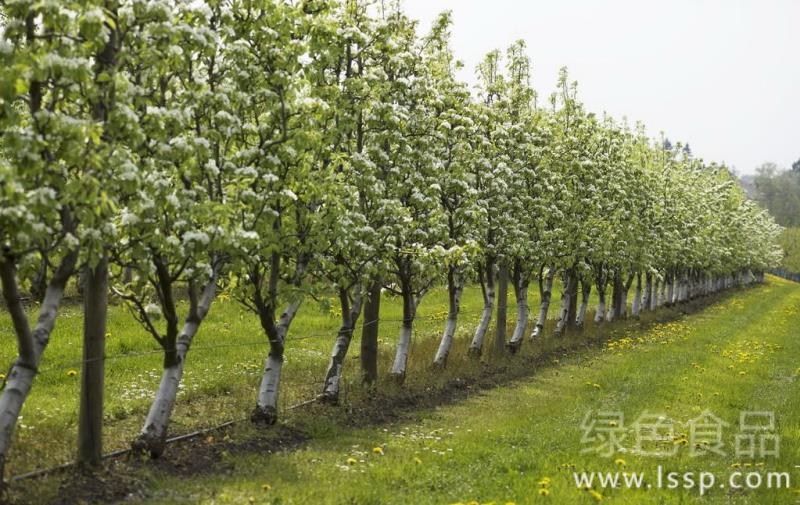
Pear trees
When pear trees enter dormancy, it is a great time for winter pruning. Winter pruning of pear trees is done after leaf fall and before bud break. Its main purposes are to train the tree shape, adjust the canopy structure, develop fruiting branch groups, adjust the number of flower buds, regulate the quality and quantity of branches, promote ventilation and light penetration, renew and rejuvenate the canopy, delay senescence, achieve a balance between growth and fruiting and stable high yields, and lay a foundation for high yields. The pruning techniques for different age stages are as follows:
1. Pruning of young trees
The purpose of pruning is to shape the tree well, develop a good framework, stimulate branching, and expand the canopy and promote branches for early fruiting. Generally, long branches are lightly pruned and left unpruned, upright vigorous branches are bent flat, medium and short branches are retained, and the shoots that emerge are used as much as possible to expand the canopy. Except for thinning out some overly dense branches, thinning is generally not carried out. Overly dense branches, thin and weak branches, diseased and insect-damaged branches on the main branches and secondary main branches, as well as all those that disrupt the tree shape, are cut off. Long branches are cut back to develop into fruiting branch groups; medium and short branches are tip-pruned if vigorous and left unpruned if weak; branches with narrow angles are spread, pulled, and weighted down by other methods to widen the branching angle, reduce apical dominance, and promote early flower bud formation.
2. Pruning during the full fruiting period
The main purpose of pruning is to control tree growth, keep the tree within a predetermined range, keep the canopy from becoming shaded so as to facilitate ventilation and light penetration, maintain a vigorous and stable moderate tree vigor, and prolong the full fruiting period. For plants with relatively vigorous tree vigor, vigorous growth should be controlled, with more thinning and less cutting back, removing upright branches and keeping slanting branches, and retaining more flower buds so that the fruit load suppresses tree vigor and moves it toward moderate vigor; for plants with relatively weak tree vigor, heavier pruning methods are used, cutting back vigorous branches to medium length and thinning out weak branches; for some medium and short fruiting branches, cutting back is used, some flower buds are thinned out, fruiting branches are converted into vegetative branches, and the proportion of vegetative branches is increased; for plants with stable tree vigor, the focus is on pruning the fruiting branch groups; for pear trees with many flowers, inferior flower buds are cut off, axillary flower branches are cut back, and the ratio of fruiting branches to vegetative branches is adjusted.
3. Pruning during the senescent period
According to the degree of senescence of the pear tree, different amounts of pruning are carried out. The purpose of pruning at this stage is to restore tree vigor, rejuvenate branch groups, and prolong the fruiting years. Drooping perennial branches are retracted, and the retraction point should be a good upward-growing branch on the back; the leader branch should be a vigorous branch with vigorous buds so that it grows upward, and some flower buds are cut off and weak branches are thinned out. Water sprouts are used as much as possible to fill out the incomplete canopy, restore tree vigor, and regain high yields. For severely senescent trees, the canopy is sawed off, leaving only the framework of the main and lateral branches, to promote the sprouting of latent buds, rebuild the canopy, and restore yield. In the renovation of senescent trees, fertilizer and water management and pest and disease control must be strengthened.