How to grow winter corn for high yields? Pay attention to temperature and choose good varieties
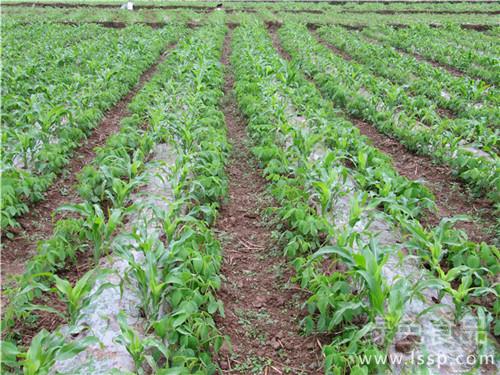
Winter corn
Winter corn is corn sown from late October to November of the same year and harvested from April to May of the following year. Its growth and development characteristics are: poor root development, weak ability to absorb water and fertilizer, and less vigorous growth and development than summer-sown corn; for the same variety, winter-sown plants are shorter than summer-sown ones and the growth period is prolonged. In our province, areas below 1,300 m altitude and the low-heat river valley areas of the Jinsha River are all suitable for growing winter corn. Summarizing the high-yield experience with winter corn from various places, the key technical links in cultivation that should be handled well include selection of good varieties, sowing at the right time, plastic film mulching, standardized planting, water and fertilizer management, and control of diseases, insects, weeds and rodents.
1. Growth and development characteristics.Winter corn is an off-season crop, with poor root development, weak ability to absorb water and fertilizer, and less vigorous growth and development than summer-sown corn; for the same variety, winter-sown plants are shorter than summer-sown ones and the growth period is prolonged. In addition, winter corn is afraid of frost. If frost occurs during the growth period, yields are reduced in mild cases and there is a total loss of harvest in severe cases. Therefore, first, winter corn must be planted in frost-free areas; second, the timing of the local lowest temperatures must be understood so that the sowing period can be arranged well.
2. Do a good job of technical training.It is rare for farmers to sow again shortly after harvesting corn, so technical training is very important. In training, the field should serve as the classroom, and the best results come from explaining while operating and demonstrating. Technical training should be carried out in stages: the first stage is the sowing period. The second stage is the thinning, final thinning and topdressing period. The third stage is the period for preventing disease, insects and frost.
3. Sowing specifications and density.The sowing specifications and density should be determined according to the growth characteristics of winter corn, climatic features, fertilizer application levels, and so on.
1. Variety selection
The premise for growing winter corn is that it does not affect spring planting, so early and medium-maturing varieties should be selected as much as possible, such as the Zadan series, Zhongdan series, and so on.
2. Master the sowing period well
Because winter temperatures are low, winter-sown corn has a growth period 30-50 days longer than summer-sown corn. In addition, the corn pollination period must avoid the period of the local lowest temperatures. According to meteorological data, the lowest temperatures over the years occur in early and mid-January. In order for winter corn to suffer less or no frost damage, the sowing season for winter corn should be comprehensively considered, generally in October to November.
3. Sowing specifications and density
For high-yield cultivation of winter corn, the sowing specification is standardized cultivation with wide and narrow rows, and the wide-narrow row composite belt depends on whether it is sole cropping or intercropping. For sole cropping, the narrow row is 50 cm, with 2 rows of corn planted on the narrow row, row spacing 40 cm, plant spacing 13-17 cm, wide row 90-93 cm, and 5,580-7,140 plants per mu; for intercropping, the narrow row is 42 cm, with 2 rows of corn planted, row spacing 33 cm, plant spacing 13-17 cm, wide row 133 cm, with 3 rows of soybean or 2 rows of potato planted between the wide rows, and 5,700 corn plants per mu.
4. Land preparation and sowing.
Fields planned for winter corn must have ditches dug for drainage when the grain turns yellow, and after harvesting the grain the field should be plowed in time to sun the soil clods, then harrowed and broken up with a tractor at the right time, and ditches opened and beds divided according to field size; then, according to the wide and narrow rows and plant and row spacing, lines should be pulled and sowing furrows opened for directional wet direct seeding, with 2 seeds sown per hole for corn and 1 plant retained after final thinning. For soybean, row spacing is 33-40 cm, hole spacing 13-17 cm, and 2-3 seeds sown per hole. Whether corn or soybean, when sowing the seeds should be pressed into the firm soil so that the seeds can fully absorb water and achieve a full stand.
5. Fertilization.
Fertilizer for winter corn requires combined application of nitrogen, phosphorus and potassium, with increased application of farmyard manure and zinc fertilizer. Amounts per mu: nitrogen fertilizer not less than 40 kg, phosphorus fertilizer 50 kg, potassium fertilizer 20-25 kg, zinc fertilizer 1 kg, and farmyard manure more than 1 ton. Base fertilizer should be applied between the two corn holes, and fertilizer should avoid contact with the seeds. For the first topdressing, when seedlings have 4-5 leaves, apply 10 kg urea per mu. For the second topdressing, when seedlings have 6-7 leaves, apply 20 kg urea, 20 kg phosphorus fertilizer, and 10-15 kg potassium fertilizer per mu. The third topdressing is at the full heading stage, applying 5 kg urea per mu, preferably with a topdressing gun for deep application.
6. Film mulching.
Because temperatures are relatively low in winter corn, soil field water-holding capacity decreases as the rainy season ends, rainfall is low, and there is a lot of wind. Therefore, increasing temperature and preserving moisture through film mulching is very important. Relevant experimental data show that the yield difference between winter corn with film mulching and without film mulching is more than twofold. Fields to be mulched require fine soil clods and a level field; when mulching, the film should be stretched tight, and the soil covering the edges of the film should be pressed firm but should not be covered too much. There are two sowing methods: first, mulch after sowing; this method allows orientation, can press the seeds onto raw soil, has a high emergence rate, and the orientation rate can reach more than 90%. But note that the film should be broken about 5 days after sowing, otherwise seedling burn will occur. Second, first open furrows, apply fertilizer and cover with soil, then mulch, and after mulching use a pointed stake to break the film and make holes for sowing, then cover the holes well with fine soil after sowing; this method can reduce the labor of breaking the film, avoid seedling burn, and ensure a full stand, but the orientation rate is relatively low.
7. Field management.
At the end of sowing, only 30% of the work is completed, while 70% must be carried out within 4-5 months after sowing. First, after sowing, if the soil is too dry, irrigate once for emergence so as to achieve a full stand; in the middle and late stages, irrigate according to soil moisture content. Second, break the film in time and check seedlings, replant missing seedlings, and carry out final thinning. Third, topdress in a timely manner according to the amount of base fertilizer and seedling vigor. Fourth, winter corn often suffers damage from rodents, corn borers, cutworms, and so on, so disease, insect and rodent control must be done well. Fifth, at the edges and corners of fields, do a good job of piling weeds and burning smoke to prevent frost, and light the fire promptly to produce smoke against frost when low temperatures occur. Especially for low-lying fields, prevention should be emphasized, and antifreeze agents should be sprayed before low temperatures arrive.