Pollution-free overwintering celery cultivation technology, with good planting returns
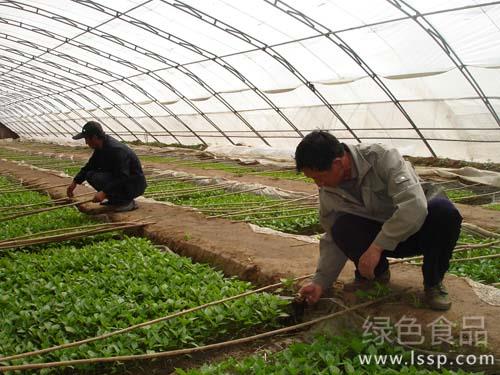
Greenhouse celery
In the Hetao region, greenhouses are generally used only for overwintering cultivation. Seedlings are raised in early July, transplanted in early September, and the vines are pulled and the plot cleared in March-April of the following year. Because this crop of celery has too long a growing period, passing through both the hot dog days of summer and the cold coldest days of winter, in cultivation one should choose solid-stalk celery that is both heat-tolerant and cold-tolerant, with strong winter hardiness, not prone to bolting, low in fiber, crisp and tender in quality, and with green leaf stalks. Judging from market consumption in recent years, western celery and Chinese celery each account for 50%.
1. Greenhouse transplanting: generally finished from late September to before frost. If the previous crop cannot be cleared out for the time being, the celery seedlings can be lifted out and temporarily heeled in inside the greenhouse to prevent freezing. Land preparation, bed making and base fertilizer application: after the previous crop is pulled, remove residual plants and weeds, prepare the land, make beds, and apply base fertilizer in the same way as for greenhouse celery. Transplanting: eliminate seedlings damaged by pests and diseases as well as weak seedlings, and plant seedlings of the same size together. Plant 5-6 rows per bed, single plants, with a plant spacing of eight cm, and irrigate heavily immediately after transplanting.
2. Management inside the greenhouse: on the basis of watering enough at transplanting, irrigate once or twice more continuously, then carry out careful loosening of the soil to preserve moisture. In the early stage, increase ventilation, provide cross ventilation and night ventilation, enlarge the day-night temperature difference, appropriately control moisture, and promote well-developed roots, short leaf stalks, thicker stems, and greater accumulation of nutrients, laying the foundation for the inner layer to grow thick, large leaf stalks.
3. Strengthen fertilizer and water in the middle stage: when the inner leaves begin vigorous growth, start topdressing and irrigation, applying 40-50 grams of ammonium nitrate per sq m, irrigating while topdressing, and strengthening ventilation after irrigation.
4. Keep warm and prevent cold in the late stage: as the weather turns colder, do not ventilate during the day when the temperature does not exceed 25°C, and strengthen insulation at night. After entering winter, add straw curtains, build up soil outside the back wall and provide indoor heating, and reduce irrigation to prevent disease.
5. Pest and disease control: the main pests and diseases of celery include late blight, leaf spot and aphids. When late blight is found, promptly remove diseased plants and residual leaves, and spray with 72.2% Propamocarb emulsifiable concentrate at 600 times dilution and 72% Cymoxanil wettable powder at 500-600 times dilution. To control celery leaf spot, first strengthen management, apply more organic fertilizer, prevent drought and waterlogging, avoid irrigation under high temperatures, and irrigate with well water after heavy rain; second, use chemical control, spraying 75% chlorothalonil wettable powder at 500-800 times dilution; 50% carbendazim wettable powder at 500-600 times dilution can also be sprayed. When aphids occur, spray 10% imidacloprid wettable powder at 2000 times dilution and 4.5% beta-cypermethrin at 1500 times dilution.