Seven precautions for applying fertilizer with irrigation water to winter vegetables
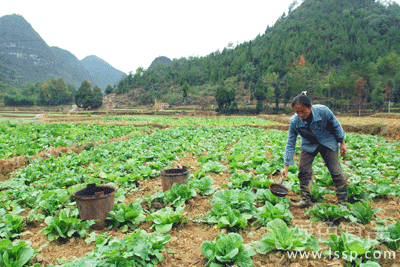
Vegetable fertilization
Applying fertilizer with irrigation water, as a common fertilization method for protected vegetables, is widely used by vegetable growers because it is convenient, quick, saves labor and effort. However, in the cold winter season, fertilizer applied with water often causes some problems unfavorable to crop growth. Below is a brief introduction to the precautions when applying fertilizer with water to winter vegetables.
First, the application rate should not be too large. In winter, the greenhouse temperature and soil temperature are relatively low. In such an environment, the roots of vegetables have low absorption and utilization rates of fertilizer. If fertilizer is still applied with water at the conventional rate, a large amount of fertilizer will accumulate in the soil, raising the soil concentration and damaging the vegetable roots, causing phenomena such as root burn and red roots, and in severe cases even causing leaf wilting, stiff fruit or dead plants.
Second, the water volume should not be too large. In the severe winter season, the relatively low water temperature has a very great impact on vegetables. Well water irrigated into the greenhouse is generally 10~14°C. After fertilizer is applied with water, the soil temperature drops noticeably, and soil aeration also deteriorates, which can cause root rot, cause the heart leaves of vegetables to turn yellow, and affect the normal growth of vegetables.
Third, prevent the occurrence of gas damage. Protected vegetables are kept closed in winter for a relatively long time. Nitrogen fertilizer or other nitrogen-containing fertilizers applied with water will release nitrogen gas under the action of soil microorganisms. Because ventilation is not carried out for a long time, harmful gases such as nitrogen gas accumulate in the greenhouse. When the concentration is relatively high, it will cause the stems and leaves of vegetables to change color. Even if fertilizers such as amino acids and fulvic acid are used, gas damage can also occur if ventilation is not timely. Therefore, in most areas of Henan during the low-temperature season from late December to early February, fertilizers with relatively high nitrogen content should be avoided to prevent the harm of gas damage.
Fourth, observe soil moisture conditions. Do not apply fertilizer with water when soil humidity is too high, so as to avoid affecting soil aeration and causing hazards such as root rot and yellowing of heart leaves. If fertilizer needs to be supplemented urgently, foliar fertilizer can be applied first, and fertilizer can be applied with water after the moisture conditions are suitable.
Fifth, observe the weather. Choose to carry out the application after a cold front has passed and the weather turns clear, and avoid encountering consecutive cloudy days after application. If consecutive cloudy days occur after fertilizer application, the soil temperature will be difficult to recover, and the humidity in the greenhouse will increase, causing great harm to vegetables and also increasing diseases.
Sixth, raise the soil temperature in time. Generally, on the same day or the next day after fertilizer application, close the ventilation opening appropriately to raise the greenhouse temperature by 2~3°C, thereby increasing the soil temperature and eliminating and alleviating the adverse effects caused by applying fertilizer with cold water.
Seventh, after fertilizer application, disperse moisture in time. This can be done in conjunction with raising the greenhouse temperature. First raise the temperature to 30°C, allow the relative humidity to drop, and then ventilate to remove moisture, reducing vegetable diseases and insect pests.
In short, applying fertilizer with water in winter should follow the principle of "less amount, good weather, and raise the temperature after fertilization" to ensure the safety of vegetable production.