Improving Fertilization Techniques: Nutrient Requirements and Fertilization Principles of Winter Wheat
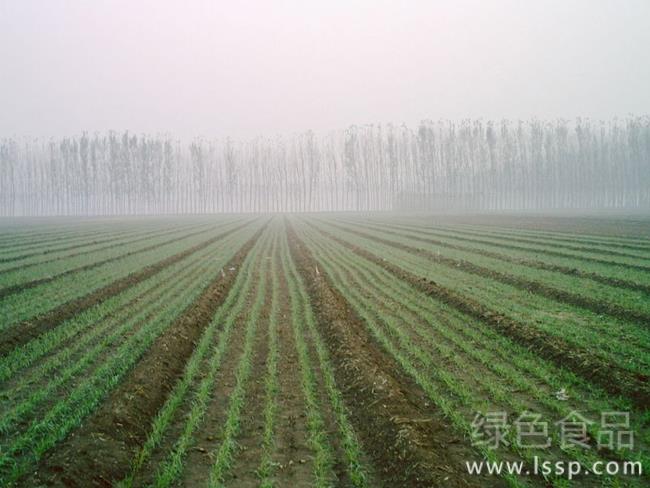
Winter Wheat
Winter wheat is mostly sown in autumn, undergoes vernalization at low temperatures, and is harvested in the summer of the following year. Field yields are generally 300-600 kg, with high-yield levels above 400 kg; the growth period is relatively long, mainly including the stages of emergence, tillering, greening, standing up, jointing, booting, flowering and maturity. Its nutrient requirements, fertilization principles and fertilization technique models are as follows:
I. Nutrient Requirements
1. The period from standing up to jointing is the key period for topdressing. The seedling stage (emergence to greening) is dominated by vegetative growth, and nutrient uptake capacity is weak; the cumulative uptake of nitrogen, phosphorus and potassium at the tillering stage is still less than 10% of the total uptake, but at the booting stage (greening to heading) the cumulative uptake of nitrogen, phosphorus and potassium during vegetative growth reaches more than 75% of the total uptake, making it the peak of nutrient uptake. About half of these nutrients come from fertilizer, among which phosphorus and potassium are mainly supplied by base fertilizer, while nitrogen fertilizer relies equally on base fertilizer and topdressing, and topdressing is mainly nitrogen, so the period from standing up to jointing is the key period for nitrogen topdressing.
2. Fertilization at the tillering stage is affected by many factors. Wheat is a crop that tillers per plant, and the number of effective ears per mu is closely related to the yield per mu, but it is sensitive to nitrogen fertilizer at the tillering stage, and excessive application easily leads to increased ineffective tillering and plant lodging. The growth vigor and tillering of wheat are also related to the influence of factors such as variety characteristics, seeding rate, sowing quality, soil fertility and soil moisture, and climatic conditions. Therefore, the specific conditions of spring soil fertility, soil moisture and seedling condition should be used to determine the nitrogen application rate and fertilization timing, and comprehensive management should be carried out.
3. Rotational fertilization should take both crops into account. Winter wheat is mostly rotated with summer-sown crops such as summer maize. In fertilization, the characteristics of rotational fertilization should be considered, treating the two crops as one unit: the nitrogen application rates for the two crops are roughly equal, but phosphate fertilizer should mainly be applied to winter wheat, and potassium fertilizer mainly to summer maize.
II. Fertilization Principles
1. Improve fertilization techniques. Advocate increasing the application of organic fertilizer, carry out straw return, and apply organic fertilizer together with inorganic fertilizer; adhere to the fertilization policy of "moderate nitrogen, stable phosphorus, supplement micronutrients", appropriately reduce the total amount of nitrogen fertilizer applied, adjust the ratio of base nitrogen fertilizer to topdressing, lower the amount of nitrogen fertilizer used in the early stage, and apply nitrogen fertilizer in split applications; according to seedling condition, soil moisture and the characteristics of different wheat regions, adopt different integrated water and fertilizer management measures respectively. The total number of stems per mu should be controlled at 600,000-800,000, and fertilization should be classified according to the seedlings. For weak seedling fields with a total stem number less than 450,000, the main approach should be promotion, advancing topdressing to the greening and standing up stage, and appropriately increasing the nitrogen application rate; for vigorous seedling fields with a total stem number higher than 800,000, topdressing should be carried out after jointing, and the nitrogen application rate should be appropriately reduced.
2. Strengthen comprehensive management. According to local climatic characteristics and fertilization conditions, select varieties that can grow and mature normally, have a high ear-forming rate and strong stress resistance; before sowing, carry out seed selection, sun-drying, disinfection and other treatments; sow at the appropriate time and rate, and improve land preparation and sowing quality; carry out management before winter and at the greening stage, and in the northern winter wheat region, irrigate with winter water, and at the greening stage irrigate and fertilize as appropriate according to seedling condition, soil moisture and soil fertility; the period from standing up to before heading of winter wheat is the key period for fertilization, and management should be classified according to seedling condition; after heading, through moderate irrigation and foliar fertilizer spraying, etc., prevent premature senescence of wheat, increase grain weight, and control pests and diseases such as powdery mildew, rust, aphids, armyworms and wheat blossom midges.
III. Fertilization Techniques
① Nutrient application rates. Total fertilization per mu: N 12-15 kg, P2O5 6-8 kg, K2O 4-8 kg.
② Fertilizer application rates. Base fertilizer: advocate the application of organic fertilizer, apply 1500-2000 kg of decomposed farmyard manure per mu, 6-8 kg of urea or 20-25 kg of ammonium bicarbonate, 15-20 kg of diammonium phosphate or 40-50 kg of superphosphate, and 5-10 kg of potassium chloride; if compound fertilizer is used, in the Huang-Huai-Hai Plain, it is advisable to choose the medium-nitrogen, high-phosphorus, low-potassium type, such as 15-20-10 or 16-20-18, etc.; in the Yangtze River Basin, it is advisable to choose a general-purpose compound fertilizer with equal or similar nitrogen, phosphorus and potassium contents, such as 15-15-15 or 12-15-18, etc., with an application rate of 30-40 kg per mu. Topdressing: from greening to jointing, apply 15-20 kg of urea per mu, in 1 application or split into 2 applications. For strong-gluten high-quality wheat, an additional 3-5 kg of urea can be topdressed at the flowering stage.