Causes of Flower and Fruit Drop in Melons and How to Prevent It
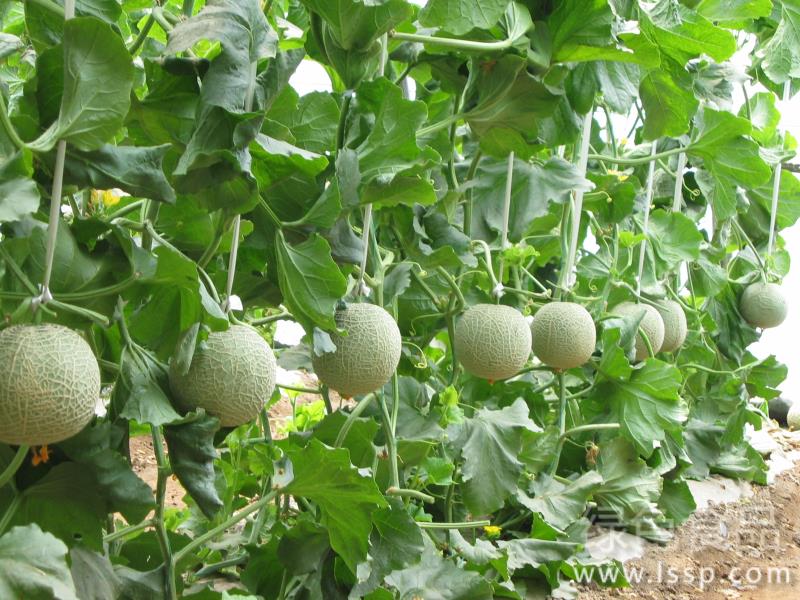
Melon
In melons grown with greenhouse seedling raising and double-film cultivation, the fruit-setting rate is not high, and flower and fruit drop is very serious. According to surveys, some drop rates reach more than 70%, and the drop rate is even higher in thick-skinned melons, which not only affects yield and quality but also delays the melon marketing time and reduces returns.
I. Causes of Flower and Fruit Drop
1. Applying too much base fertilizer, especially excessively applying quick-acting nitrogen fertilizer, causes excessive vegetative growth and inhibits flower bud differentiation;
2. A relatively long period of low temperature restricts the development of reproductive organs;
3. High atmospheric humidity and soil moisture in an oversaturated state not only affect leaf transpiration and the absorption and assimilation functions of the root system, but also easily make pollen difficult to shed or cause pollen rupture, all of which hinder fertilization;
4. Insufficient light forces melon internodes and petioles to elongate, causes poor flower bud differentiation, and results in less accumulation of nutrients in the fruit, lower sugar content, and poorer quality.
II. Prevention and Control Methods
1. Improve the ecological environment. First, drain standing water around the planting site to promote root development; second, seize sunny weather to uncover the plastic film, uncovering early and covering late, to both supplement light and preserve heat; third, on rainy days, uncover the two ends of the plastic shed or the film at the base of the greenhouse to supplement scattered light.
2. Regulate vine growth. In melon fields where excessive vegetative growth has already occurred, spray with paclobutrazol, using 40 g of wettable powder per mu mixed with 50 kg of water, or use 10 mL of mepiquat chloride per mu mixed with 40-50 kg of water and spray, which can significantly inhibit vine growth, promote plump and robust ovaries, and favor fruit expansion.
3. Induce female flowers to set fruit. Treatments such as Zuogualing or Zuoguoling can be used on female flowers, which can increase the fruit-setting rate by more than 90%. That is, on the afternoon of the day before the female flower opens or on the day it opens, sprinkle the fruit with a 200-400 times solution of Zuogualing wettable powder, or apply a 10-20 times Zuogualing solution to the fruit stalk.
4. Artificial supplementary pollination. Because melons grow female and male flowers on the same plant, and the female flowers are also bisexual flowers, two methods can be used for artificial pollination. First, pick male flowers and apply their pollen to the stigma of female flowers; each male flower can pollinate 2-3 female flowers. Second, gently stir the stigma of the female flower with a dry brush. Pollination should be carried out from 7-9 a.m. every day.