High-yield cultivation techniques for sweet crisp corn, with relatively good economic benefits
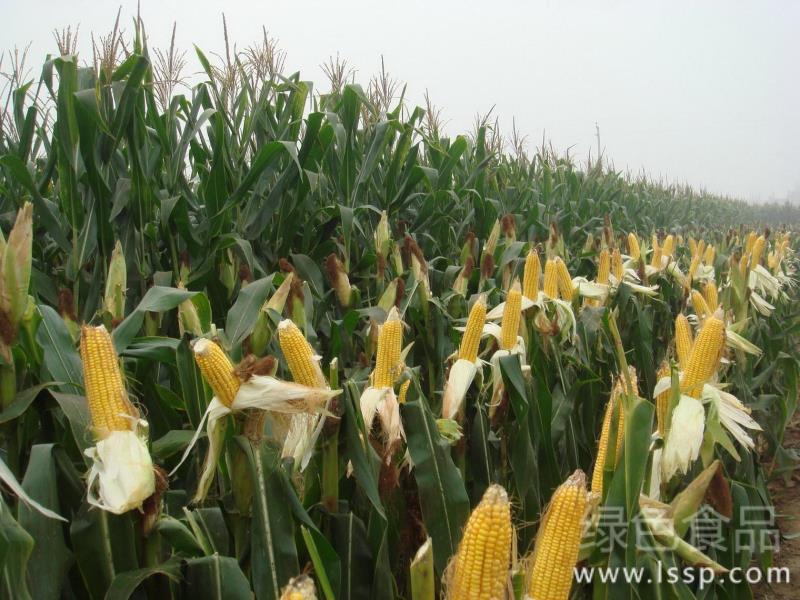
Growing corn
Sweet crisp corn is a crop with relatively good economic benefits whose planting area has been continuously expanding in recent years in the Gaoda river valley area, most of the flatland area, and some mountainous areas of our county. Its high-yield cultivation measures are:
1. Select excellent varieties: Kupula 902, etc.
2. Sow at the right time and early. In the Gaoda river valley, sowing as early as the beginning of February can achieve high yields; in the flatland area, sow from early March to early April; in mountainous areas, it should be determined according to water conservancy conditions and rainfall.
3. Reasonable close planting. For sowing before May, 4500--5000 plants per mu can be planted, with a sowing specification of 120 cm bed width, 2 rows per bed, and a plant spacing of 22 cm--25 cm. For sowing in May and later, the sowing density should be appropriately reduced to 4000--4200 plants per mu, with the plant spacing adjusted to 26 cm--28 cm.
4. Fertilization
Apply base fertilizer per mu of 20 kg urea + 40 kg compound fertilizer + 30 kg ordinary calcium superphosphate, applied in furrows during land preparation and bed formation. For seedling fertilizer, apply 10--15 kg urea per mu by watering at the 4--5 leaf stage, and at the 7--8 leaf stage apply 30--35 kg urea + 10--15 kg potassium sulfate per mu as topdressing.
5. Pest and disease control
(1) After emergence, promptly spray "Baishida" and "Yinnong No. 2" to control stem borers and other pests.
⟧ (2) Pay attention to aphid control. From the tasseling stage of sweet crisp corn to before maturity, spray imidacloprid 2--3 times depending on the degree of aphid occurrence.
(3) From the silking stage (peak stage) to the late silking stage, spray beta-cypermethrin 1--2 times to prevent stem borers and cotton bollworms from boring into the ears and affecting their commercial value.
(4) At the initial stage of rust disease, use azoxystrobin + myclobutanil or difenoconazole + azoxystrobin for control. Generally, spraying 1--2 times can achieve the desired control effect.