How to accumulate farmyard manure in winter? Methods for making fermented organic fertilizer
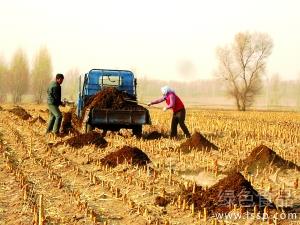
Farmyard manure
Farmyard manure is an excellent organic fertilizer, but in winter, due to the lower temperatures, accumulated farmyard manure does not ferment and decompose easily. In addition, farmyard manure contains many pests, and if it is not treated, they multiply in large numbers and will harm crops after application. Therefore, farmyard manure should be handled scientifically in winter. Lai Hangxian, a soil and fertilizer expert from the College of Natural Resources and Environment at Northwest A&F University, reminds farmers to handle it in the following ways:
1. Choose a good site for accumulating fertilizer. First choose a place close to the manure source, with flat terrain, sheltered from the wind and facing the sun, and convenient for transport, as the composting site.
2. Build the pile scientifically. The shape of the manure pile is best round, and the height of the manure pile is generally above 1.5 m, otherwise it is difficult to keep warm. When composting, break up and mix all kinds of farmyard manure thoroughly. After determining the base of the manure pile, first spread a layer of yellow manure or various weeds, then pile up the evenly mixed farmyard manure layer by layer until the required height is reached.
3. Add heat-producing fertilizers. When accumulating farmyard manure in winter, appropriately add heat-producing fertilizers such as manure from large livestock, so that not only does fermentation happen quickly, but the quality is also good. In addition, the amounts of water and soil should be reduced to raise the temperature of the manure pile and speed up fermentation.
4. Add chemical substances. If the composting material is mainly barnyard manure, adding some superphosphate can not only speed up the decomposition of the barnyard manure and prevent the volatilization and loss of nitrogen in the barnyard manure, but also increase the organic phosphorus content in the fertilizer and improve the effectiveness of the phosphorus fertilizer. If the composting material is mainly crop straw and leaves, adding 0.5%-1% ammonium bicarbonate and an appropriate amount of human feces and urine for composting can adjust the carbon-to-nitrogen ratio and promote the decomposition of the straw, while also improving the nitrogen content of the fertilizer and increasing its effectiveness. If the proportion of human feces and urine in the composting material is relatively large, adding 0.5% ferrous sulfate can convert the ammonium carbonate in the urine into the stable ammonium sulfate, thereby preserving fertilizer, removing odor, and preventing the volatilization of nitrogen.
5. Pay attention to enlarging the manure pile. Winters are cold, and if the manure pile is too small, it is easily frozen and cannot ferment, affecting quality. After enlarging the manure pile, heat is released slowly, which is conducive to fermentation.
6. Control the moisture of the compost. Mix all kinds of composting materials evenly and adjust the moisture at the same time, to the degree that it forms a ball when squeezed in the hand and breaks apart when dropped to the ground, preventing excessively high moisture, poor aeration after piling, and difficulty in heating up and fermenting.
7. Seal with mud to keep warm. In order to maintain the temperature of the manure pile and prevent nutrient loss, the manure pile can be covered around with corn leaves or scattered grass to form a 30-50 cm insulating layer, with old rice straw spread on the outside, and then sealed with mud. Compared with no insulating layer, the organic matter content is increased by 1.96%, and available nitrogen and available phosphorus are also greatly increased.
8. Smoke to raise the temperature. When the temperature is too low, dig a pit in the manure pile, fill it with dry grass and other flammable materials, and ignite it after the manure pile is built, raising the temperature of the fertilizer pile through slow smoking and promoting rapid heating, fermentation, and decomposition of the compost. However, it should be noted that igniting to produce smoke is not burning grass with an open flame, so as to avoid the manure fertilizer overheating and becoming ineffective. After the manure pile thaws, let it sit and decompose for more than 10 days, so that both the inside and outside, top and bottom, are fully decomposed.