How to prevent and control the "flower topping" phenomenon in overwintering cucumbers in greenhouses
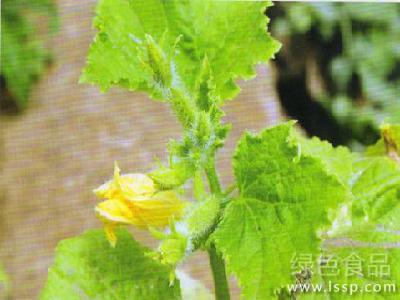
Cucumber flower topping
In winter production, greenhouse cucumbers often develop the flower topping phenomenon. Cucumber flower topping, also known as "flowers hugging the head," is a common physiological disorder in greenhouse cucumbers. It mainly manifests as shortened internodes near the growing point, no growth of the heart leaves, and female and male flowers clustering in a mass, forming a flower-hugging-head shape. It generally occurs frequently in the early fruiting stage and has a great impact on cucumber yield and quality. Below is an introduction to the causes and control methods of cucumber flower topping.
I. Main causes of flower topping in greenhouse cucumbers.
1. Temperature imbalance type. From the transplanting and seedling recovery stage to the early flowering and fruiting stage, if continuous low temperatures occur, the plant's vegetative growth is hindered, while reproductive growth proceeds too quickly, making flower topping likely to occur.
2. Root rotting and root decay type. When the greenhouse is hot and dry, especially when the soil is dry, excessive fertilizer and insufficient water cause root burn, or when the soil is too wet but the air temperature and soil temperature are relatively low, causing root rotting, both can easily lead to flower topping.
3. Water and fertilizer imbalance type. Unsuitable soil conditions, weak root activity, and poor ability to absorb water and fertilizer lead to physiological fertilizer deficiency, which can also cause cucumber flower topping.
II. Prevention methods
Reasonably regulate temperature, prevent temperatures from being too low or too high, and maintain a suitable temperature. Timely carry out intertillage, loosening the soil, and hoeing to raise soil temperature. When necessary, first apply an appropriate amount of fertilizer and water, then loosen the soil to raise temperature, promoting root development and downward growth. Scientifically manage fertilizer and water. For fertilizer and water application in greenhouse cucumbers, follow the principle of small amounts, multiple applications, and even application. In particular, organic fertilizer must be fully decomposed to prevent root damage caused by improper fertilization. The amount and frequency of topdressing should be reduced as much as possible according to weather conditions. Water appropriately, avoiding flood irrigation that affects soil temperature and causes root rotting. Strengthen field management. For plants that have already developed flower topping, appropriately remove young fruits and female flowers, and spray the leaves with 500-fold potassium dihydrogen phosphate solution. For flower topping caused by low-temperature freezing damage, spray plant regulators such as Bihu plus brassin to enhance the plant's cold resistance and promote root and plant development.