Four key points for raising pumpkin seedlings in cold frames in early spring to achieve an early market launch
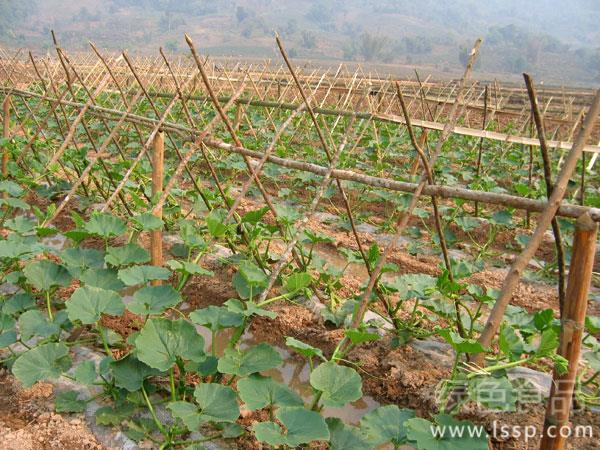
Pumpkins have the characteristics of cold tolerance and low-temperature tolerance, so cold frames can be used in early spring to bring them to market early, fill the market gap, and obtain relatively high economic returns. Below is an introduction to the key technical points for raising early spring pumpkin seedlings, for the reference of melon growers.
1. Choose superior varieties. For early spring cold frame cultivation, choose the Dongsheng variety, which has good early maturity, a well-developed root system, robust growth, low-temperature tolerance, orange-red color, thick flattened-round fruit, and good marketability.
2. Soak and sprout the seeds. Blanch the seeds in 100°C hot water for 5 seconds, immediately add cold water to cool them to 30°C, and stir for half an hour. Then soak the seeds in clean water for 8-12 hours, during which wash the seeds 2-3 times with 30°C warm water to remove the mucilage on the seed surface. After removing the seeds, air-dry them for 2 hours, and sprout them after the seed surface is dry. During sprouting, maintain the temperature at 28-30°C. After 2-3 days, when the sprouts are 0.2-0.5 cm long and the radicles are exposed, commonly known as whitening, they can be sown. The usual seed rate is about 200 grams per mu.
3. Sow at the right time. In the central and southern regions of our province, early spring pumpkin seedlings are raised in solar greenhouses or cold frames, and the suitable sowing period is generally from late February to early March. Seedling trays are commonly used. Before filling the trays, mix 2 kg of 40% carbendazim powder into each cubic meter of seedling medium for disinfection. Spray the seedling medium with clean water so that its moisture content reaches 70%. When filling the trays with seedling medium, leave 2 cm of space at the top of each cell. Sow 1 germinated seed per seedling cell, cover with 2 cm of expanded vermiculite, and then cover the seedling trays tightly with plastic film.
4. Seedling stage management. After sowing, maintain the daytime temperature at 25-30°C and the nighttime temperature at 18°C. When 60% of the seeds have pushed through the soil, remove the plastic film and lower the daytime temperature to 20-25°C and the nighttime temperature to 12-15°C to prevent the seedlings from growing leggy. When the heart leaves are 2 cm long, maintain the daytime temperature at 25-28°C and the nighttime temperature at about 15°C. During the seedling-raising period, spray with clean water once every 5 days. When the seedlings have 2 true leaves and 1 heart leaf, harden the seedlings at low temperature, then transplant them together with the seedling medium on a clear day.