Master the nutritional characteristics of various vegetables and apply targeted fertilization
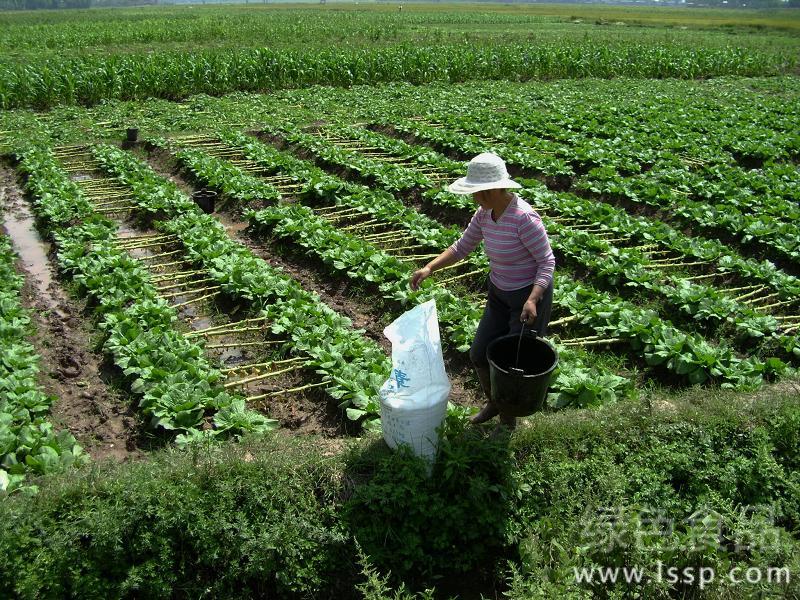
Vegetable fertilization
Nutritional characteristics of various vegetables: Under the premise of balanced fertilization, leafy vegetables need more nitrogen, root vegetables need more phosphorus and potassium, and fruit vegetables need more nitrogen and phosphorus. In addition, because vegetable crops have high yields per unit area, take up large amounts of nutrients, and deliver high economic returns, fertilizer inputs are also much greater than for field crops.
1. Chinese cabbage group: These vegetables have large leaf area, relatively high transpiration, and relatively shallow root systems, and they require soil with high water content and fertility. These vegetables increase yield by increasing leaf number and leaf area, so an adequate supply of nitrogen is especially important. If nitrogen supply is insufficient, the plants are stunted, have few leaves, the leaves at the base of the stem tend to turn yellow and drop, and the tissues are coarse and hard. If nitrogen is excessive, the tissues have high water content, which is unfavorable for storage, and the plants are more susceptible to disease. If phosphorus and potassium supply is insufficient in the later stage, heading is often difficult.
2. Cabbage group: These vegetables include cabbage, cauliflower, kohlrabi, and Brussels sprouts. During the pre-heading stage, head cabbage has limited growth, so its uptake of nitrogen, phosphorus, and potassium is relatively small, but after entering the heading stage, growth increases greatly and nutrient uptake rises rapidly; cauliflower has the highest uptake of nitrogen, phosphorus, and potassium, and only by ensuring coordinated supply of nitrogen, phosphorus, and potassium over a long period can high yield and good quality of cabbage-group vegetables be guaranteed. In addition, cabbage-group vegetables are typical calcium-loving crops; when the soil is deficient in calcium and physiological calcium deficiency develops in the plants, leaf edges dry up, affecting yield and quality.
3. Cauliflower: Cauliflower is sensitive to boron deficiency; when boron is deficient, it easily causes cracking of the leaf stalks or the occurrence of small leaves, cracking at the center of the flower stalk, and brown spots on the curd, with a slightly bitter taste. The solution is to choose "New Boron" fertilizer for foliar spraying. At the same time, according to whether soil element contents are abundant or deficient, supplement molybdenum, zinc, and iron fertilizers at the appropriate time.
⟧ 4. Leafy green vegetables include spinach, celery, celtuce, fennel, and others. These leafy greens have relatively shallow root systems, grow rapidly, and are planted at high density, so they have very high requirements for fertilizer and water conditions. Their nutritional characteristic is that when nitrogen is sufficient, the leaves are tender, juicy, and low in fiber; when nitrogen is insufficient, the plants are stunted with more fiber, fewer leaves, and a yellow, coarse appearance, and they tend to bolt early, losing their edible value.
5. Onion and garlic group vegetables: These include Chinese chives, garlic, scallions, and onions. These vegetables generally have a nutrient demand dominated by nitrogen, matched with appropriate phosphorus and potassium fertilizers. For onions and garlic, emphasis should be placed on controlling nitrogen and increasing phosphorus and potassium to promote onion bulbing and garlic bolting; for Chinese chives, nitrogen fertilizer should be applied heavily to promote vigorous growth and ensure the yield of the next harvest.