Notes on Managing Greenhouse Vegetables in Low-Temperature Rain and Snow Weather
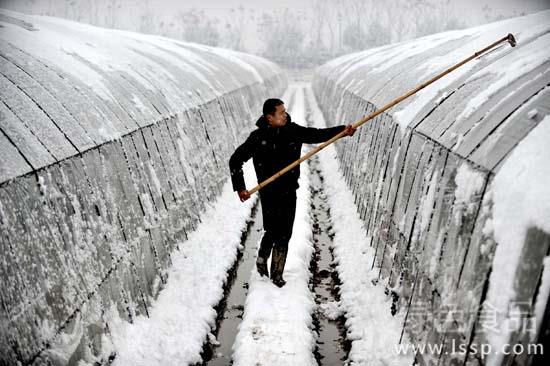
Greenhouse Management in Rain and Snow Weather
With the current cold wave bringing low-temperature rain and snow, to prevent low-temperature freezing damage to greenhouse strawberries and vegetables, every village must effectively strengthen protection against low-temperature freezing. The specific recommendations are as follows:
First, pay attention to adding straw mats. Uncover and cover them at the appropriate time according to the day's temperature (it is best if the greenhouse temperature is around 18°C one hour after covering; if it is above 18°C, cover later, and if it is below 18°C, cover earlier). On the night of overcast and snowy weather, cover the straw mats (straw curtains) with an additional layer of cold-protection plastic film, which can raise the greenhouse temperature by 2°C to 3°C. If seedlings are being raised in the greenhouse, a small arched tunnel should also be built over the seedling beds, which will give even better heat preservation and moisture retention.
Second, pay attention to supplementing light. Greenhouse vegetable production is not afraid of freezing cold, but it is afraid of insufficient light during consecutive overcast and snowy days. Therefore, enhancing and supplementing the light in the greenhouse is very important for ensuring the normal growth of vegetable plants. The method is to hang a reflective film on the back wall of the greenhouse to increase the light intensity on the growing beds; electric lights can also be installed in the greenhouse, and during overcast and snowy days when light is weak, turn on the lights in the morning and evening for about 3 hours each to supplement light. This not only supplements light but also raises the temperature in the greenhouse and promotes photosynthesis in the plants.
⟧ Third, pay attention to adjusting the greenhouse air. In cold seasons, because the temperature in the greenhouse is low and ventilation is limited, it is almost sealed, which easily causes excess oxygen and insufficient carbon dioxide in the air, greatly affecting the respiration of vegetable plants. Carbon dioxide fertilization techniques can be used, such as the reaction of sulfuric acid with ammonium bicarbonate, to adjust the air composition in the greenhouse and supplement the carbon dioxide content, while also enhancing the cold resistance of vegetable plants.
Fourth, pay attention to spraying fertilizer solution on the leaves. Under conditions of low temperature and weak light, the ability of greenhouse vegetable roots to absorb nutrients is greatly weakened, and the ability of photosynthesis to produce nutrients is even poorer. At this time, growth hormones should be used as little as possible or not at all, while the method of spraying fertilizer solution on the leaves has a relatively obvious effect.
Fifth, pay attention to irrigation to preserve soil moisture and protect the roots. During the key period of vegetable plant growth, choose clear, fine weather (when the greenhouse temperature is above 20°C) and use subsurface irrigation under film or drip irrigation to fully irrigate the soil and preserve moisture, which can effectively prevent freezing damage. This is because water has a higher specific heat than air and releases heat slowly; when the soil moisture content in the greenhouse is moderate, heat preservation performance is good, and the roots of vegetable plants can be protected from freezing damage.
Sixth, pay attention to strengthening management after snow. During overcast and snowy weather, the temperature in the greenhouse is relatively low and the plants are in a dormant state; but once the weather clears, the temperature in the greenhouse rises rapidly, which can easily cause leaf dehydration and wilting. To prevent plant wilting, repeatedly uncover and cover the straw mats, and if necessary spray water on the leaves, so that the temperature rises slowly and the vegetable plants have a process of adapting to the environment. Only after 2 to 3 days can they resume normal growth. Otherwise, it will cause "ten days of suppression, one day of rapid growth" and seedling burn, making plants even more susceptible to freezing damage when the temperature drops again.