Detailed Explanation of Walnut Tree Pruning Techniques Throughout the Four Seasons
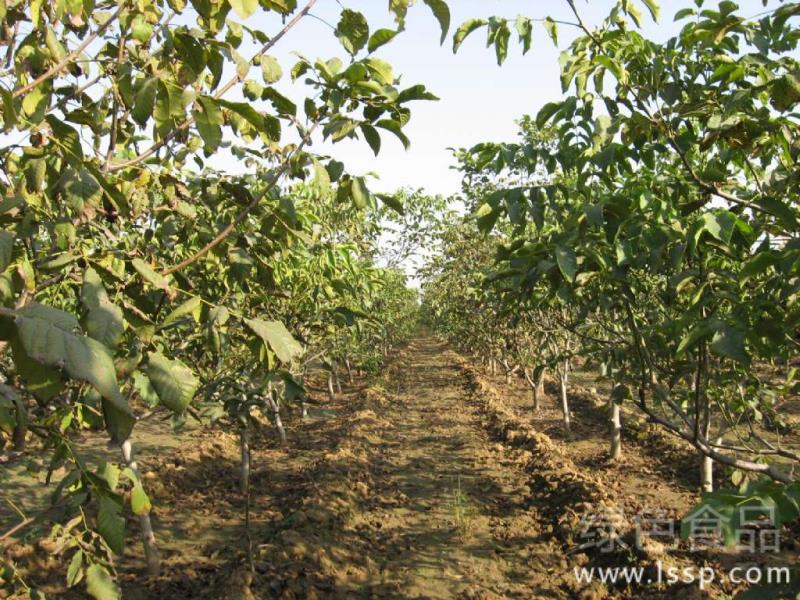
Walnut tree
Walnut trees can be pruned in all four seasons. The pruning periods for walnut trees differ from those of other tree species. If the timing is improper, a "bleeding" phenomenon will occur, causing the tree to lose nutrients, leading to tree weakening. Generally, pruning is divided into the dormant period and the non-bleeding period. There are four pruning periods: spring, summer, autumn and winter. Pruning in different periods produces different problems and different results.
1. Spring pruning. Spring pruning refers to pruning carried out after the walnut tree buds and before the leaves unfold. As temperatures continually rise, after the tree buds, the nutrients stored in the roots are continually transported upward and nutrients begin to transform. This is also a period when the tree needs relatively more nutrients. If pruning is carried out at this time, bleeding will occur, and a large portion of nutrients will inevitably be lost, thereby weakening tree vigor, reducing the fruit-setting rate, affecting yield, lowering quality and thus reducing returns. If it is a non-fruiting tree or an excessively vigorous tree, pruning at this time can effectively control growth, weaken tree vigor and bring fruiting earlier. Therefore, when walnut trees enter the initial fruiting stage (early-bearing varieties), pruning is not advisable; it is suitable to prune excessively vigorous and non-fruiting trees. It is suitable for use before the initial fruiting stage of late-bearing varieties, and it is advisable to promote early fruiting.
2. Summer pruning. For summer pruning, the pruning period must be grasped. If the temperature reaches around 30°C after pruning, the walnuts are exposed and are prone to sunscald, and nutritional quality declines, thereby reducing returns. According to observation, starting in late May and finishing by the end of June is optimal. At this time, pruning should be combined with collecting scion wood, mainly by heading back, with branches left at a maximum length of 3 cm, leaving an outer bud or lateral bud, and leaving the layer spacing; thin out overly dense branches and cut back drooping branches. After pruning, fertilizer and water management must be strengthened. Specific practices: starting from the end of June, spray 300-fold potassium dihydrogen phosphate solution, once every 10 days, until it ends before leaf fall. After July, stop applying nitrogen fertilizer and increase the application of phosphorus and potassium fertilizers; do not water from August until before leaf fall; in mid-September, spray paclobutrazol to control growth and enhance the pruning effect.
3. Autumn pruning. Carry it out after the walnuts are harvested and before the leaves turn yellow (from mid-September to early November). At this time the leaves have not fallen, there is no bleeding phenomenon, and overly dense branches and shading branches are easy to identify, so thin them out to facilitate ventilation and light penetration. However, at this time the nutrients have not yet fully returned, and the pruned leaves and branches carry a large amount of nutrients that have not returned. Moreover, if the temperature is unstable in winter, bleeding can still occur from autumn pruning wounds, and branches with a diameter of less than 1.5 cm suffer somewhat more severe shoot dieback (about 2 cm or so). Therefore, autumn pruning is suitable for weak trees, old trees and walnut trees on hillside land. At this time there is no bleeding, which is favorable for working on large branches and promoting tree vigor.
⟧ 4. Winter pruning. Theoretically, the best period is from Major Cold to the Beginning of Spring. Walnut tree bleeding generally begins after leaf fall and stops after buds sprout the following spring. However, bleeding does not occur throughout the entire dormant period. When the temperature fluctuates around 0°C, bleeding is intermittent; when the temperature remains stable above or below 0°C for a longer time, bleeding appears minimal or does not occur. In addition, the amount of bleeding is greatly related to tree vigor, environment and the soil moisture conditions of that year, and the bleeding volume of the tree decreases as branch order increases. It can be seen that as long as the actual temperature and climate conditions of each year are taken into account and the favorable opportunity is seized, winter pruning is feasible, but the key period should be seized to prune medium and small branches. Pruning at this time can ease the time conflicts between spring and autumn and the busy farming season.
In short, walnut tree pruning should follow these points: increase the intensity of summer pruning and do a good job of post-pruning management. Combine autumn and winter pruning: prune large branches in autumn and small branches in winter. Growers can choose the pruning period suitable for their region according to their own actual circumstances.