Analysis of Water Consumption of Winter Wheat at Different Growth Stages
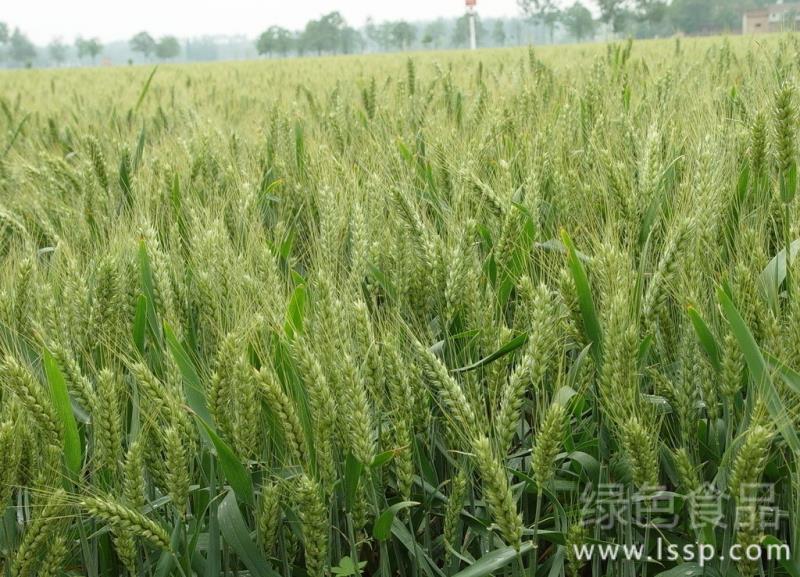
Wheat
Water plays a very important role throughout the life of wheat. According to research, producing 1 kg of wheat requires about 1000-1200 kg of water, of which 30%-40% is lost through surface evaporation. During the wheat growing period, precipitation is only about 1/4 of the water requirement. Therefore, irrigating wheat fields at different stages and adopting drought-resistant and moisture-conserving measures are of great significance for supplementing the wheat's water needs. Experiments show that the water consumption of winter wheat at each growth stage has the following characteristics:
1. From after sowing to before jointing, the plants are small, the temperature is low, and surface evaporation is small. Water consumption accounts for 35%-40% of the total water consumption for the whole growth period, with an average daily water consumption of about 0.4 cubic meters per mu.
2. From jointing to heading, the wheat enters a period of vigorous growth, and water consumption rises sharply. Within 25-30 days, water consumption accounts for 20%-25% of the total water consumption, with a daily water consumption of 2.2-3.4 cubic meters per mu. This period is the critical period for wheat's water requirement; if water is lacking, yields will be severely reduced.
3. From heading to maturity, about 35-40 days, water consumption accounts for 26%-42% of the total water consumption, and daily water consumption increases slightly compared with the previous stage. Especially around heading, the stems and leaves grow rapidly, and the green area reaches its maximum in the plant's life, with daily water consumption of about 4 cubic meters. It can thus be seen that, apart from requiring sufficient soil moisture for sowing, wheat consumes relatively little water at the seedling stage and early jointing stage, and consumes the most water from after jointing to before heading. Among these, the flag-leaf stage is the most sensitive to water, and is called the "critical period" for water requirement; next is from flowering to grain filling, which some call the "second critical period"; water consumption then decreases again during the maturity stage. Therefore, meeting the water supply during wheat's critical period for water requirement as fully as possible is very important for achieving a bumper wheat harvest.
In addition, although wheat consumes relatively little water before jointing, the water supply at this stage is crucial for achieving full, uniform, and strong seedlings, for root development and tillering, and for building a high-yield framework. As the farming proverb says: "The wheat harvest depends on rain in the eighth, tenth, and third months (lunar months)," which is an objective summary by the broad masses of farmers of wheat production experience gained through long-term practice.