Safe overwintering management of grapes is the key to high-yield cultivation
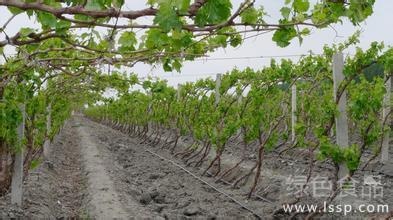
Grape growing
Properly managing the safe overwintering of grapes is an essential technique for high-yield grape cultivation. Here are several management measures suitable for the Laizhou area:
1. Carry out winter pruning before overwintering to reduce water evaporation from the canes in winter. Give the vines one thorough watering to meet the water needs of the roots' weak winter activity. During the overwintering period, check every half month; if the soil is found to be dry, water promptly. Avoid watering in icy or snowy weather, so that the water temperature is not too low and does not damage the roots.
2. Clean the vineyard. After pruning, thoroughly clear away the pruned leaves and canes; the leaves on the canes must be cleaned off completely. Otherwise, if leaves and canes are buried together, the rotting leaves can cause the canes to rot, affecting the next year's grape yield.
3. Topdressing. To ensure vigorous plant growth the following year, apply some decomposed organic fertilizer together with winter pruning. Note that the amount of fertilizer used should not be too much, and the base fertilizer used should not come into direct contact with the grape roots.
4. Cold protection and heat preservation management. Maintain soil temperature to promote rapid root growth.
(1) Bundle-and-cover cold protection method. Tie the pruned grape canes into bundles, wrap them with 1-2 layers of straw curtain or burlap, then cover with 15-20 cm of sawdust, pat firm, and cover with 1 layer of plastic film, pressing the edges of the film down firmly with soil.
(2) Four-layer cold protection method with sand, film, leaves and straw. First cover the canes with 20 cm of sand, lay 1 layer of plastic mulch on the sand, spread 1 layer of about 10 cm of corn leaves on the mulch, and on the leaves lay 60 cm of corn stalks along the same direction; this achieves the effects of sand nourishing the canes, film retaining moisture, leaves increasing density and stalks providing warmth. The first three layers should be applied recently. The last layer is applied after the soil freezes.
(3) Hollow cold protection method. Build a trough shape in the ditch with bricks and adobe blocks, place the canes tied after winter pruning in the middle, build a shed frame above with wooden poles, put sorghum stalks and straw bags on it, covering 20-30 cm; then cover with leaves or firewood and grass for 50 cm, leaving several ventilation holes along the ground so temperature can be measured and air exchanged at any time; seal at 0°C and open at Qingming the following year.
(4) Plastic film cold protection method. With the continuous improvement of cold protection techniques, a cold protection method using plastic film covering has appeared in recent years. For the single-dragon-cane tree form, the grape canes also need to be coiled up, and any sticking-up branches must be laid flat so as not to puncture the plastic film. After coiling and laying flat, press down lightly with soil, then cover with 1.4 m wide, 0.07 mm black plastic film, and press the edges of the film down firmly with soil.