Key points of overwintering cucumber cultivation techniques: applying sufficient base fertilizer is the key
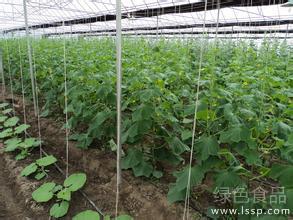
Cucumber cultivation
When cultivating overwintering cucumbers, be sure to apply sufficient base fertilizer. The base fertilizer should be decomposed straw compost or livestock and poultry manure compost. Generally, apply 3000-5000 kg of organic fertilizer per mu, 100 kg of superphosphate, or 30-50 kg of diammonium phosphate, or 40-50 kg of biological fertilizer, or 200 kg of cake fertilizer. When there is a large amount of base fertilizer, it is suitable to broadcast it; when there is less base fertilizer, 2/3 can be broadcast and 1/3 applied in furrows. After broadcasting on the ground, deep plow twice, then open furrows according to the row spacing, apply the remaining fertilizer into the furrows, mix thoroughly with the soil, then pour a large amount of water into the furrows to create sufficient bottom moisture. Overwintering cucumber cultivation generally adopts wide and narrow rows, with a narrow row spacing of 80 cm and a wide row spacing of 100 cm, planting 3300-3500 plants per mu.
1. Transplanting
1. Transplanting should preferably be done on a sunny day. Grade the seedlings into large, medium, and small, and carry them to the side of the transplanting rows. Looking at the entire greenhouse, large seedlings should be placed at the east and west ends and the front part of the greenhouse, while small seedlings should be placed in the middle of the greenhouse. Looking at a single row, large seedlings go in front, small seedlings in back, and generally medium seedlings in the middle. This helps them grow uniformly and consistently later on.
Because light intensity in the greenhouse is stronger in front and weaker in back, when placing and planting seedlings, keep the front dense and the back sparse so that seedlings in different positions receive basically similar light. When transplanting, you can open holes according to the plant spacing and plant the seedlings in the holes; or open a deep furrow on the transplanting row and place the seedlings into the furrow at the specified plant spacing, fixing them slightly. Water in the holes or furrow, and after the water seeps in, cover the holes (furrow). Note that the seedlings should not be planted too deep; after covering with soil, the seedling plug should be level with the row surface. Be careful not to bury the graft union in the soil.
2. Mulching with plastic film. In the past, people were used to mulching first and then planting cucumbers, or mulching with plastic film immediately after planting. In fact, doing so is not conducive to deep rooting of grafted seedlings and reduces the plants' ability to resist cold and tolerate low temperatures. Since the soil temperature is still relatively high at transplanting time, mulching may be omitted. After transplanting, on the basis of repeated hoeing and scratching, try to promote deep rooting as much as possible, and cover with plastic film about 15 days after planting.
2. Hanging vines
When cultivating overwintering cucumbers, in order to promote development and maintain vigorous root vitality, the method of not pinching the tops and letting them grow naturally is mostly adopted. Overwintering cucumbers generally grow to 40-50 nodes, and since greenhouse height is limited, the vines must be lowered after growing for some time.
For convenience in lowering the vines, nylon strings, cloth strips, or nylon net supports are generally used for hanging, which can greatly reduce shading from trellis materials. When hanging nylon strings or nylon nets, try not to connect them directly to the greenhouse arch frame; independent supports are best. The nylon strings used for hanging should be left with extra length at the top so they can continue to be used when lowering the vines.
When hanging vines, handle them gently, do not lower them too much at one time, and do not damage the leaves. Make the leaves distributed evenly in space without shading each other. At the same time, also remove diseased and yellow lower leaves, side branches, tendrils, male flowers, deformed cucumbers, and diseased cucumbers. Removing leaves is not a necessary measure; leaves that are growing well and relatively intact should generally not be removed casually. Generally, do not remove more than 2-3 leaves at a time, and try to keep about 20 functional leaves per plant.