Weeds in wheat fields cause serious damage; what control measures are there?
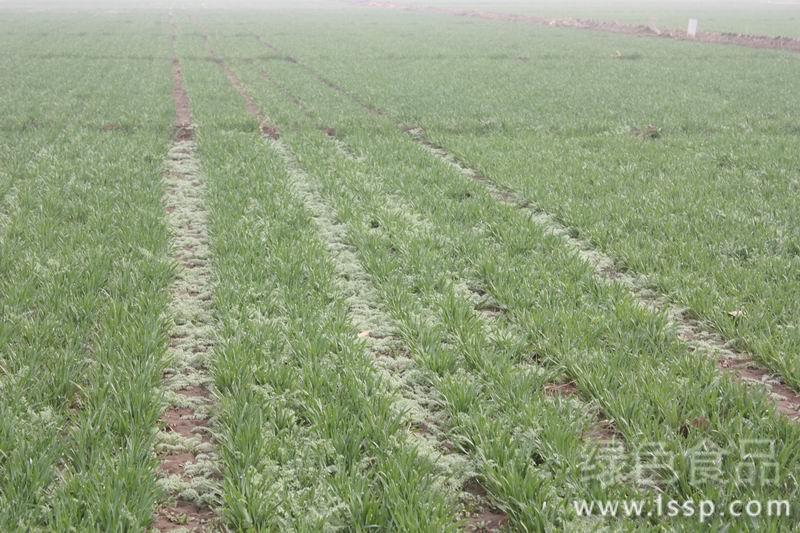
Weed control in wheat fields
Weeds in wheat fields emerge and cause damage over a long period, suppressed by low winter temperatures, and there are usually two emergence peaks per year. The first emergence peak occurs 10-30 days after sowing, in early to mid-October in autumn. The weeds that emerge include field cress (Descurainia sophia), shepherd's purse (Capsella bursa-pastoris), cleavers (Galium aparine), chickweed (Stellaria media), common vetch (Vicia sativa), sun spurge (Euphorbia helioscopia) and dwarf mallow, all of which are biennial weeds. Apart from a small portion that die naturally in winter, most survive the winter safely and flower and set seed in April-May of the following year. The second emergence peak coincides with wheat green-up, from late February to early May in spring after temperatures rise. In general years, weed emergence is mainly in autumn, with autumn weeds accounting for about 80% of the total, characterized by high emergence density, a long symbiotic period with wheat, and serious damage. Weed control in wheat fields follows these points:
1. Change from spring application to pre-winter application. After the autumn wheat seedlings have 4 leaves is a favorable period for chemical weed control, because by then most weeds in the wheat field have emerged, and the weeds are small and tender and not resistant to herbicides. A single application can basically control weeds in the wheat field, so this favorable opportunity should be seized to actively carry out chemical weed control.
2. If herbicide was not applied before winter in time, after wheat green-up many weeds begin to grow again. Weeds in the wheat field should be controlled from after green-up to the early jointing stage, around early to mid-March, when the average daily temperature is above 10°C, which helps the efficacy of the herbicide.
3. Change from single-agent application to mixed application. Because of the selective action of herbicides, sensitive weeds are easily gradually reduced while resistant and tolerant weeds rise rapidly. There are currently many herbicide varieties. Therefore, herbicides should be selected in a targeted way according to the species of weeds occurring in the wheat field.
① In wheat fields dominated by grass weeds such as shortawn foxtail (Alopecurus aequalis) and Japanese shortawn foxtail (Alopecurus japonicus), use 69 g/L fenoxaprop-P-ethyl at 69 grams per mu, or 15% clodinafop-propargyl wettable powder at 20-40 grams, or 50 g/L clodinafop-propargyl emulsion in oil at 60-100 milliliters, or 50% isoproturon wettable powder at 150 grams, add 40 kg of water and spray.
② In wheat fields dominated by hard grass (Sclerochloa kengiana), after wheat sowing and before the weeds reach the 3-leaf stage, use 50% isoproturon wettable powder at 150 grams per mu with water and spray. Using 50 g/L clodinafop-propargyl emulsion in oil at 70-90 milliliters per mu, or 69 g/L fenoxaprop-P-ethyl, or 15% clodinafop-propargyl wettable powder at 30-40 milliliters also has good control efficacy against hard grass, and it is best to apply the herbicide after the weeds have fully emerged before winter. For fields with large amounts of hard grass and annual bluegrass (Poa annua), use 30 g/L mesosulfuron-methyl oil dispersion for control, and apply strictly according to the instructions to prevent herbicide damage.
③ In wheat fields dominated by broadleaf weeds such as cleavers and shepherd's purse, before winter or in early spring use 200 g/L fluroxypyr emulsion at 20-25 milliliters per mu, or 200 g/L fluroxypyr emulsion at 20-25 milliliters plus 20% MCPA aqueous solution at 150 milliliters, or 25% bentazone aqueous solution at 100-150 milliliters plus 20% MCPA aqueous solution at 150 milliliters, add water and spray for control. In addition, 5.8% florasulam suspension concentrate has good efficacy by stem and leaf treatment against most broadleaf weeds such as cleavers, field cress, common vetch and sun spurge.
④ For wheat fields where grass weeds and broadleaf weeds grow together, the above methods can be carried out in two separate applications: control grass weeds around autumn sowing, then control broadleaf weeds in early winter or early spring, or mix and use the relevant agents above.
To prevent herbicide damage: First, use strictly and scientifically according to the recommended dose. Second, prohibit or avoid the use of agents that cause herbicide damage to subsequent crops. Third, do not spray before a cold wave arrives. Also do not spray too late, as lateness causes wheat ear deformity and herbicide damage. Fourth, the long-residual herbicides chlorsulfuron and metsulfuron-methyl easily cause herbicide damage to subsequent crops such as wheat, peanut and corn after use in wheat fields, and their use must be prohibited. Fifth, dicotyledonous crops are highly sensitive to 2,4-D butyl ester and herbicide damage is easily caused; in wheat fields in mixed cropping areas of wheat-cotton, wheat-peanut, wheat-tobacco and wheat-vegetable, avoid using 2,4-D butyl ester and herbicides containing 2,4-D butyl ester for weed control.