Several New Technologies Worth Promoting in Wheat and Corn Production
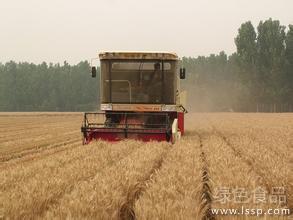
Harvesting wheat
In recent years, a number of new technologies have been gradually promoted in wheat and corn production, such as the "one prevention, two reductions" technology, the "one spray, three preventions" technology, and the "one increase, four changes" technology. They are introduced as follows.
1. Corn "one prevention, two reductions" technology
The "one prevention, two reductions" technology is an advanced and practical new technology summarized and vigorously promoted by the Plant Protection General Station of Shandong Province. Its meaning is: at the large trumpet stage of corn, insecticides and fungicides are mixed and applied for a one-time control of diseases and pests, so as to reduce the pest population base and lessen the severity of disease damage in the late growth stage of corn, ensuring increased corn yield and income. The main late-stage corn pests include the Asian corn borer, cotton bollworm, beet armyworm, leaf mites, and corn ear aphid, etc. The main late-stage corn diseases include northern and southern corn leaf blight, curvularia leaf spot, southern rust, and bacterial wilt, etc.
The late stage of corn is a season when various diseases and pests occur frequently, but control is relatively difficult. To control the occurrence and damage of diseases and pests in the late stage of corn, the large trumpet stage is the key period for pesticide application. Per 667 sq m, 20 ml of 50% phoxim emulsifiable concentrate, or 10 ml of 1.8% abamectin emulsifiable concentrate, or 10 ml of 5% emamectin benzoate emulsifiable concentrate, etc., can be used as insecticides. For fungicides, 80 g of 70% carbendazim wettable powder, or 30 g of 12.5% diniconazole wettable powder, or 50 g of 50% triadimefon emulsifiable concentrate, etc., can be used for control.
2. Wheat "one spray, three preventions" technology
The wheat "one spray, three preventions" technology is described differently depending on the differences in the degree of damage caused by various natural disasters in different wheat production areas, with the key difference lying in the spraying period and the target of control. One description: wheat "one spray, three preventions" is a key technical measure in which insecticides, fungicides, plant growth regulators, foliar fertilizers, micro-fertilizers, and other mixed preparations are sprayed during the wheat growth period to achieve prevention and control of diseases and pests, prevention of dry hot winds, and prevention of lodging, increasing grain number and grain weight, and ensuring increased wheat yield. Another description: wheat "one spray, three preventions" is a key measure in which insecticides, fungicides, plant growth regulators, micro-fertilizers, and other mixed preparations are sprayed at the wheat ear stage to achieve the effects of preventing diseases and pests, preventing dry hot winds, and preventing premature senescence, increasing grain weight, and ensuring increased wheat yield and income.
In the middle and late growth stages of wheat, there is a period of mixed occurrence of stripe (leaf) rust, powdery mildew, fusarium head blight, and ear aphid, along with dry hot winds. One may choose an aphid-killing agent plus a disease-control agent plus a yield-increasing agent against dry hot winds, that is, per 667 sq m (1 mu), use 30 g of 50% pirimicarb wettable powder, or 50 ml of 4.5% beta-cypermethrin emulsifiable concentrate, or 20 g of 10% imidacloprid wettable powder, plus 30 g of 12.5% diniconazole wettable powder, or 20-30 g of 25% tebuconazole wettable powder, 50 g of 50% triadimefon emulsifiable concentrate or 50 g of 70% carbendazim wettable powder, plus 100 g of potassium dihydrogen phosphate, and mix with 30 kg of water for uniform spraying over the whole field.
3. Summer corn "one increase, four changes" technology
The core of the summer corn "one increase, four changes" technology is to reasonably increase planting density, change to density-tolerant varieties, change interplanting to direct seeding, change extensive fertilization to formula fertilization, and change manual operations to mechanized operations. Supporting technologies include appropriate delayed harvest, seed coating, straw return to the field, integrated pollution-free control of diseases, pests, and weeds, and disaster response technologies.
Reasonably increasing planting density is the core of the core of the "one increase, four changes" technology. Determining a reasonable density requires comprehensive consideration of cultivation conditions: first, the density tolerance of the variety must be considered and matched with the variety's characteristics; second, it must be adapted to the yield target and matched with production conditions and cultivation levels. Generally, for compact-type varieties in large fields, the density is 4200-4800 plants per 667 sq m.
Changing to density-tolerant varieties is the foundation for implementing the "one increase, four changes" technology. At present, the varieties with relatively large planting area or good promotion prospects mainly include: Zhengdan 958, Jundan 20, Liaoyu 20, Shenzhou 158, Denghai 605, Nonghua 101, Ludan 818, and other varieties.
Changing interplanting to direct seeding is an effective means of implementing the "one increase, four changes" technology. The main technical measures are: ① Timely sowing. The best sowing time in Shandong Province is June 5 to 15. ② Sowing with sufficient soil moisture. The sowing moisture index requires a soil relative water content of 75%; depending on rainfall, sowing can rely on stored soil moisture or be followed by timely irrigation. ③ Appropriate sowing rate. For single-seed sowing, the seeding rate is generally 1.5-2 kg per 667 sq m, increased or decreased as appropriate according to variety characteristics. ④ Row spacing and sowing depth. In general large fields, the equal row spacing is about 60 cm. When wide-narrow row planting is used, the wide row spacing is 70-80 cm and the narrow row spacing is 30-40 cm, with a sowing depth of 3-5 cm.
Changing extensive fertilization to formula fertilization is the material guarantee for implementing the "one increase, four changes" technology. The fertilization amount is determined according to the yield target and the soil fertility foundation, calculated on the basis of applying 2.5-3 kg of pure nitrogen, 1.5 kg of phosphorus pentoxide, and 3 kg of potassium oxide for every 100 kg of grain produced. In fertilizer management, organic fertilizer, phosphate fertilizer, potassium fertilizer, and micro-fertilizers should be applied completely before corn jointing. Nitrogen fertilizer is applied in stages: skillfully apply seed fertilizer, lightly apply seedling fertilizer, heavily apply ear fertilizer, and supplement with flower-grain fertilizer.
Changing manual operations to mechanized operations meets the needs of the "one increase, four changes" technology. Reduce the wheat stubble height to provide conditions for mechanical corn sowing. Improve the quality of mechanical operations, with clean ear picking and straw crushing length of less than 5 cm. Agricultural machinery and agronomic techniques should coordinate with each other, and efforts should be made to explore new agronomic methods such as mechanical intertillage, fertilization, and pesticide spraying.