Pollution-free cultivation has become a trend: how to control nitrogen in vegetable fertilization
At present, pollution-free cultivation has become the general trend. The use of low-toxicity pesticides on vegetables has become a common understanding, but vegetable growers rarely link vegetable fertilization with the health quality of vegetables.
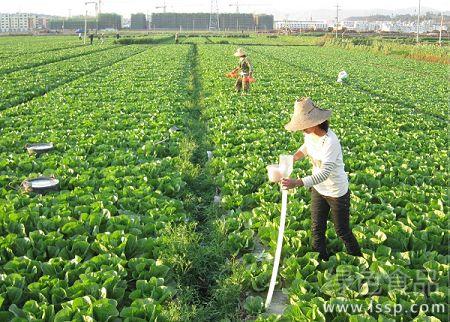
In fact, applying too much nitrogen fertilizer to vegetables has already posed a serious threat to people's health. The nitrate content in vegetables given too much nitrogen fertilizer is 20-40 times the normal level. Nitrate, in the human body or during the transportation, storage and processing of vegetables, will be converted into nitrite. Nitrite combines with various amines in the human body to form a strongly carcinogenic substance——nitrosamine.
Excessive application of nitrogen fertilizer also seriously pollutes soil and water bodies. Long-term large-scale application of nitrogen fertilizer, especially ammonium sulfate, ammonium chloride and the like, will gradually acidify the soil. Toxic substances remaining in the soil, such as sulfate radicals, chloride ions and biuret in urea, will gradually reduce microorganisms and earthworms in the soil. Soil acidification also accelerates the leaching loss of nutrient elements in the soil, ultimately making the soil compacted and losing its cultivation value.
Vegetables need attention to controlled application of nitrogen fertilizer. When applying nitrogen fertilizer, the amount should be based on output, to prevent excess. In pollution-free vegetable cultivation, nitrate nitrogen fertilizer and compound fertilizer produced with nitrate nitrogen fertilizer as raw material must be prohibited. Adopt scientific fertilization methods: base fertilizer should mainly be decomposed organic fertilizer, combined with phosphorus and potassium fertilizer. Topdressing should be applied in several portions according to the different growth stages of vegetables and the size of the fertilizer requirement. Note that base fertilizer should be applied in layers, deeply or in furrows. Foliar spraying or topdressing combined with watering. Vigorously promote organic fertilizer and reduce the amount of nitrogen fertilizer. Use more fully decomposed high-quality livestock and poultry manure and other barnyard manure, and rationally use human excrement and urine. Barnyard manure must be treated by piling and full fermentation; high-temperature piling or biogas fermentation can be used. Human excrement and urine should be stored and fermented in a septic tank, and 3-5% calcium superphosphate and gypsum powder should be added to reduce the volatilization and loss of ammonia.