How to manage spring wheat fields well during the critical growth period of wheat
After the Start of Spring, as temperatures gradually rise, wheat in the Huang-Huai region successively enters the greening, standing-up and jointing stages, and the overall seedling condition is relatively good. This period is key to determining the number of productive ears and the size of the ears, and it is also a critical period for management. First, some wheat fields with early sowing dates, high seeding rates and sufficient fertilizer and water showed a tendency to excessive growth before winter, and there is a potential risk of spring frost damage and later lodging and premature senescence; second, because temperatures before winter were relatively high, pests, diseases and weeds occurred more seriously in some wheat fields; third, since last November rainfall has been relatively low, soil moisture in some wheat fields has been lost quickly and surface soil moisture is insufficient; fourth, climate uncertainty has increased, and the probability of natural disasters such as spring drought and late frost is high.
1. Strengthen intertillage and compaction. For wheat fields sown too early, with too high a seeding rate and with an excessively large and vigorous population, timely deep intertillage to cut roots or compaction should be carried out; for third-class wheat fields with a relatively small population, shallow intertillage should be carried out to increase temperature and preserve moisture, and to promote root and tiller growth; for wheat fields with straw return and rough land preparation and loose, hollow soil, especially dryland wheat fields without irrigation conditions, timely compaction and hoeing should be carried out to firm the soil, close cracks, preserve moisture and raise temperature, promote roots and strengthen tillers, enhance drought resistance and frost resistance, and promote early development and steady growth.
2. Adapt fertilizer and water management to local conditions and seedlings, with classified management. For wheat fields currently lacking surface soil moisture, irrigation should be carried out as early as possible when the temperature is suitable, to maintain the number of ears and promote large ears. First-class wheat fields (800,000-1,000,000 per mu) should be controlled first and promoted later, and about 15 kg of urea per mu should be applied with irrigation in the middle and late jointing stage. For second-class wheat fields (600,000-800,000 per mu), 10-15 kg of urea per mu should be topdressed with irrigation at the standing-up stage or early jointing stage to promote tillers to form ears. For third-class seedlings (below 600,000 per mu), promotion should be the main approach; 8-10 kg of urea per mu should be topdressed at the greening stage, and at the jointing stage, with irrigation, another 5-7 kg should be topdressed to promote early and rapid seedling growth. For late-sown wheat fields, early spring irrigation should be controlled to avoid lowering soil temperature and aeration and affecting growth. For excessively vigorous wheat fields (above 1,000,000 per mu), control should be the main approach, and generally no more irrigation should be carried out in early spring; fertilizer and water management can be postponed to the middle and late jointing stage to prevent vigorous seedlings from turning weak. For dryland wheat fields without irrigation conditions, after the soil thaws in spring, timely compaction and hoeing should be carried out, and fertilizer should be topdressed in time by taking advantage of early spring soil moisture return or after light rain; in areas with serious waterlogging damage in rice-stubble wheat, ditches should be cleared and soil moisture regulated in time, and drainage and humidity reduction should be carried out to ensure normal growth.
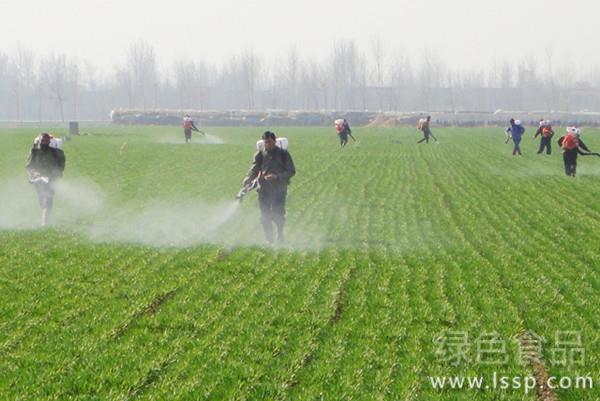
3. Focus on preventing the "three disasters." Prevent frost damage. In spring, temperatures rise quickly and fluctuate greatly, making "late spring cold" very likely. All localities should, according to weather forecasts, promptly irrigate excessively vigorous wheat fields or wheat fields with loose soil before a cold wave arrives, improve soil moisture, and prevent frost damage. Once frost damage occurs, timely remedial measures such as topdressing quick-acting chemical fertilizer combined with irrigation should be taken to promote small tillers to catch up with large tillers, promote frost-damaged wheat seedlings to recover growth as soon as possible, and reduce frost damage losses to the lowest possible degree. 2. Prevent spring drought. At present, surface soil moisture is insufficient in some wheat fields, and the frequency of spring drought is high, so close attention should be paid to the weather; for wheat fields currently lacking surface soil moisture and those with poor land preparation quality and loose soil, timely irrigation should be carried out to protect seedlings, resist drought and prevent frost, and promote normal growth. 3. Prevent lodging. For wheat fields with too high a seeding rate, a large population and a tendency to excessive growth before winter, control should be the main approach in spring; from the greening to standing-up stage, measures such as compaction, deep hoeing and spraying growth inhibitors such as paclobutrazol, Maijujin, Maiyefeng and Duntianbao should be used to control spring tillers, inhibit basal internode elongation, build a reasonable population, cultivate robust individuals, and prevent later lodging. Select the right pesticides to control diseases and weeds. For diseases, focus on monitoring wheat sheath blight, and select suitable agents such as Jinggangmiddot;lawonei, Heguoli (diniconazole), tebuconazole and propiconazole, add sufficient water, and carry out early prevention and early treatment and unified prevention and unified control at the greening and standing-up stages; for severely affected plots, treat once more 7-10 days after the first control. For wheat fields that were not chemically weeded before winter, after the spring temperature steadily passes 6°C, choose sunny weather from 10 a.m. to 4 p.m., and according to the types of weeds in the field, select the right herbicide and carry out chemical weeding in time. Strictly follow the suitable concentration, application period and technical operating procedures of the pesticide used to avoid phytotoxicity.