To improve the survival rate of bayberry, pay attention to five key technical points
Zhejiang Province is a major bayberry-producing province. February to March each year is the time for spring planting of young bayberry seedlings. Growers can pay attention to the following technical points to improve the survival rate of bayberry.
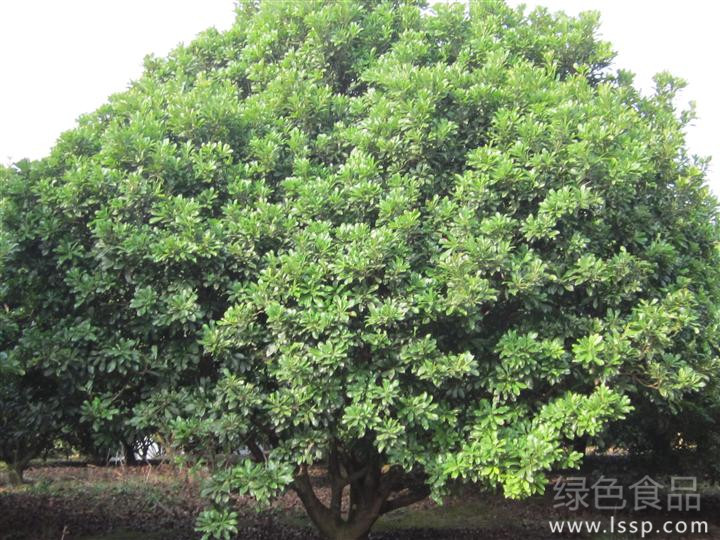
Bayberry
Planting time: In all parts of the province, it is best to plant in February-March, after the freezing period and before bayberry begins to sprout, choosing an overcast or light rainy day for planting.
Planting site: Bayberry is shade-tolerant and moisture-loving. Generally, areas with an annual average temperature of 15-21°C, a minimum temperature above -8°C, and annual rainfall of no less than 1000 mm can all be cultivated. Bayberry trees are most suitable for cultivation on hillside slopes below 500 m in altitude, where plants such as ferns and rhododendrons grow on the mountain, with no water accumulation, and relatively shady and moist conditions.
Dig the planting holes well: Before planting, dig the holes first, preferably in the shape of fish-scale pits, 0.8 m deep. Note that the topsoil and subsoil should be kept separate so that they can be used in layers when backfilling. After the holes are dug, apply sufficient fertilizer. Apply 25 kg of barnyard manure (or 3 kg of rapeseed cake) and 10-15 kg of burnt mud ash per hole, plus 0.5 kg of superphosphate, and mix thoroughly with the soil when planting. When planting, avoid contact between the bayberry seedling roots and fertilizer, especially superphosphate. Weeds around the holes should not be removed immediately; wait until the bayberry seedlings are somewhat larger before removing them.
Select strong seedlings: Choose high-quality seedlings that are thick and sturdy, have several branches, and have no damaged roots for planting. After lifting the seedlings, first coat the root system with some yellow mud slurry, then wrap the roots with nylon film for transport. The time from lifting the seedlings to planting should not exceed 10 days at most.
Planting method: To improve the survival rate of the seedlings, planting should be deep rather than shallow, especially in places where autumn drought is relatively severe. All the old scion on the rootstock should be buried below the soil, and at least 3-5 leaves of the newly grown branches and leaves on the scion should also be buried in the soil, so that the scion part can develop roots.
Before planting, all leaves should be cut off, leaving the petioles, and the nylon film on the scion should be removed. If there are bayberry seedling roots damaged by digging, use pruning shears to trim the wounds smooth. At the same time, attention should be paid to proper trunk establishment; the height of the central trunk above the graft union should preferably be 25 cm.
When planting, first cover the fertilizer with a layer of topsoil 15-20 cm thick; this is the soil that comes into direct contact with the roots. Place the bayberry seedling, straighten out the root system, fill in topsoil in stages, firm the soil around it, and cover the top with subsoil to 20-30 cm above the ground. After covering with subsoil, water 1-2 times, then cover with a layer of loose soil.