Chemical Weed Control Methods and Technical Key Points for Peanut Fields
How is chemical weed control carried out in peanut fields? Please explain. Peanut is one of the major economic crops, and in the cultivation process, the most labor-intensive and time-consuming task is weeding. The major harmful weeds occurring on peanut land include grass-family weeds such as large crabgrass, green foxtail, Chinese sprangletop, purple nutsedge, goosegrass, and late barnyardgrass; broadleaf weeds include field thistle, feather cockscomb, chickweed, prickly lettuce, small bindweed, shepherd's purse, knotweed, lambsquarters, amaranth, bean and black nightshade, etc.
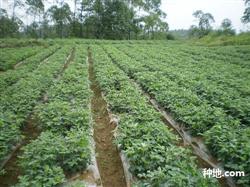
How is chemical weed control carried out in peanut fields? Please explain.
Peanut is one of the major economic crops, and in the cultivation process, the most labor-intensive and time-consuming task is weeding. The major harmful weeds occurring on peanut land include grass-family weeds such as large crabgrass, green foxtail, Chinese sprangletop, purple nutsedge, goosegrass, and late barnyardgrass; broadleaf weeds include field thistle, feather cockscomb, chickweed, prickly lettuce, small bindweed, shepherd's purse, knotweed, lambsquarters, amaranth, bean and black nightshade, etc. Given the characteristics of peanut fields having many weed species and different growth periods, at different stages of peanut planting, selecting different herbicide varieties for different weeds and applying treatments at the right time and in the right amount can achieve good results. Several commonly used chemical weed control techniques for peanut fields are briefly introduced below:
I. Pre-emergence herbicides after peanut sowing
After peanut sowing but before seedling emergence, select different herbicides according to different weed types and spray them on the soil surface, covering it to form a herbicide film layer, achieving soil-surface sealed weed control.
1. Peanut fields with more monocotyledonous weeds
Per 667 sq m, choose 72% Dual at 100-150 ml added to 40 kg of water and spray evenly, or 50% acetochlor at 150-200 ml added to 40 kg of water and spray evenly, or 48% Lasso emulsifiable concentrate at 100 g mixed with 25% diuron wettable powder at 100 g, added to 40 kg of water for spraying.
2. Peanut fields where monocotyledonous and dicotyledonous weeds grow together
Per 667 sq m, choose 50% Sucorsu at 4 g plus 90% Harness at 60 ml, added to 40 kg of water for spraying. Or three days before peanut sowing (or three days from sowing to germination), use 20% Gramoxone at 120-180 ml, diluted with 30-45 kg of water, and spray evenly on weed stems and leaves or the soil surface.
Saline-alkali land, wind-sandy arid land, sandy loam with low organic matter content, and soil that is particularly dry or waterlogged generally should not use pre-emergence soil treatment for weed control; instead, post-emergence stem-and-leaf treatment should be adopted.
II. Post-emergence stem-and-leaf treatment,
After peanut sowing, due to being too busy with farm work or due to climatic factors, if pre-emergence soil-surface sealed weed control cannot be carried out, then after peanuts and weeds have emerged, when grass-family weeds are at the 2-4 leaf stage and broadleaf weeds are 5-10 cm tall, stem-and-leaf spray weed control can be carried out.
1. Grass-family weeds
Per 667 sq m, choose 6.9% Whip at 40-50 ml, or 10.8% haloxyfop-R-methyl at 25-30 ml, or 15% fluazifop-P-butyl at 40-50 ml, or 20% quizalofop-P-ethyl at 30 ml, added to 40 kg of water for stem-and-leaf spraying, which can control annual grass-family weeds.
2. Broadleaf weeds
Per 667 sq m, use 24% lactofen at 8-10 ml, or 25% fomesafen at 60 ml, added to 40 kg of water, which can effectively control common broadleaf weeds.
For peanut fields where grass-family weeds and broadleaf weeds grow together, choose the peanut-field-specific herbicide Kecaoxing (Peanut Treasure), which can be used from the 2-3 compound leaf stage of peanut until before row closure. Usage methods: (1) When peanut has 2-3 compound leaves and weeds are at the 1-3 leaf stage, use 40-50 ml of Kecaoxing per mu diluted with 40 kg of water and spray evenly. (2) When peanut has 4 compound leaves until before row closure and weeds are at the 4-6 leaf stage, use 50-65 ml of Kecaoxing per mu diluted with 40 kg of water and spray evenly. Or choose to mix the above two herbicides.
Click to get more peanut cultivation techniques
Click to get more herbicide application techniques
Click to get more pesticide application techniques