How to choose herbicides for corn at sowing time in a scientific way
How to choose herbicides for corn at sowing time? Please advise. Weeds occur commonly and in great variety in corn fields. Among them, the Huang-Huai-Hai region is the largest corn-producing area in China, mainly growing summer corn. In this region, crops are grown twice a year, mostly in corn-wheat rotation, and there is also relay intercropping of corn with soybean, peanut, etc. The main weeds in this region...
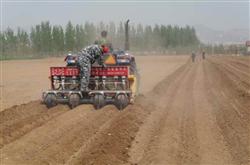
How to choose herbicides for corn at sowing time? Please advise.
Weeds occur commonly and in great variety in corn fields. Among them, the Huang-Huai-Hai region is the largest corn-producing area in China, mainly growing summer corn. In this region, crops are grown twice a year, mostly in corn-wheat rotation, and there is also relay intercropping of corn with soybean, peanut, etc. The main weeds in this region are crabgrass, purslane, goosegrass, field bindweed, lambsquarters, lovegrass, and purple nutsedge. The area affected by weeds in corn fields accounts for 82%-96% of the planted area, of which the area with moderate or greater damage reaches 66%.
At corn sowing time, amide herbicides such as 72% metolachlor (e.g. Jindule, Jindubao) and 90% acetochlor (e.g. Fengsite, Fengdigao) can be selected. After sowing corn and before emergence, preferably immediately after sowing, a soil-sealing treatment can be applied, which can effectively prevent the germination of various annual grass weeds. Thifensulfuron-methyl and metribuzin are herbicides with good pre-emergence sealing effects on broadleaf weeds in corn and can be used to seal the soil against the germination of annual broadleaf weed seeds. In fields where grass weeds and broadleaf weeds grow together, atrazine can be used to control annual grass weeds and broadleaf weeds, and its efficacy on broadleaf weeds is better than on grass weeds. Atrazine can be used both for soil treatment after corn sowing and before emergence and for post-emergence foliar treatment. However, because of its long residual period, if the active ingredient used per mu exceeds 133 grams, sensitive crops such as wheat, soybean, and foxtail millet cannot be planted as the following crop in cold northern regions. To improve the sealing effect on grass weeds and reduce the application rate of atrazine, it is generally recommended to use amide herbicides mixed with atrazine.
Its application rate is 220-250 milliliters per mu, and it has a very good sealing effect on both grass weeds and broadleaf weeds and is safe for the following crop. The following formulas can also be used: 40-60 milliliters of 90% acetochlor plus 75-100 milliliters of 38% atrazine per mu; 75-100 milliliters of 72% metolachlor plus 75-100 milliliters of 38% atrazine per mu; 40-60 milliliters of 90% acetochlor or 75-100 milliliters of 72% metolachlor mixed with 1.25-1.5 grams of 75% thifensulfuron-methyl dry suspension concentrate per mu, prepared and used immediately.
When using the above sealing-treatment herbicides, low temperatures during application, water accumulation caused by uneven ground, too late application, and excessive application rates may all cause varying degrees of crop injury. If soil moisture is poor at the time of application, water first and then apply the herbicide.
Click to get more corn planting techniques
Click to get more herbicide application techniques
Click to get more pesticide application techniques