How to cultivate buckwheat sprouts? Detailed technical methods
Sprout vegetables have always been very popular, and many people have been developing new types of sprout vegetables. A type of buckwheat sprout is now popular on the market and belongs to the new category of sprout vegetables. Buckwheat sprouts are simple to cultivate. Generally, after 10—12 days of cultivation, each kilogram of buckwheat seeds can produce 4 kilograms of buckwheat sprouts, and they can be cultivated in all four seasons and marketed year-round.
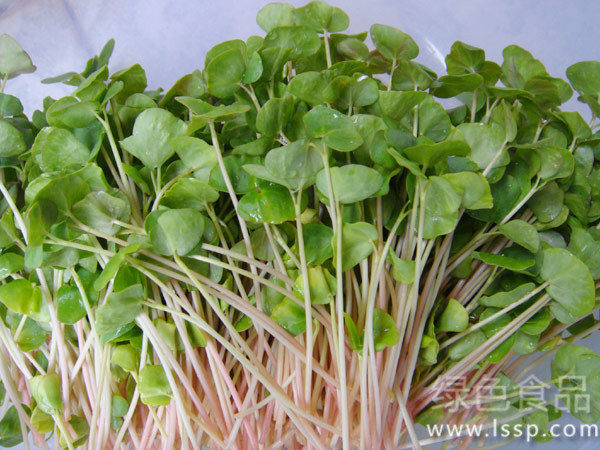
Buckwheat sprouts
1. Carefully select seeds. Choose new buckwheat seeds with a germination rate above 95%, high purity, plump grains, and no contamination.
2. Soak seeds and promote germination. Wash the buckwheat seeds 2—3 times in clean water at 20—30°C. Soak them in water 2—3 times the volume of the seeds for 24—36 hours. Rub off the mucilage, remove and drain the water, place them in a flat-bottomed container, cover with a wet towel, and place in a constant-temperature location at 23—26°C to promote germination. After 48 hours, when the buckwheat sprouts have grown to 2—3 millimeters, sow them.
3. Sowing. Use a sowing tray measuring 60×25×5 (cm). Lay 1—2 layers of white paper on the bottom of the tray so the paper absorbs enough water, and sow about 150—170 grams per tray. After sowing, stack the trays neatly and cover them tightly with black plastic film, then promote germination at 20—25°C. After 2 days, when the buckwheat sprouts have grown to 2—3 cm tall, place the trays on shelves. The cultivation shelves are made of steel bars, bamboo, wood, etc., stacked 3—5 layers, with 30—40 cm between each layer.
4. Sprout management. Buckwheat sprouts cannot receive too strong light, otherwise the quality of the sprouts will be affected. Spray water 2—3 times a day to keep the substrate in the trays moist; ventilate every day to regulate temperature and humidity.
5. Harvesting. Harvest when the leaves of the buckwheat sprouts turn green, the hypocotyls turn red, the sprouts are 12—15 cm tall, and the cotyledons are flat and fully plump.