How to choose fruit tree saplings? Eight tips to help you buy the highest-quality saplings
As the saying goes: to plant trees and build an orchard, the saplings are the key. Fruit tree saplings are the foundation of an orchard. Whether the varieties of fruit tree saplings are appropriate and whether their quality is good or bad will directly affect the development of the orchard and the fruit growers' economic returns. How should fruit growers choose suitable and high-quality fruit tree saplings?
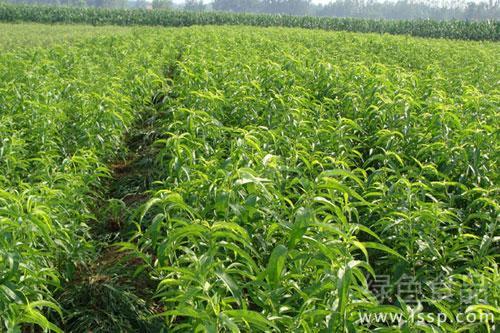
Fruit tree saplings
1. Pay attention to choosing superior tree species suitable for local planting: no matter what kind of fruit tree, planting areas are divided into optimal production zones and suitable production zones. Generally speaking, if fruit growers want to obtain good economic income, they should choose superior tree (variety) species suitable for local planting when building an orchard.
2. Pay attention to choosing fruit tree saplings suitable for local climatic conditions: the cold resistance of various fruit trees varies from strong to weak, and different regions also differ in cold and warmth. Therefore, when purchasing fruit tree saplings, first consider the cold resistance of the fruit tree variety, and then consider the quality, size, productivity, and storability of its fruit. Never simply pursue large fruit and high quality while ignoring the cold resistance of the tree (variety).
3. Pay attention to sapling standards: for apple, pear, plum, persimmon and other saplings, the height should be 80 cm to 140 cm, and the thickness should be 0.7 cm to 1.0 cm; for peach and apricot saplings, the height should be 60 cm to 100 cm, and the thickness should be 0.4 cm to 0.8 cm; grape saplings should have more than 3 plump, well-filled buds. Various fruit tree saplings should have more than 4 lateral roots about 18 cm long, and there should be many fibrous roots.
Fruit tree saplings
4. Pay attention to sapling quality: whether fruit growers buy fruit tree saplings in spring or autumn, try not to buy heeling-in saplings. It is best to buy fruit tree saplings directly lifted from the nursery, or buy fruit tree saplings that have just come out of the nursery and are on the market.
5. Pay attention to checking whether fruit tree saplings have pests and diseases: some fruit tree saplings carry slug moth cocoons. Do not buy apple saplings carrying overwintering larvae of pierid butterflies and egg masses of tent caterpillars, and do not buy plum, pear, and apple saplings carrying root knot disease.
6. Pay attention to checking whether fruit tree saplings have been frozen: if saplings are improperly heeled in for the winter, they are highly prone to freeze damage. If a branch is cut and the cross-section turns brown, it indicates freeze damage. Fruit tree saplings that have been frozen have a low survival rate, so do not buy them.
7. Pay attention to checking whether the root system of fruit tree saplings is moldy and rotten: when saplings are heeled in for the winter, if fruit trees are heeled in too early or the density is too high, the sapling roots are prone to mold and rot. Normal sapling roots have fresh-looking epidermis and a white cross-section; those with brown or dark brown epidermis are moldy roots and break as soon as they are touched.
8. Pay attention to checking whether fruit tree saplings have lost water: branches that are plump and rounded, with a green cross-section and a soft, cool feel, are normal fruit tree saplings; woody branches that are shrunken and wrinkled, with a white cross-section and a stiff, hard feel, are fruit tree saplings that have lost water. Such saplings have a low survival rate, and severely dehydrated fruit tree saplings basically cannot be planted alive.