What should be noted when topdressing peach trees
Because soil and climate conditions, tree growth and fruiting status vary from place to place, the timing and frequency of topdressing for peach trees should be flexibly managed according to the development of the peach tree, soil conditions, and the yield of the variety. However, some growers topdress blindly, resulting in low peach yields. Today, the editor of Green Food Network introduces to growers the aspects to note when topdressing peach trees.
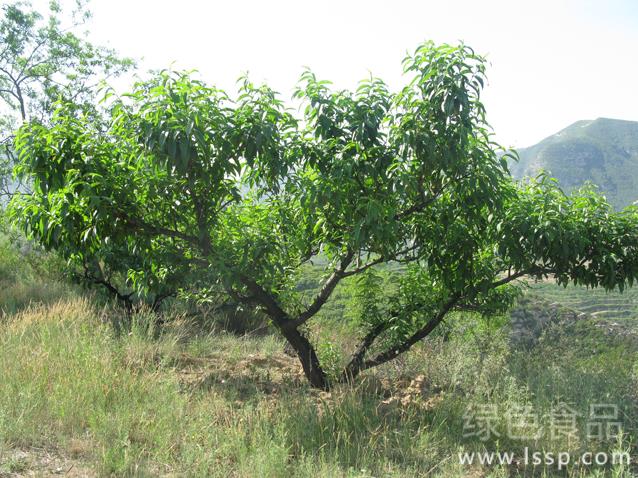
Peach tree
Look at the tree
Fertilize according to the age, growth vigor and yield of the peach tree. Generally, a combination of root fertilization and foliar spraying is used. For mature trees, apply an additional 0.4-0.6 kg of compound fertilizer per tree at each fertilization period, to help continue supplementing the nutrition of the peach tree. If topdressing after flowering, mainly apply quick-acting nitrogen fertilizer to the roots, supplemented by foliar boron spraying; if topdressing before fruit harvest, mainly apply quick-acting potassium to the roots; if supplementary fertilization is adopted, it can be done in September to October after harvest, mainly supplementing nitrogen fertilizer together with phosphate fertilizer.
Look at the soil
Look at the structure and fertility of the vineyard soil to determine the type, amount and method of topdressing. For example, sandy soil has low organic matter content, poor structural properties, and serious water and fertilizer leakage. For peach trees growing in sandy soil, apply 60 kg of high-quality barnyard manure mixed with 0.4-0.6 kg of chemical fertilizer per tree each time.
Look at the yield
Fertilize according to yield. Trees with a large fruit load must have sufficient fertilizer with a reasonable combination of nitrogen, phosphorus and potassium, so that the diameter of the extension shoots of the peach tree remains at 1.0-1.5 cm. Under normal conditions, for every 100 kg of peaches produced per peach tree, 0.7-0.8 kg of quick-acting nitrogen fertilizer, 0.5-0.6 kg of phosphate fertilizer, and 1-1.5 kg of potassium fertilizer can be topdressed.