Cherries are delicious but hard to grow: how to prevent cherry fruit cracking
In the period shortly before cherries are ready for market, what fruit growers fear most is rain, because after it rains, the cherries in the orchard begin to crack. Fruit that clearly looks ready for market splits open one after another, and growers truly feel the pain. Cherries come to market in April and May, which happens to coincide with spring, the so-called season of spring rains, and growers can only watch helplessly as the cherries crack. So what methods are there to prevent cherry cracking?
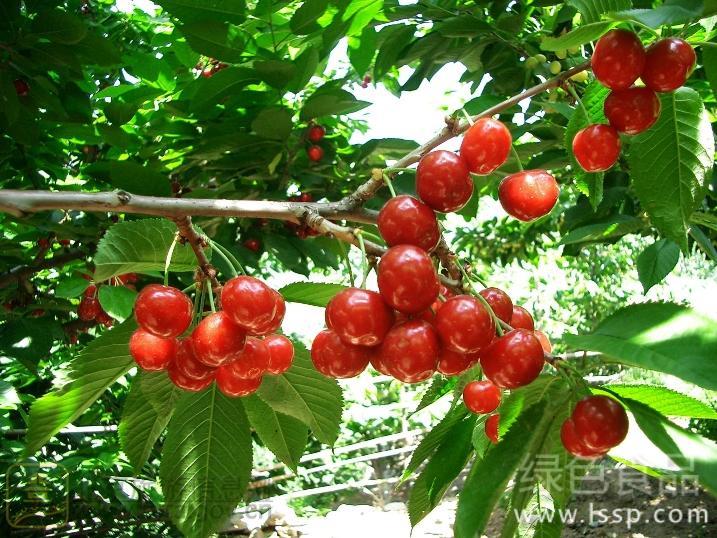
Cherry
1. Choose crack-resistant varieties. So far, no sweet cherry variety has been found that is completely resistant to cracking, but the number and degree of cracked fruit differ by variety. Varieties such as Dazi, Shuijing and Bingku, because their fruit skin strength is low and their stomata are numerous and large, have strong water absorption and crack more severely; varieties such as Samit and Lapins crack less.
In addition, sweet cherry cracking is mostly caused by drought before harvest followed by rain, so growers can also use early-maturing cherry varieties that ripen before the rainy season arrives, in order to avoid the rainy season, such as Zaofeng, Hongdeng and Zhifuhong.
2. Keep the soil moisture content stable when growing cherries. Cherry cracking is also closely related to an uneven distribution of soil moisture content. For example, when the soil has been in a water-deficient state for a long time, a sudden rain will cause cherry cracking; if the soil moisture remains relatively saturated and stable, even if it suddenly rains, cracking will be less severe.
3. Spray calcium salt before harvest. According to experiments, spraying a 0.2% calcium chloride solution 3 times at 7-day intervals before fruit harvest can reduce sweet cherry cracking and extend shelf life.
4. In addition, when cherries begin to color and before the rainy season arrives, building a plastic-film rain shelter over the cherries to create a rain-free micro-environment can also effectively prevent cherry cracking.
Although the methods above cannot completely prevent cherry cracking, they can still reduce losses somewhat, so fellow fruit growers may as well give them a try.