To grow radishes well, do three things properly: choosing the site, fertilizing, and watering
Many people think radishes are very easy to grow, but that is not actually the case. Radishes have their own requirements for growing conditions. So what are the basic requirements for growing radishes? The editors at Green Food Network have summarized them for you:
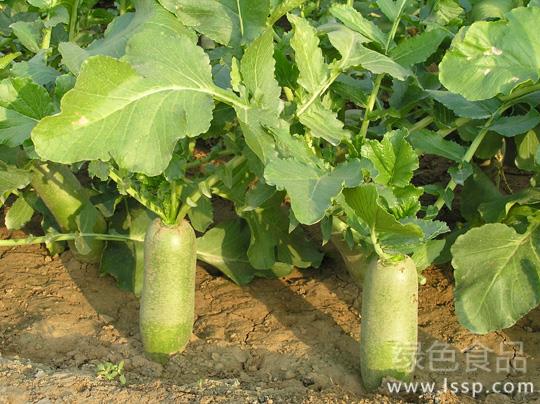
Radish
1. Choose a good site
Sandy loam soil with deep topsoil, rich organic matter, good drainage, and a loose, breathable texture is best for growing radishes. If radishes are grown in sticky, compacted soil with poor drainage, the fleshy roots will bend, branch, or even become deformed.
2. Apply fertilizer well
The radish plot needs plenty of base fertilizer. Generally, apply 6000-7000 kg of fully decomposed organic fertilizer, 10 kg of diammonium phosphate, and 3-5 kg of potassium sulfate per mu. For topdressing, generally at the radish seedling stage, combine it with watering and apply 5 kg of urea per mu; at the rosette stage, apply 8-10 kg of urea per mu; at the stage of rapid fleshy root expansion, apply 5-8 kg of urea, 10-15 kg of diammonium phosphate, and 10 kg of potassium sulfate per mu. If the temperature is too high and the radish plot receives too much nitrogen fertilizer with insufficient phosphorus and potassium fertilizer, the radishes will taste rather bitter. During radish cultivation, fertilizer should be applied rationally, with appropriate additional phosphorus and potassium fertilizer and organic fertilizer, avoiding excessive nitrogen fertilizer alone. For fields deficient in boron, spray boron on the leaves. Each time, use about 150 g of borax mixed with 50 kg of water per mu, and spray it on the radish leaves in the evening, once every 2 weeks, for 2-3 consecutive sprays.
3. Water well
Generally, the soil should be kept moist during the germination stage. After sowing radishes, if the soil is found to be dry, water promptly. When more than 75% of the radishes have emerged, water lightly once more. During the radish seedling stage, the main task for growers is to strengthen cultivation and loosening of the soil. During high temperatures and drought, pay attention to watering the radishes, and also ensure drainage to prevent waterlogging on rainy days. During the vigorous leaf growth stage of radishes, water moderately and control moisture, while also carrying out cultivation, hilling, and seedling hardening. During the vigorous growth stage of the fleshy roots, water evenly to prevent root splitting. Stop watering 5-7 days before harvest. Note that radishes should be irrigated with flowing clean water or well water, not with sewage or stagnant pond water.
Meet the three most basic conditions for growing radishes well, and you are halfway to success in your radish-growing journey.