How to pollinate apricot trees in greenhouses? Master the correct method to increase the fruit-setting rate
Many growers of greenhouse apricot trees report that even though they carried out artificial supplementary pollination for their apricot trees in early spring, the fruit-setting rate of the apricot trees was still not high. This is very likely because the fruit growers made a mistake in some step during pollination. Today, the editors of Green Food Network summarize for the majority of fruit growers three points to pay attention to when pollinating apricot trees in greenhouses:
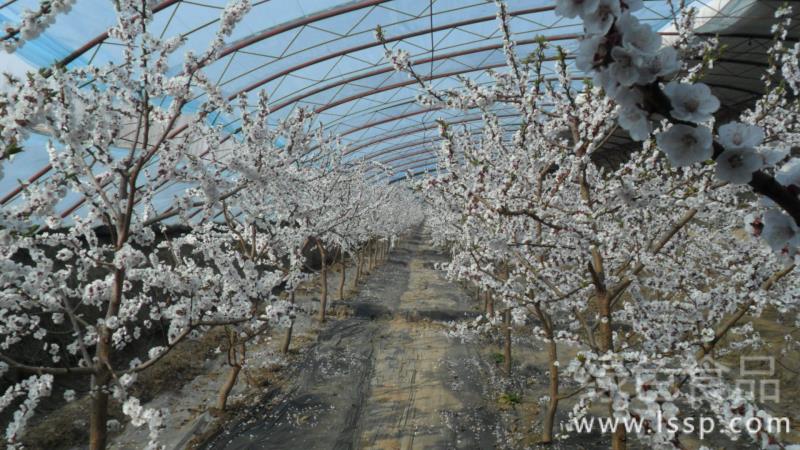
Apricot tree
Pollen collection
2 to 4 days before artificial pollination, collect flower buds that are about to open and are developing normally from selected varieties with high pollination compatibility, or cut flowering branches from pollinator trees and insert them into water bottles for water culture. Indoors, use tweezers to peel open the petals of the collected flower buds, take out the anthers, spread the anthers on smooth and clean paper, and place them in a room at 20 to 25°C with humidity of 30% to 70% to dry in the shade. When the anthers on the paper crack, they can release pollen; for the water-cultured flowering branches, when the anthers mature, place a sheet of white paper under the water bottle and gently tap the flowering branches to let the pollen fall onto the paper. After collecting the pollen, sift out debris, store it in a bottle, and place the bottle in a ventilated and dry place for later use. The number of buds collected or the amount of flowering branches collected can be determined according to the number of flowers to be pollinated, the amount of pollen, or the variety. Because apricot tree pollen is relatively scarce, generally one flower bud can pollinate three flowers.
Pollination period
For pollination of the whole apricot tree, generally when about 25% of the flowers are open, and the stigmas of the apricot flowers have a large amount of mucus and are bright in color, the best pollination time is the morning of the day the flowers open, when there are no water droplets and the stigmas are fresh and moist; at this time the fruit-setting rate after pollination is also relatively high.
Pollination methods
1. Point pollination method: Add 3 to 5 times the amount of talcum powder or starch to the collected pollen, mix thoroughly, then use a brush or a soft rubber tip to dip a small amount of pollen and lightly smear it on the stigma. Each dip of pollen can pollinate 10 to 25 flowers. The key is to carry out comprehensive point pollination for plants with few flowers and for early-opening flowers and late-opening flowers, so as to improve the fruit-setting rate and ensure yield.
2. Spray method: Take 10 to 12 grams of collected dry pollen, add 5 kg of water and 250 grams of white granulated sugar, mix and stir to prepare a suspension for later use. Before spraying, add 5 grams of boric acid to the prepared solution, stir thoroughly and mix evenly, then immediately spray with a handheld sprayer. Spray 1 to 2 times when 60% of the flowers on the whole tree are open. The whole apricot tree is required to be sprayed evenly, without missing any part, and without repeated heavy spraying.