Four Main Wheat Pests and Diseases in Spring and Their Control Methods
Doing a good job of wheat pest and disease control is an important part of securing a bumper wheat harvest. Spring is an important period when wheat pests and diseases occur frequently, so special attention must be paid to wheat pest and disease control work. Therefore, this article introduces the four main wheat pests and diseases in spring and their control methods.
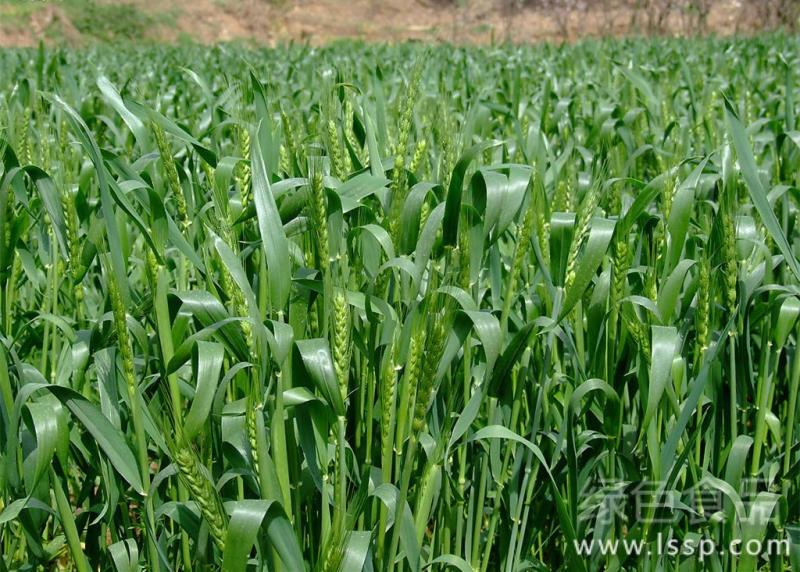
Wheat
1. Aphids. If wheat leaves turn yellow and white, then aphids are the culprit. Aphids mainly gather on wheat leaves, stems and ears, sucking the sap of the wheat. Aphid excrement also contaminates wheat leaves, hindering photosynthesis, which in turn affects grain filling and reduces wheat yield.
① Control threshold. If there are more than 500 aphids per 100 wheat plants on average, or if the proportion of wheat plants with aphids in a field reaches more than 25%, control should be carried out promptly.
② Control method. Use 10 to 15 grams of 10% imidacloprid wettable powder per mu, diluted in 50-75 kg of water, and spray on the wheat.
2. Red spiders (spider mites). Red spiders appear from late March to early April, mainly harming wheat by sucking the sap from wheat leaves. The symptoms of damaged wheat are that the leaf surface is covered with yellow-white spots, which gradually expand into blotches, and the leaves turn yellow. Severely affected wheat cannot head out and withers and dies.
① Control threshold. When 200 wheat round spiders or 100 wheat long-legged spiders appear per 33 cm of a single wheat row, pesticide should be applied promptly.
② Control method. Use 73% propargite (Comite) emulsifiable concentrate at 1500 times dilution or 1.8% abamectin emulsifiable concentrate at 3000 times dilution to spray and control the wheat.
Wheat
3. Wheat blossom midge. If you find that your wheat has developed shriveled grains, please note that this may be the larvae of the wheat blossom midge damaging the wheat flowers and sucking the grain sap.
① Control threshold. From late April to early May, when there are 2 pupae in one wheat sample quadrat (10 cm × 10 cm × 20 cm), or when 2-3 adult wheat blossom midges can be seen at a glance by parting the wheat rows during the grain-filling stage, pesticide should be applied promptly.
② Control method. During the pupal stage, use 600-900 grams of 5% chlorpyrifos granules per mu and mix evenly with 20-25 kg of fine soil; or first dilute 300 mL of 40% phoxim emulsifiable concentrate with 1-2 kg of water and then mix with 20 kg of fine soil, and spread evenly along the wheat rows. After spreading the mixed soil, water immediately to improve the control effect.
4. Wheat sawfly. The larvae feed on leaves, and the wheat symptoms are notched leaves, with only the main vein remaining in severe cases.
① Control threshold. When there are 40 wheat sawfly larvae per square meter of wheat field, pesticide should be applied.
② Control method. Apply pesticide before the larvae reach the 3rd instar. Use 30-50 mL of 50% phoxim emulsifiable concentrate per mu, diluted in 50 kg of water, and spray on the wheat.