Spring management measures for red-fleshed honey pomelo: learn to grow this anti-cancer fruit well
Spring is the period when red-fleshed honey pomelo puts out roots, grows spring shoots, grows flower spikes, blooms, and sets young fruit. During this time, if there is damage from pests and diseases, fertilizer deficiency, or drought, it will have a direct impact on the pomelo tree's vigorous shoots, vigorous flowers, and fruit-setting rate, and it is a key period for the annual yield of red-fleshed honey pomelo. Fruit growers must take various spring management measures in a timely manner to promote vigorous shoots and vigorous flowers in red-fleshed honey pomelo, increase the fruit-setting rate, and secure a bumper harvest.
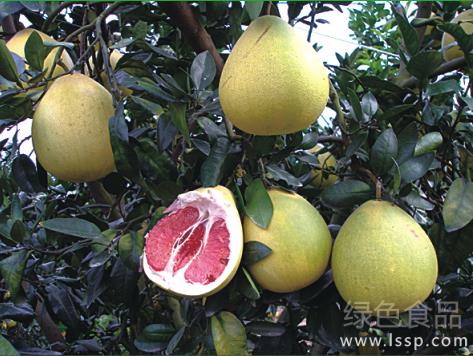
Honey pomelo
1. Fertilization: Red-fleshed honey pomelo sprouts shoots and unfolds leaves at the same time as it blooms, requiring a large amount of nutrients, so the fertilizer applied must be ensured to meet the needs of pomelo tree growth. For fruit-bearing red-fleshed honey pomelo trees, apply 0.75 kg of ammonium carbonate, 0.75 kg of superphosphate, and 0.15 kg of ammonium sulfate mixed fertilizer per tree; or apply 0.5 kg of special fertilizer for honey pomelo and 0.1 kg of urea mixed fertilizer per tree. For young trees, choose a small amount of ammonium bicarbonate with added superphosphate applied as a liquid drench or buried in trenches.
Pay attention to pre-bloom fertilizer. 10-15 days before flowering, supplement the pomelo tree once with chemical fertilizer mainly consisting of quick-acting nitrogen fertilizer to promote vigorous flowers. For a tree producing 50 kg of red-fleshed honey pomelo, apply 0.5 kg of calcium nitrate or ammonium nitrate, or 0.5 kg of special fertilizer for honey pomelo.
At the same time, combine with foliar fertilization. Before flowering, add 100-150 g of imported urea, 25 g of ammonium molybdate, 100 g of potassium chloride, 200 g of magnesium sulfate, and 130-150 mL of flower and fruit nutrient solution to 50 kg of water, mix well, and spray the pomelo tree, spraying once every 5-7 days.
During the flowering period, use 50 g of boric acid and 25 g of ammonium molybdate mixed with 50 kg of water for spraying, spraying once every 5-7 days, for 2-3 consecutive times.
After 2/3 of the flowers have fallen, spray with 150 mL of flower and fruit nutrient solution, 200 g of magnesium sulfate, 100 g of monopotassium phosphate, and 150 g of imported urea mixed with 50 kg of water. 7-10 days after the flowers fall, gibberellin (920) may be appropriately sprayed to retain fruit, adding 1 g of gibberellin (920) to every 50 kg of water.
2. Pay attention to spring pruning: try to keep spring shoots even, and when pruning, appropriately remove excessively dense spring shoots at the top and outer parts of the canopy. For excessively vigorous top spring shoots, 1/3-2/3 of the total current-year spring shoots may be cut off to moderate the growth vigor, reduce competition for tree nutrients, and improve flower quality.
Red-fleshed honey pomelo
3. Flower and fruit thinning: remove slender weak flowers and deformed flowers, and thin flower spikes on red-fleshed honey pomelo trees with large flower quantities. At the same time, thin flower buds. Keeping 2-4 robust flower buds per spike is enough, and keeping 80-120 robust flower spikes per tree is about right. Thin fruit after the second physiological fruit drop of red-fleshed honey pomelo ends, removing small and weak fruit and deformed fruit.
4. Girdling to retain fruit: when half the flowers have fallen, make 2-3 spiral girdles on the branches bearing red-fleshed honey pomelo to increase nutrient accumulation and raise the fruit-setting rate.
5. Pest and disease control: the main pests and diseases during the flowering period of red-fleshed honey pomelo include scab, flower bud maggot, anthracnose, aphids, and so on. Carry out disease control when spring shoots are 2 cm long, choosing agents such as copper soap solution, thiophanate-methyl, carbendazim, and copper hydroxide. Pest control: before flower buds turn white, broadcast "1605" powder comprehensively to control flower bud maggot, or before and after flowering, in combination with controlling aphids, leaf-eating insects, and red spiders, spray isocarbophos, dichlorvos, trichlorfon, and so on.