What to Do About Boron Deficiency in Peach Trees? Symptom Identification and Control Measures
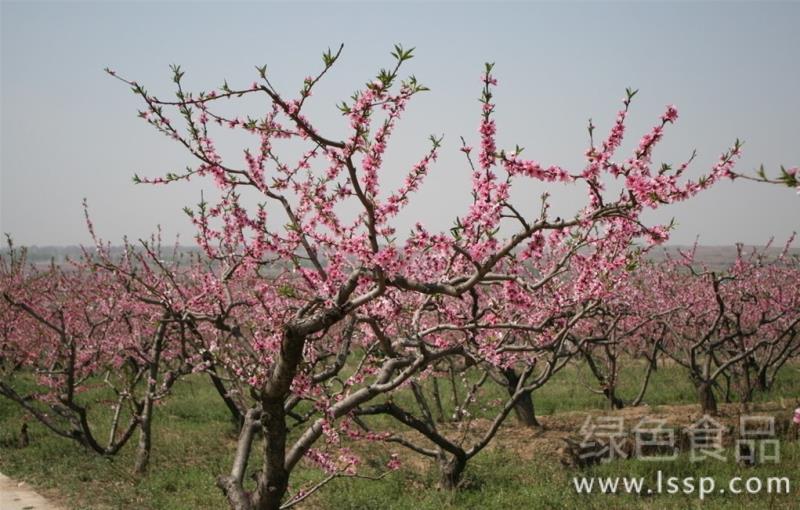
Peach trees
The symptoms of boron deficiency in peach trees are as follows: the tips of branches tend to die back; below the dead parts of the peach tree, many disordered, tangled new shoots emerge, forming a "broom-like" shape; the phloem of the branches turns brown, the trunk and branches tend to exude gum, the leaves are narrow and small, wrinkled, with curved petioles and veins, brittle and easily broken; the leaf color is pale yellow, the fruit is deformed, and the color is uneven. Mild boron deficiency causes the peach tree to weaken, with low yield and poor quality, while severe boron deficiency causes most branches of the peach tree to die back or to have buds but no flowers, resulting in total crop failure.
Control measures:
1. Apply more organic fertilizer, and irrigate after application; this can promote the conversion of available boron in the soil and increase the content of soluble boron in the soil.
2. Combined with the application of base fertilizer, apply 50—150 grams of borax or boric acid per peach tree. Irrigate after application; the effective period of boron supplementation can reach 3—5 years.
3. Foliar boron spraying. Before bud break, before flowering, at full bloom, or after petal fall and other important stages of the peach tree, spray the canopy of the peach tree 2—3 times with 0.5% borax solution as needed.