How to scientifically formulate fertilizer for rapeseed after spring and how to apply topdressing
After the beginning of spring, rapeseed enters a period of vigorous growth and requires a large supply of nutrients. Therefore, if at this time scientific fertilization can be carried out according to the soil quality, climate and the fertilization situation of rapeseed before spring, combined with the seedling condition, the yield of rapeseed can be greatly increased.
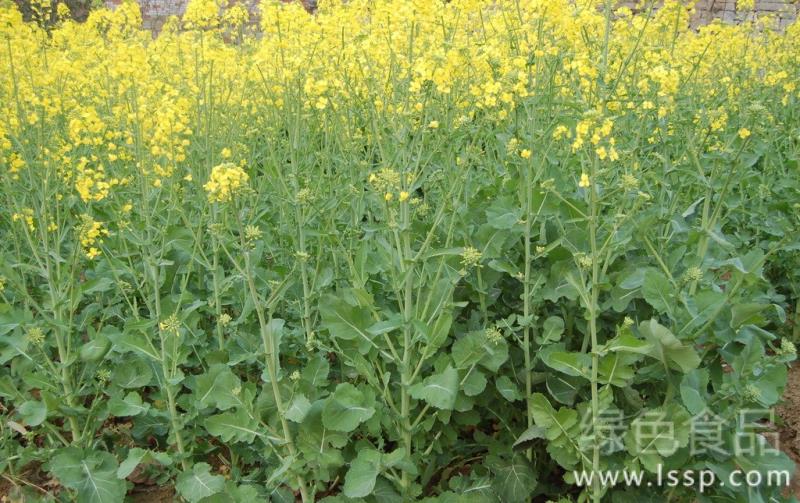
Rapeseed
1. Apply spring fertilizer early.Topdressing in early spring can remedy the insufficient growth of rapeseed caused by winter and promote more branching and early budding. Especially for rapeseed that has insufficient base fertilizer and has not been given winter fertilizer, the key to achieving high yield lies in supplementary topdressing in early spring. Generally, 5-8 kg of urea or 10-15 kg of ammonium bicarbonate is used per mu.
2. Apply bolting fertilizer skillfully.Fertilization of rapeseed at the bud and bolting stage should be treated differently according to the appearance and growth vigor of the rapeseed. Apply early and heavily for fields with weak seedlings and poor growth, that is, when the bolting height is about 50 cm, apply 15-20 loads of human excrement and urine per mu, plus 5 kg of urea or 10-15 kg of 45% compound fertilizer. For fields with vigorous growth and dark green leaf color, delay the application or apply less bolting fertilizer.
3. Spray boron on the leaves.Rapeseed has a very large demand for boron, and boron deficiency often causes rapeseed to flower but not set seed. Applying boron fertilizer has a good yield-increasing effect. When applying boron to rapeseed after spring, generally spray once at the early flowering stage, using 50-100 g of borax per mu each time, first dissolving it in hot water, then spraying with 50-60 kg of clean water; the second boron spray can be carried out together with the control of rapeseed sclerotinia, which helps increase the yield of rapeseed.
4. Increase the application of potassium fertilizer.In order to improve the lodging resistance, disease resistance and waterlogging resistance of rapeseed, potassium fertilizer can be applied in an appropriate amount. Especially for potassium-deficient soils such as paddy fields and sandy fields, increasing the application of potassium fertilizer in spring has an obvious yield-increasing effect. From late February to mid-March, apply about 150 kg of plant ash per mu by broadcasting or apply 15 kg of potassium chloride.