Detailed Explanation of the Causes, Symptoms and Control Methods of Pepper Phytophthora Blight
Pepper Phytophthora blight is the most important fungal disease of peppers. Besides damaging the roots, stems, branches, leaves and fruits of peppers, it also affects crops such as tomatoes, eggplants, cucumbers and melons, often causing large-scale plant death. In ordinary fields, the plant death rate is 20%-30%, and in severe cases it reaches more than 90%. The following are the symptoms, disease patterns and control methods of pepper Phytophthora blight:
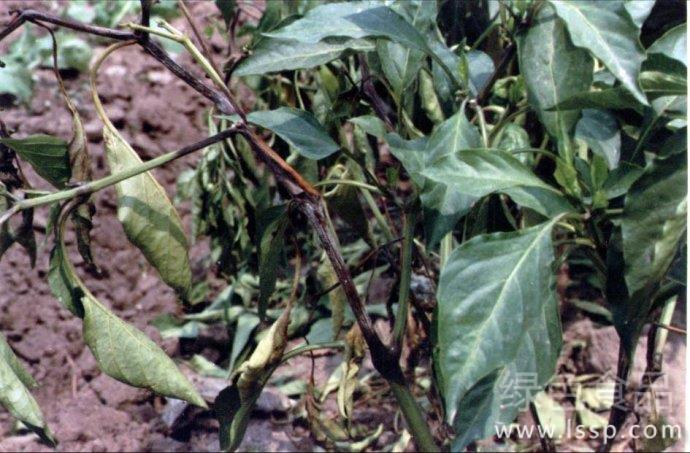
Pepper plants affected by Phytophthora blight
1. Symptoms. Phytophthora blight can occur at both the seedling stage and the mature plant stage of peppers, and the stems, leaves and fruits can all be infected. When the disease occurs at the seedling stage, the base of the pepper stem becomes dark green, water-soaked, soft and rotting, or the seedling collapses, also known as seedling damping-off. Infection of the pepper fruit starts from the calyx end, initially appearing as dark green water-soaked spots, which rapidly turn brown and soft-rotting. When humidity is high, white mold grows on the infected peppers; after drying, dark brown mummified fruits remain on the branches. When the stem is infected, the most common sign is that the branching points of the plant turn dark brown or black. Damage to the base of the stem is the most serious: the lesions are initially water-soaked, then brown or black streaks appear and spread around the epidermis, and the diseased part becomes noticeably constricted, causing the aboveground part to break and fall over. It mainly damages mature plants, and the plants wilt rapidly.
2. Disease patterns. Pepper Phytophthora blight is a fungal soil-borne disease. 30°C is the suitable temperature for the growth and development of the Phytophthora pathogen. The disease is prone to occur and spread after rainy days. The disease cycle is short. Fields with heavy clay soil, poor drainage and easy water accumulation have severe outbreaks. Fields that are watered too frequently and with excessive amounts of water are also prone to the disease. In addition, when pepper plants are planted too densely and ventilation and light penetration are poor, the disease is severe.
3. Control measures. Cultivate strong seedlings and plant at a reasonable density. Strengthen ventilation and moisture removal to reduce humidity inside the greenhouse. Pay attention to applying organic fertilizer, increase phosphorus and potassium fertilizer, and apply less nitrogen fertilizer. When diseased pepper plants are found in the field, spray with 72.2% Previcur N aqueous solution at 600-800 times dilution, or spray with a solution of 64% Sandofan wettable powder at 500 times dilution, or spray with 77% Kocide wettable powder liquid at 400-500 times dilution. Apply control 3-4 times continuously. On continuous cloudy days, use the smoke fumigation method or dusting method as much as possible: fumigate with 250-300 g of 45% chlorothalonil smoke agent per mu each time, and apply 1 kg of 5% chlorothalonil dust per mu each time for dusting, to reduce humidity inside the greenhouse and decrease further spread and infection of pepper Phytophthora blight.