How to effectively control cucumber gray mold
Gray mold is one of the diseases that cucumbers are most susceptible to, especially greenhouse cucumbers. When the weather is low in temperature and has insufficient accumulated sunlight, gray mold can easily spread. Cucumber gray mold directly harms young cucumbers, leaves, and stems, and then the plants die off over a large area. The following are the symptoms, occurrence patterns, and control measures of cucumber gray mold:
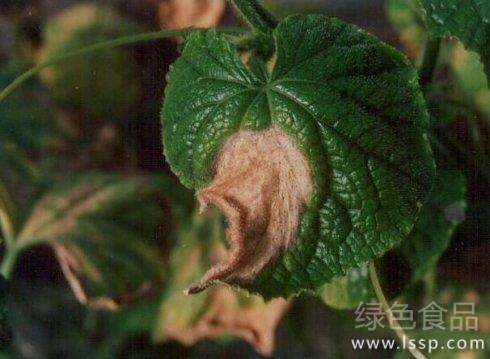
Gray mold cucumber
Symptoms: The gray mold pathogen mostly invades from withered female flowers, causing the petals to rot and grow a light grayish-brown mold layer, which then spreads to the young cucumber, causing the umbilical area to become water-soaked. The young flower quickly softens, shrinks, and rots, with a dense mold layer on the surface. When larger cucumbers are infected, the infected area first turns yellow and develops gray mold, after which the mold layer turns light gray. The infected area of the infected cucumber stops growing, rots, or falls off. Gray mold on leaves is generally caused by fallen rotten flowers or broken cucumbers attaching to the leaf surface, forming large lesions with a diameter of 20-50 mm that are nearly round or irregular in shape, with obvious edges and a small amount of gray mold attached to the lesion surface. When rotten cucumbers or rotten flowers attach to the cucumber stems, they can also cause rot of the plant stems, and in severe cases can also cause the fruit nodes on the stems to rot and the vines to break, and finally the plants die.
Occurrence patterns: The peak period of gray mold infection and rotten cucumbers is during the cucumber fruiting period. The suitable temperature for disease development is 18-23°C, with a maximum of 30-32°C and a minimum of 4°C. When the humidity in the greenhouse exceeds 85%, the dew condensation time on cucumber leaves lasts for a long time, and ventilation is not timely, gray mold is especially likely to occur. The gray mold fungus overwinters as mycelium, conidia, and sclerotia attached to infected cucumbers or plants, or in the soil. The overwintered conidia of the gray mold fungus spread through airflow, farming operations, and irrigation.
Gray mold cucumber
Control measures:
1. In greenhouses and sheds, use high ridges and drip irrigation cultivation methods. For cucumbers in the early growth stage and after disease onset, appropriately control watering, ventilate later at the right time, reduce humidity, and reduce the time of dew condensation on the shed roof and leaf surfaces and guttation at leaf margins. Clean dust from the shed surface to enhance lighting.
2. After cucumber harvest, thoroughly remove infected cucumber plants. At the early stage of disease onset, remove diseased flowers, diseased cucumbers, and diseased leaves and bury them deeply.
3. Chemical control. In greenhouses and sheds, 300 g of 10% Rogor smoke agent can be used per mu each time, and 1 kg of 5% Jiaruinong dust per mu each time, once every 9—11 days, for 2-3 consecutive times. At the early stage of disease onset, 50% Nongliling water-dispersible granules diluted 1000 times, 40% Shijiale suspension concentrate diluted 800 times, 50% Kaize water-dispersible granules diluted 1500 times, 50% Huijiding wettable powder diluted 1000 times, 50% Sumilex wettable powder diluted 800 times, 50% Iprodione wettable powder diluted 1500 times, etc. can be selected for spraying cucumber plants, once every 7-10 days, for 2-3 consecutive times. When dipping flowers, add Shileshi diluted 200 times, Nongliling diluted 1000 times, Iprodione 800 times, and Sumilex 800 times to the liquid.