What precautions should be taken for chemical weed control in corn fields?
What should be noted when using chemical weed control in corn fields? Please explain. Currently, chemical weed control in corn fields accounts for about 70% of the corn planting area. Most of the herbicides used in production are atrazine plus acetochlor or their compound formulations. However, because atrazine has a long residual effect and poses a threat to the safety of subsequent crops, it is not...
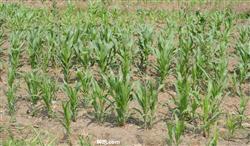
What should be noted when using chemical weed control in corn fields? Please explain.
Currently, chemical weed control in corn fields accounts for about 70% of the corn planting area. Most of the herbicides used in production are atrazine plus acetochlor or their compound formulations. However, because atrazine has a long residual effect and poses a threat to the safety of subsequent crops, it is not conducive to crop rotation; in addition, atrazine can also pollute groundwater, posing a threat to people and crops. For the above reasons, herbicides and methods to replace atrazine are being screened and used in production. These mainly include 2,4-D butyl ester or products containing 2,4-D butyl ester, nicosulfuron (Yunongle), paraquat (Gramoxone), etc. Below is an introduction for farmers on the methods and precautions for chemical weed control in corn fields.
I. Soil closure after sowing and before emergence
1. Use 38% atrazine 250 ml/mu + 90% Harness (acetochlor) 100 ml/mu for soil closure after corn sowing and before emergence.
2. Note: Because atrazine is a long-residual herbicide, it will cause some phytotoxicity to sensitive subsequent crops, but when the dosage per mu does not exceed 250 ml, it will not cause serious phytotoxicity to subsequent crops.
3. Use 60% Fengsha No. 1 emulsifiable concentrate containing 2,4-D butyl ester at 200 g/mu for soil closure after corn sowing and before emergence.
4. Note: Some farmers use 2,4-D butyl ester for foliar spraying on corn. Because 2,4-D butyl ester is a hormone-type herbicide, the technical requirements for post-emergence foliar spraying on corn seedlings are very strict and very difficult to master. After spraying, corn plants become brittle and easy to break, and tumors form at the internodes, affecting yield. It is recommended not to use 2,4-D butyl ester for foliar spraying on corn in production. In addition, because 2,4-D butyl ester is highly volatile, spraying on windy days can easily cause phytotoxicity to nearby sensitive crops such as legumes and cucurbits. Therefore, spraying must be done on windless days.
II. Post-emergence foliar spraying
1. 4% nicosulfuron (Yunongle) 50 ml/mu + 38% atrazine 100 ml/mu, for foliar spraying at the 3-5 leaf stage of grass weeds.
2. Note: 4% nicosulfuron is sensitive to some corn varieties and cannot be used on sweet corn and waxy corn.
III. Soil closure before emergence, and directed inter-row spraying after emergence
1. After corn sowing and before emergence, use 90% acetochlor 100 ml/mu for soil closure, then from the 6-leaf stage of corn to before row closure, when weeds are 10-15 cm tall, use 20% Gramoxone aqueous solution 150 ml per mu for directed inter-row spraying.
2. Note: Gramoxone is a non-selective herbicide and cannot be sprayed onto green crops. It can only be sprayed on weeds between rows with a protective shield added to the nozzle, and then cultivation should be used to cover weeds between the seedlings.
Click to get more corn planting techniques
Click to get more herbicide application techniques
Click to get more pesticide application techniques