Sugar beet damping-off is highly destructive, how should it be prevented and controlled?
Damping-off is a major disease affecting sugar beet production areas in China. Also called black leg, seedling blight and seedling rot, it is the general term for the main diseases of sugar beet at the seedling stage. Damping-off occurs to varying degrees in sugar beet production areas, with a general incidence rate of 30%-40%, and in severely affected fields there are gaps in the stands due to missing plants. If proper preventive measures are not taken before sowing sugar beet, it will cause reduced yield or even total crop failure.
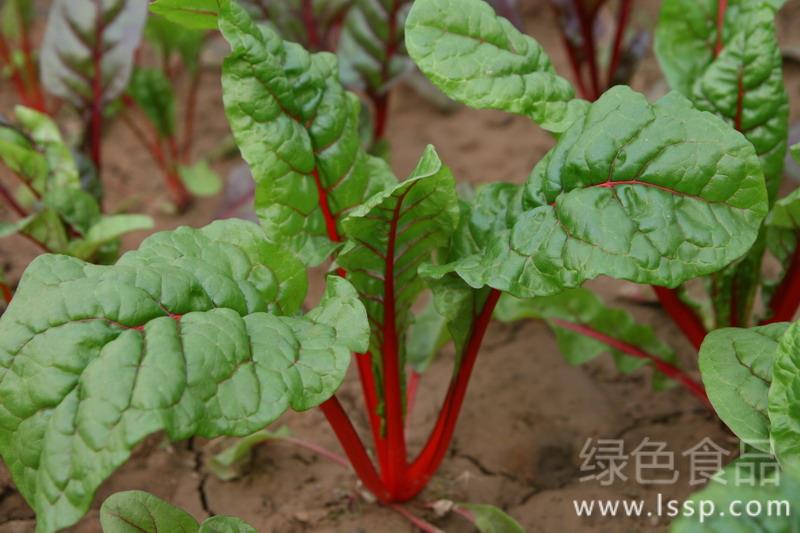
Sugar beet
Judging from the symptoms of affected sugar beet, seeds that have not yet emerged through the soil and seedlings up to the 3-true-leaf stage can all be infected by damping-off, and generally sugar beet at the 1-2 true-leaf stage is most severely affected. The main types are: pre-emergence rotting in the soil type, main root rot type, damping-off type and seedling blight type. The general symptom is that water-soaked lesions appear on the young roots and the hypocotyl below the leaves of sugar beet; the lesions gradually turn brown to black, and the part with the long lesion becomes constricted and appears pinched. When the disease is mild, the sugar beet plant still remains normally green. Because the disease only reaches the epidermis or primary cortex of the sugar beet seedling and has not yet reached the pith, the young root sheds its skin and the seedling can recover to normal, but it easily forms a gourd-shaped sugar beet root. If the seedling root rots away, forked roots or deformed sugar beet roots are formed.
Judging from the conditions for disease development, the aquatic fungus damping-off is extremely closely related to soil moisture; the greater the humidity, the more severe the disease. Low temperature and severe disease, poor drainage in low-lying land, poor soil structure or heavy clay soil, rain at sowing time causing soil crusting, careless land preparation before sowing, low seed quality, weak seed germination vigor, and soil pH that is too high or too low or soil that is barren will all aggravate sugar beet damping-off.
Sugar beet
From the perspective of control methods, (1) Agricultural control. Prepare the land finely, requiring loose soil, empty on top and firm below, clear away weed roots and stubble, with no clods, and combine with fertilization to meet the standards of deep, loose, level, clean and fertile; after the previous crop is harvested, use autumn deep plowing of 25-30 cm, winter compaction, and early spring harrowing to prevent loss of soil moisture. (2) Seed treatment. Select stress-resistant sugar beet varieties such as the excellent polyploid sugar beet varieties Tianyan 303, 304 and 305. (3) Chemical control. Before sowing, spread the seeds out to dry for 2-3 days and then crush the seed balls, which can save seeds and increase the sugar beet germination rate. To control damping-off, 0.25 kg of thiram can be mixed with water and used to dress 50 kg of sugar beet seed; Baomiaoling can also be used, and 1 small packet of Baomiaoling can dress 50 kg of seed. (4) Reasonable crop rotation. Carry out crop rotation for more than 5-8 years, and by all means avoid continuous cropping or alternating crops of the same type. (5) Increase phosphate fertilizer. Apply an additional 50 kg of phosphate fertilizer per mu of sugar beet to promote seedling growth and improve disease resistance.