Eggplant southern blight causes wilting and death, how to prevent and control it
Southern blight of eggplant mainly affects the base of the eggplant stem. When the diseased area first appears, it is a dark brown water-soaked lesion, and produces white, glossy, silk-like mycelium, causing the stem cortex to rot, and finally the eggplant dries up and falls off or the plant dies.
After the disease develops, the plant's leaves and petioles wilt, but generally the leaves do not fall off. Some leaves turn yellow and withered, while others remain green throughout, and finally the whole plant dies, but the root system is generally intact. The disease mainly spreads through the radial extension of surface mycelium. This disease has primary infected plants; high temperature and high humidity favor the occurrence and epidemic of southern blight, with the optimum temperature for disease development around 30°C and relative humidity above 95%. Through investigation, it can be seen that in plots with extensive management, excessive watering, low-lying terrain, and poor drainage, southern blight occurs.
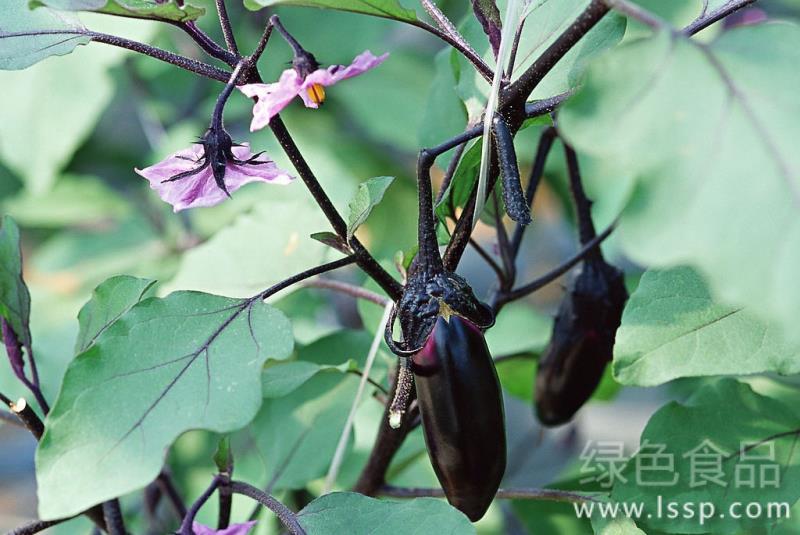
Eggplant southern blight
The following methods can be used to prevent and control eggplant southern blight:
1. Comprehensive prevention: Try to level the land before sowing eggplants to avoid water accumulation in the field; control planting density, adopt a planting method with alternating wide and narrow row spacing, increase field ventilation and light penetration to reduce disease occurrence, which also facilitates field operations and improves management efficiency; balance fertilization, use phosphorus fertilizer and potassium fertilizer in appropriate amounts, and especially do not use nitrogen fertilizer excessively. Pay special attention that farmyard manure must be fully decomposed and fermented before application, otherwise undecomposed farmyard manure is more conducive to the occurrence of various diseases and insect pests.
2. Cleverly use Aitailing (6% oligosaccharide · chain protein) to treat seedlings, so that eggplants do not become infected or are only mildly infected. Aitailing activates the immune system within the eggplant, can resist the invasion of pathogens, and at the same time prompts the eggplant to produce more lignin, making the eggplant stem epidermis tighter and blocking pathogen invasion. One week before transplanting eggplants, spray the seedlings with one bag (15 grams) of Aitailing per bucket of water. After transplanting and seedling recovery, before flowering, and during the peak fruiting period, use Aitailing alone or mixed with other agents for spraying, which can greatly reduce the occurrence of southern blight or other diseases.
3. Remove primary infected plants: In the early stage of the disease, promptly find the primary infected eggplant plants. Primary infected plants are the basis for spread, so they should be pulled out early and taken out of the field for destruction.
4. Mix 500 grams of Zhongbao Tanxi (40% carbendazim · thiram · bromothalonil) plus 500 grams of 40% quintozene with 40 kg of fine dry soil, mix evenly, then broadcast it into the planting holes of diseased eggplants and the surrounding soil, followed by watering, for disinfection treatment. Alternatively, use Xiumiao 800-fold solution plus Zhongbao Aitailing to disinfect the diseased eggplant field by spraying the ground, drenching the holes, or sprinkling 1-2 times, but note that the amount of solution must be sufficient to penetrate to the root zone of the eggplants.