Ginkgo has a long flowering and fruiting cycle; how to promote early flowering and early fruiting
Ginkgo is also called the "grandfather-grandson tree," meaning that if you plant a ginkgo as a young person, you have to wait until you become a grandfather before it flowers and fruits, which shows just how long the ginkgo's flowering and fruiting cycle is. Because ginkgo has high edible and medicinal value, many people have now begun to plant it. Although improved ginkgo varieties no longer have as long a flowering and fruiting cycle as before, it is still not short, so how to promote early flowering and early fruiting in ginkgo has become the top priority for growers. Today, the editor will introduce several methods to promote early flowering and early fruiting in ginkgo.
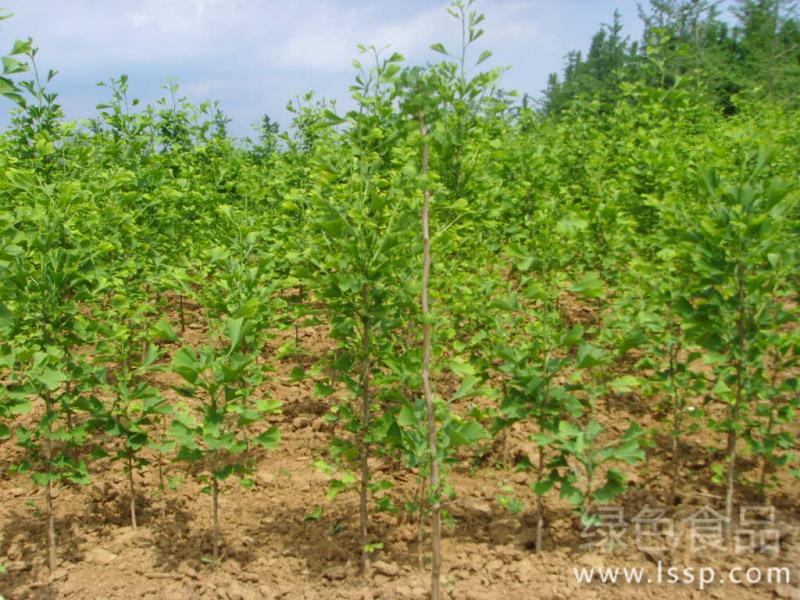
Ginkgo
1. Branch bending. Starting from the young tree stage of ginkgo, for ginkgo trees with small branch angles, bend the branches to open the angles, so as to ease the growth vigor of the ginkgo tree and its branches and promote flower formation. In early May, tie convenient bags filled with soil to the tips of upright branches. Determine the weight of the soil bags according to the tree's growth vigor and the requirements of branch bending. The more upright the branch, the thicker the branch, and the larger the opening angle required, the heavier the soil bag should be. Generally, the main branches should be opened to an angle of 45-50 degrees, the side branches to an angle of 55-60 degrees, and non-skeletal branches should be bent flat.
2. Notching. Make a horizontal cut with a knife above or below a ginkgo short shoot, deep enough to reach the xylem, so that the short shoot can accumulate a large amount of nutrients and accelerate flower formation. In winter, the upper part of the short shoot should be notched to block the upward transport of nutrients from below, so that nutrients accumulate at the short shoot; in summer, the lower part of the short shoot should be notched to block the downward transport of nutrients from above, so that nutrients accumulate at the short shoot and promote flower bud formation.
3. Girdling and ring-barking with inverted bark in ginkgo. Use a sharp blade to remove a ring of bark at a smooth place at the base of a ginkgo main branch or side branch, prompting the nutrients produced by the branches and leaves above the girdling wound to accumulate at the short shoot, which can rapidly form flower buds. The keys to this technique are: first, girdling should be done before flower bud differentiation, that is, from late May to early to mid-June each year; second, the girdling width should be 1/10 of the diameter at the girdling site of the branch, and even for very thick branches the girdling width should not exceed 1.5 cm; third, the cutting depth should reach the ginkgo xylem, but the xylem must not be damaged; fourth, the girdling wound should be smooth, clean, flat, and straight, and must absolutely not be contaminated. Wrap the girdling wound tightly with plastic film to prevent infection by diseases and pests and to promote rapid healing of the girdling wound. Girdle in the first year, and results can be seen the next year. It must be noted that if the girdling operation is not strict, the girdled branch of the ginkgo will die. Therefore, first-time users can invert the upper and lower ends of the removed bark and stick it back on, which is called ring-barking with inverted bark. The operating essentials and the results achieved are the same as with the girdling method.
Ginkgo
4. Ring cutting. Use a sharp blade to make horizontal ring cuts around the ginkgo trunk or the base of the main or side branches, deep enough to reach the xylem. You can make 3——4 consecutive cuts at the same location, with a distance of 0.5 cm between rings. The disadvantage of ring cutting is that it must be carried out for consecutive years (the location must be changed for ring cutting in the second year) until the effect is stable.
Growth control and flower promotion treatment for ginkgo must be carried out only after grafted seedlings have been planted for 4 years or after seedling rootstock has been grafted for 3 years, and only when the long shoots produced by the ginkgo plant are thick and strong and can form short shoots, and the annual growth of the terminal extension of the main branch reaches more than 50 cm.