Key Points of Pollution-Free Hotbed Chive Cultivation Technology: Grow Green Food
Hotbed chives grown with traditional cultivation techniques are of low commercial quality because of the blind use of chemical fertilizers, pesticides and the like. Today we will introduce the key points of pollution-free hotbed chive cultivation technology. Hotbed chives grown with new techniques are not only of high commercial quality but also safe.
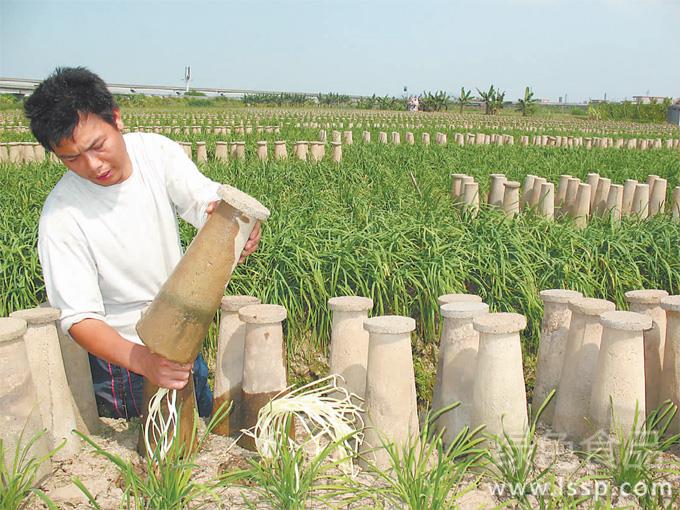
Hotbed Chive Cultivation
I. Propagation Methods:
They can be propagated by seed or by division. Division propagation involves digging up the roots of old hotbed chives, cutting off the lower old root base and the upper leaves, and after the wounds heal, planting the hotbed chives at a certain spacing between plants and rows. However, old roots have a long age, the hotbed chives grow weakly, and they produce few tillers, so hotbed chives should still be mainly propagated by seed.
For seed propagation, first select high-yielding, disease-resistant varieties such as Pingjiu No. 2 and Xuejiu No. 4. Before sowing, scald the seeds with warm water at about 55°C, then soak them in warm water for 12 hours, then germinate them at 20-25°C for 2-3 days, and sow once the seeds begin to sprout. Spring sowing can be done around the Awakening of Insects to Qingming, and autumn sowing around Cold Dew. Choose loose, fertile loam or sandy loam with good drainage as the seedling bed, apply sufficient base fertilizer and make raised beds. Sow about 300 grams of hotbed chive seeds per mu, enough to plant one mu of field.
II. Site Selection and Planting:
Although hotbed chives are perennial plants with persistent roots, proper rational paddy-upland rotation with aquatic crops such as water bamboo and lotus root is also advocated. After the current crop is harvested, plow deeply and apply 3000-4000 kg of fully decomposed farmyard manure and 30 kg of compound fertilizer. When the hotbed chive seedlings grow to 18-20 cm tall, they can be planted in holes or rows at a spacing of 30-40 cm between plants and rows.
III. Field Management:
After the transplants have taken root, carry out intertillage and weeding, timely irrigation and topdressing according to soil moisture conditions and the growth of the hotbed chives. Diluted human urine and manure or urea mixed with water can be used for topdressing. To make the newly planted hotbed chives grow vigorously and accumulate more nutrients, hotbed chives in the year of planting are generally not harvested. In the following year, they can be harvested when the hotbed chives grow to 25-30 cm tall.
Hotbed Chives
IV. Shading and Softening:
Traditional blanching of hotbed chives uses materials such as crop straw, weeds, rice straw and horse manure, but the hotbed chives have poor commercial quality and are also unhygienic. Nowadays, arched sheds covered with weeds, vegetable leaves and black film are generally used as supports, with the arched shed height at 60-70 cm. Before blanching newly planted hotbed chives, cut off the chive leaves leaving a 10 cm stubble above the ground surface; for perennial chives, leave about 15 cm. After the wounds heal, water thoroughly and apply topdressing, then cover with weeds, straw and chive leaves, with the standard being that no light is visible. If there is little covering material, add a layer of black plastic film on top, which can both reduce weight and provide insulation in winter. Keep the temperature inside the shed at 15-20°C; when it is higher than 25°C, ventilate to cool down and remove moisture. Generally, in summer and autumn, they can be harvested in just 20-30 days, while in winter and spring it takes 40-50 days. Chives in one plot can only be blanched 1-2 times a year.
After the hotbed chives are harvested, remove the covering material, loosen the soil around the roots, and after the hotbed chives send out new leaves, water, topdress and earth up in time to restore their vitality and lay the foundation for a high yield of the next crop of hotbed chives.
In the fertilization of pollution-free hotbed chives, more farmyard manure should be applied, and the use of undecomposed human excrement and urine and nitrate nitrogen fertilizer is prohibited.