Bitter melon spring cultivation techniques: few pests and diseases, high yield
Bitter melon is rich in vitamin C and contains a kind of glycoside that gives it its special bitter taste, making it one of the more popular health vegetables. Spring bitter melon has relatively light pests and diseases, low cost, high yield, and good returns. Now the editor will introduce the high-yield cultivation techniques for spring bitter melon:
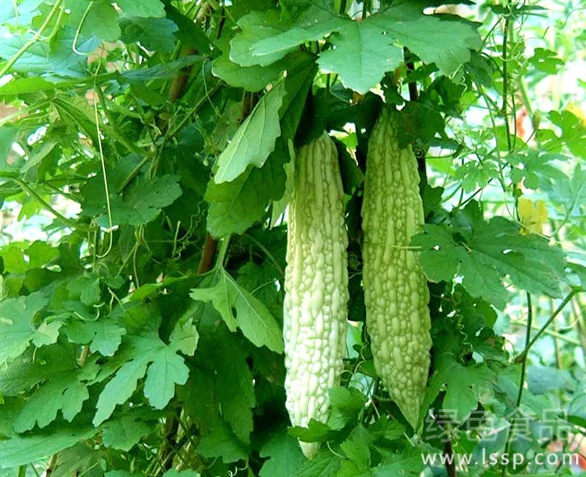
Bitter melon
1. Select good varieties and raise seedlings at the right time.For spring planting, choose high-efficiency, high-yield, high-quality bitter melon hybrid varieties. Such as Changbai Gangua, Dabai Bitter Melon, Yuefeng No. 1, Bilu No. 2, Emerald, etc. The sowing and seedling-raising time is chosen when the average daily temperature is stable above 10°C. Aim to sow early at the right time to extend the vegetative growth period of bitter melon. Use nutrient cups (bags) to raise seedlings, and choose a seedbed in a garden plot near a water source, sheltered from the wind and facing the sun, and convenient for management. First soak the bitter melon seeds in warm water at 50°C-60°C, and when the seeds sprout and show white, they can be sown by dibbling, with the root tip pointing down, gently pressing the sprouted seeds into the nutrient soil, and set up 40-50 cm high arched bamboo frames, covering them with plastic film to retain moisture and heat, prevent cold, and raise strong seedlings. One week before transplanting, uncover the film to harden the seedlings.
2. Apply enough base fertilizer and transplant at the right time.Generally, 1500 kg of decomposed farmyard manure, 25 kg of phosphate fertilizer, and 10 kg of potassium fertilizer are used as the base fertilizer for planting bitter melon. Mix the above fertilizers evenly and apply them into the planting holes, then cover with a layer of thin fine soil. Before sowing, first prepare the land, with a bed width of 2 m, planting two rows per bed, with a row spacing of 120 cm and a hole spacing of 40 cm. Generally, 1100-1400 bitter melon seedlings per mu is suitable. Transplant when the seedlings have 3-4 true leaves. 3-5 days after transplanting, apply dilute human and animal manure water as the “marriage fertilizer”.
3. Set up trellises and guide vines, and topdress at the right time.When the bitter melon seedlings begin to send out vines, set up a herringbone-shaped bamboo trellis. When the bitter melon begins to climb, manually tie and guide the vines onto the trellis. After the vines are guided onto the trellis, remove the side vines growing below 40 cm from the base of the vine, and appropriately remove overly dense old leaves and weak upper side vines to improve ventilation and light penetration. For topdressing, water-soluble fertilizer is best, applied frequently and lightly to promote early and rapid seedling growth. After flowering and fruiting, topdress once. Generally, use 20-25 kg of compound fertilizer per mu of bitter melon. During the bitter melon harvesting period, topdress once every 7 days, which can extend the harvest period. When the top of the bitter melon is plump and about 30 cm long, it can be harvested and marketed.