Symptoms of Five Common Lily Diseases and Their Control Methods
The lily, belonging to the genus Lilium in the family Liliaceae, is a perennial herbaceous plant, also known as the wild lily and the medicinal lily. In recent years, lily cultivation has been seriously threatened by diseases such as leaf blight, Phytophthora blight, bulb basal rot, and viral diseases. Generally, the incidence of disease in lilies is 10%-15%, and in severe cases it can reach 20%-30%.
1. Five major diseases of lilies
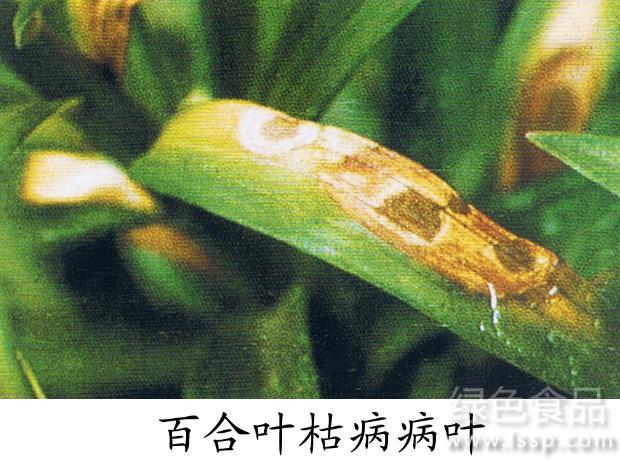
Lily leaf blight
(1) Lily leaf blight, also known as lily gray mold. It mainly damages the leaves, but can also infect stems, buds, and flowers. The round or oval lesions on the leaves range in color from pale yellow to light reddish-brown, vary in size, and appear water-soaked. Under warm and humid conditions, the lesions become thin and brittle, light gray, and semi-transparent, and in severe cases can cause the entire lily leaf to wither and die. Where the lily stem is infected, it turns brown or becomes constricted, causing the plant to break and fall over. When young lily plants are infected, the growing points of the stems and leaves soften, rot, and die. When lilies at the bud stage are infected with this disease, small brown spots appear initially, then spread to the entire bud, which eventually rots.
Lily viral disease
(2) Lily viral disease. Affected plants show mosaic symptoms with mottling of light green and dark green. Severely affected lily plants are noticeably dwarfed, with shorter scales, and some develop brown and necrotic lesions.
Lily rot
(3) Bulb basal rot. It mainly damages the base of the lily stem, usually beginning when the lily flowers. The affected base turns dark brown and rots, the leaves droop and turn yellow, and the plant eventually dies.
Lily leaf tip blight
(4) Lily leaf tip blight. It mainly damages the leaf tips. After the lily leaf tips are infected, they turn dark brown, necrotic, or withered, and the damage continuously spreads toward the base of the leaf. When the middle of the leaf is affected, oval or spindle-shaped lesions form, with brown or reddish-brown edges and grayish-white centers, and many small black dots are scattered on the diseased parts of the lily leaves. Leaf tip blight tends to occur in June.
Lily Phytophthora blight
(5) Lily Phytophthora blight, also known as lily foot rot. It mainly damages the stems and leaves of lilies. Infected leaves develop water-soaked grayish-green to brown lesions with no obvious margins. In severe cases, water-soaked brown lesions also appear on the flowers and bulbs, which rot, and in humid weather a sparse white mold layer grows on the diseased parts of the lily. When the stem and stem base are affected, water-soaked brown wrinkled streak lesions appear at first, gradually spreading upward and downward, causing the stem to rot and the lily plant to wither and fall over.
2. Control measures
(1) Select robust, disease-free lily bulbs, and manage the bulbs well during storage to prevent dehydration. Virus-free bulbs should be planted to prevent viral disease. First, propagate through lily seeds; second, perform shoot tip treatment, taking 0.1-0.2CM lily shoot tips for tissue culture to obtain virus-free plantlets. However, virus-free plantlets must be planted in isolation, and aphids must be controlled to prevent natural infection.
(2) Before sowing, soak the lily bulbs in a 1:500 thiram solution or a 40% formaldehyde 50-fold solution for 15 minutes.
(3) Strengthen field management. The field for planting lilies should have high beds and deep ditches, with flat bed surfaces to facilitate drainage, and irrigation should avoid wetting the lily leaves. Improve ventilation and light conditions, and increase the application of phosphorus and potassium fertilizers, so that the plants grow robustly and their disease resistance is enhanced.
(4) Promptly pull out diseased plants, thoroughly remove the remaining diseased lily debris in the field, and burn it in a centralized manner. After pulling out the diseased plants, disinfect with 50% lime milk.
(5) Chemical control. For seedling diseases, after the lilies emerge, spray 2-3 times with a 50% carbendazim wettable powder 1000-fold solution, and promptly pull out diseased seedlings. For lily Phytophthora blight, you can choose a solution of 25% metalaxyl diluted 2000-fold with water, a solution of 40% fosetyl-aluminum diluted 300-fold with water, a solution of 70% dexon technical powder diluted 1000-fold with water, or a 70% thiophanate-methyl 1000-fold solution to spray the lilies. When spraying, make sure the pesticide reaches the stem base of the diseased lily plants and the surrounding soil.