Proper management during the sugarcane seedling stage is the key to steadily rising income
During the sugarcane seedling stage, the underground root system grows relatively fast, while the aboveground leaves grow slowly. The main focus of seedling-stage management is to ensure full stands, even stands, and strong seedlings, laying a good foundation for sugarcane to tiller early and secure enough millable stalks.
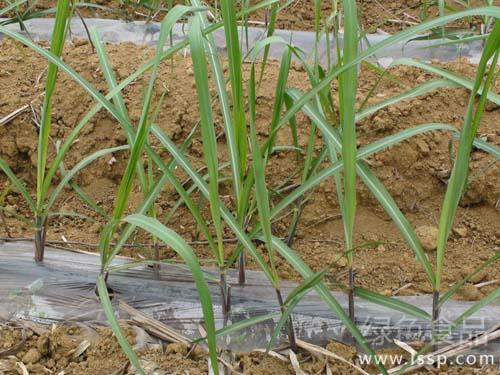
Seedling-stage sugarcane
The main management measures during the seedling stage are as follows:
I. Check the seedlings and fill in gaps.
Sugarcane seedlings must be replanted wherever there are gaps or missing rows of more than 40 cm. For replanting, the method of raising reserve seedlings can be used: that is, while planting, raise seedlings at the edge of the field for replanting, or raise seedlings in film or bag pots for replanting. The amount of reserve seedlings raised is generally about 5% of the planting amount. It is best to replant when the sugarcane seedlings have 3-4 leaves, choosing to transplant after rain or when soil moisture is good, and water with rooting water.
II. Apply fertilizer to promote seedlings.
When the sugarcane seedlings have two leaves and one heart, apply 5-8 kg of urea per mu, and it is best to apply 500-2000 kg of decomposed human manure and urine per mu. Be careful to apply more to weak seedlings so as to achieve even and strong seedlings. If the base fertilizer lacks phosphorus and potassium fertilizer, it is best to supplement it during the sugarcane seedling stage, and then earth up lightly after application.
III. Cultivate and weed.
During the seedling stage, the aboveground part of sugarcane grows relatively slowly, and with wide row spacing, weeds are prone to flourish. Therefore, sugarcane should be cultivated and weeded 1-2 times in a timely manner, preferably when the weeds have 3-4 leaves.
IV. Prevent drought and waterlogging.
If drought occurs during the seedling stage, the sugarcane field should be irrigated in a timely manner with running water or watered to resist drought. Another effective method for retaining water and resisting drought is to cultivate and loosen the soil after rain. If the sugarcane field accumulates water, the seed cane before emergence is prone to infection by pineapple disease, causing seed and bud rot. After emergence, sugarcane develops a poor root system, the seedlings turn yellow, and the roots may even rot and die. Therefore, drainage must be carried out to prevent waterlogging.