What to Do About Damping-Off in Early Rice? Prevention and Control Methods When the Weather Is Changeable
During the seedling-raising season for early rice, cold spells or continuous rainy weather are often encountered. If the water level in the early rice seedbed is not managed properly at such times, the root absorption capacity of the seedlings can decline, the water balance between the upper and lower parts of the seedling body can be disrupted, and pathogens can invade while the seedlings are weakened, leading to damping-off in early rice. The prevention and control measures for damping-off in early rice are as follows:
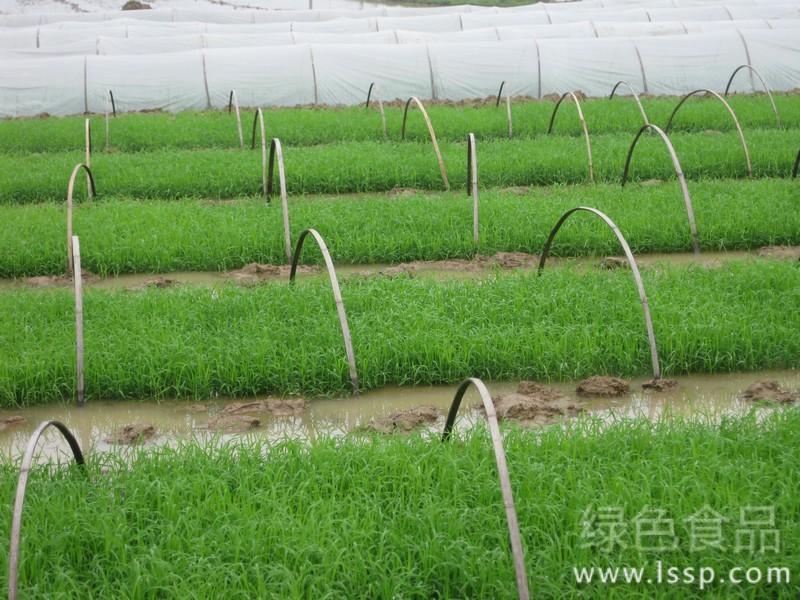
Early rice seedling raising
Permeable water and aeration.The seedbed must be permeable to water so as to favor the germination and emergence of early rice seeds, and it must also be aerated to facilitate the rooting and growth of early rice seedlings. The specific method: first break up the soil in the paddy field into fine particles, open furrows and build raised beds, apply sufficient base fertilizer, crush the clods on the bed surface, and level it roughly with a rake; then let in water to soak it, and further level the bed surface in the paddy field.
Planned seedling raising.Master the suitable sowing period for early rice and determine the suitable seedling age so as to avoid damping-off. The normal emergence temperature for early rice is 15°C, so when raising early rice seedlings in the open field, sowing should begin only after the temperature has steadily risen to 12°C. If seedlings are raised early, when the temperature is relatively low and the rice seedlings grow slowly, the seedling age should be appropriately longer; if seedlings are raised late, when the temperature is relatively high and the rice seedlings grow quickly, the seedling age should be shorter.
Thin sowing and even sowing.The sowing rate in the seedbed should be determined according to the length of the seedling age and the temperature level during the seedling-raising season. In principle, thin and even sowing of the seedlings is required, so that every early rice seedling can get enough sunlight, air and nutrients and grow vigorously. If sowing is too dense, it will reduce the amount of light the seedlings receive in the later stage, affect assimilation, lower rooting ability, make the seedling body weak, and make damping-off likely. Under normal circumstances, for small seedlings in spring rice fields within 20 days of seedling age, sow 180-200 kg per mu; for large seedlings around 30 days of seedling age, sow 80-100 kg per mu.
Cultivating strong seedlings.Cultivating strong seedlings is the foundation for high yields in early rice and for preventing damping-off. The method of moist seedling raising can be used to cultivate strong seedlings of suitable age. During the seedling establishment stage, generally water is only poured into the furrows of the seedbed to keep the surface of the seedling field moist and aerated, without flooding water onto the bed surface, so as to promote rapid rooting and establishment of the early rice seeds. During the rooting stage, the water level should be managed flexibly to prevent cold and sun damage. Keep the seedling field both watered and aerated to favor rooting and preserve the seedlings.