Get apple tree spring management right, and only then can apple yields be high
Spring management of apple trees is not only the key to achieving high-quality, high-yield apples for the whole year, but it also affects the formation of flower buds for the apple tree's second year. Fruit growers can do a good job of spring management of apple trees from the following four aspects.
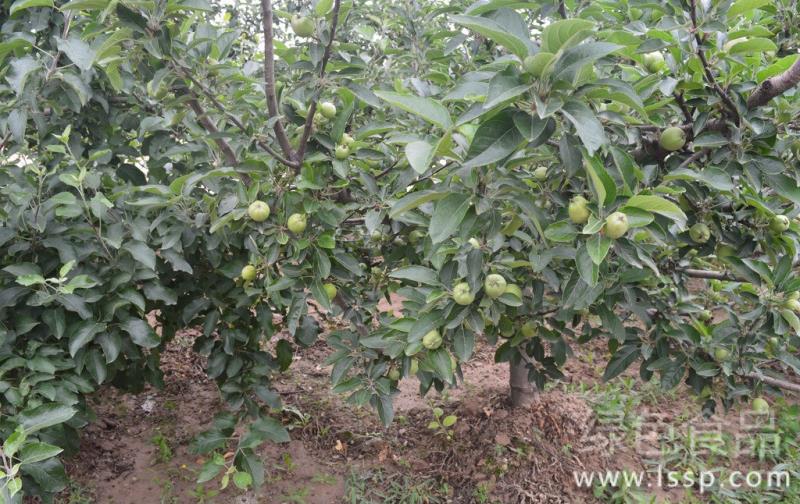
Apple tree
1. Fertilizer and water management.Spring is the period when all organs of the apple tree grow rapidly, and the demand for nutrients is relatively large, so topdressing should be done in time following the principle of small amounts applied frequently. Before bud break, spray the trunk with a 2% urea solution or apply a quick-acting nitrogen fertilizer per tree, so that flowering is uniform and the fruit-setting rate is increased. One to two weeks after flowering, apply quick-acting nitrogen fertilizer once more to promote vigorous growth of new shoots of the apple tree, reduce the number of physiological fruit drop that occurs in June, and increase yield. In order for the fertilizer to give full play to its effectiveness, combine topdressing with irrigation; otherwise it will delay the apple tree's bud break period or make bud break uneven, affecting new shoot growth. However, note that water should be properly controlled during the flowering period to avoid causing flower and fruit drop of the apple tree and reducing the fruit-setting rate.
2. Pre-flowering management:(1) Pre-flowering summer pruning. For flowering branches that were not headed back during winter pruning because they could not be clearly distinguished, when the flower buds turn green, after determining the flower buds on the flowering branch, set the quantity according to the branch: keep more on strong branches and fewer on weak branches, and thin out excess flowers. Vigorous spur-type flowering branches can retain 5-7 inflorescences. You can also at the blind node. Do the “capping” treatment to concentrate nutrients and improve the apple tree's fruit-setting rate and fruit quality. (2) Notching to supplement branches. For young fruit trees, at the position lacking branches, use a knife to cut a wound 0.5 cm above the flower bud deep to the xylem, to stimulate the growth of branches and fill the space. (3) Notch out the dominant buds at the top of the fruit tree. When carrying out apple branch polarity repositioning such as bending and branch pulling, notch out the buds at the polar positions on the apple branch to prevent the apple tree from sending out upright vigorous shoots; when notching out dominant buds, follow the principle of “more on lateral branches and fewer on the back, dense on strong and sparse on weak, more on lateral and fewer on main.”
3. Flowering period management:(1) Flower and fruit thinning. This is an important measure to regulate balanced growth, overcome alternate bearing, and improve apple quality. In areas without late frost damage and with relatively more spring rain, thinning flowers of apple trees is advocated; in areas where late frost damage is relatively frequent, thinning fruit of fruit trees is the main approach. For apple flower thinning, usually keep the 1-2 central flowers that open first and thin out the side flowers; for small-fruited apple varieties, 2 side flowers can be kept, and after fruit set, if the apple quantity is large, thin out the excess fruit clusters. If fruit is set by flowers, for large-fruited apple varieties, one inflorescence can be kept at a spacing of 20-25 cm, and each inflorescence keeps 1-2 central fruits. However, note that in the actual process of thinning flowers and fruits, appropriately keep more and do not fix the position in one step. (2) Improve the fruit-setting rate. Because the specific conditions of apple orchards vary from place to place, there are many reasons causing flower and fruit drop of apple trees. To ensure yield and improve the fruit-setting rate, methods such as artificial pollination, releasing bees during the flowering period, or selecting growth regulators to protect flowers and fruits can be used.
4. Pest and disease control.In spring, scrape off the dead bark, old bark and loose bark on the trunk of adult apple trees, and burn them in a centralized manner. Before bud break of the apple tree, spray lime sulfur mixture at 3-5 degrees Baume. Before flowering, spray lime sulfur mixture at 0.3%-0.5% Baume, to eradicate overwintering sources of infection, reduce the occurrence of diseases, and promote tree growth.