Increase Spring Corn Yields by Mastering Scientific Corn Fertilization Methods
Spring corn has a relatively high yield per plant, robust plants, and strong lodging resistance, but it grows slowly during the seedling stage. If it encounters high temperatures and rainy weather, it is prone to diseases that affect yield. To achieve high and stable yields in spring corn, scientific fertilization methods for spring corn must be mastered.
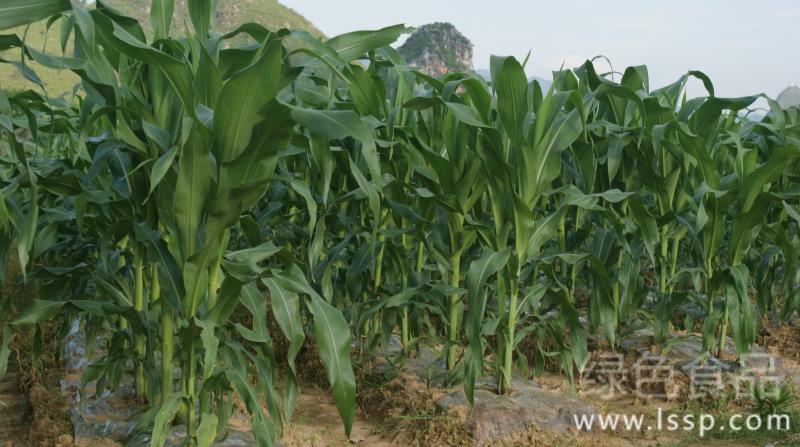
Corn
Apply organic fertilizer widely.The yield of spring corn is closely related to soil fertility. In fertilization measures for high and stable spring corn yields, widespread application of organic fertilizer is essential. This practice can improve soil fertility. Generally, the input of organic fertilizer per mu should be higher than 4000 kg.
Apply nitrogen fertilizer steadily.For good spring corn yields, basal fertilizer must be applied well, and the amount of topdressing should be regulated. In high-yield fields with corn yields of more than 500 kg per mu, nitrogen fertilizer should be stably applied at 9-12 kg per mu; in medium-yield fields with corn yields of 300-500 kg per mu, nitrogen fertilizer should be stably applied at 7-10 kg per mu; in low-yield fields with corn yields of less than 300 kg per mu, nitrogen fertilizer should be stably applied at 6-8 kg per mu. At the same time, reasonably adjust the application period and method of nitrogen fertilizer to improve nitrogen use efficiency.
Control phosphorus fertilizer application.At present, the effectiveness of phosphorus fertilizer has been widely recognized, but the application rate of phosphorus fertilizer should be reasonably determined and controlled according to the available phosphorus content in the soil. In fields with low, medium, and high corn yields, the suitable application rates of phosphorus fertilizer per mu should be controlled within the ranges of 5 kg, 6 kg, and 7 kg respectively. Phosphorus fertilizer is generally applied as basal fertilizer when planting spring corn.
Increase potassium fertilizer application.As the content of available potassium in the soil declines year by year, the area of potassium-deficient soil continues to expand, and potassium is essential for corn growth, so potassium fertilizer must be increased across the board. The suitable application rates of potassium fertilizer for high-yield, medium-yield, and low-yield fields are about 8 kg, about 7 kg, and about 6 kg per mu respectively. The application ratio of nitrogen, phosphorus, and potassium should be 1:0.5:0.6.
Supplement micronutrient fertilizer.The deficiency of trace elements in the soil has led to the appearance of zinc deficiency symptoms in corn on a large scale. To supplement zinc fertilizer for corn, it can be applied together during corn seed soaking and coating, or 1-2 kg of zinc sulfate can be generally applied during corn sowing or seedling topdressing. Zinc fertilizer can also be added to corn special-purpose fertilizer or sprayed on the leaves during the corn seedling stage.