For high yield and good quality in green onions, proper hilling and fertilization are very important
Proper hilling and fertilization during the cultivation of green onions help improve their taste and quality, enhance their value, and prevent the occurrence of diseases, making them an important measure for increasing the yield and quality of green onions. So how should green onions be hilled and fertilized?
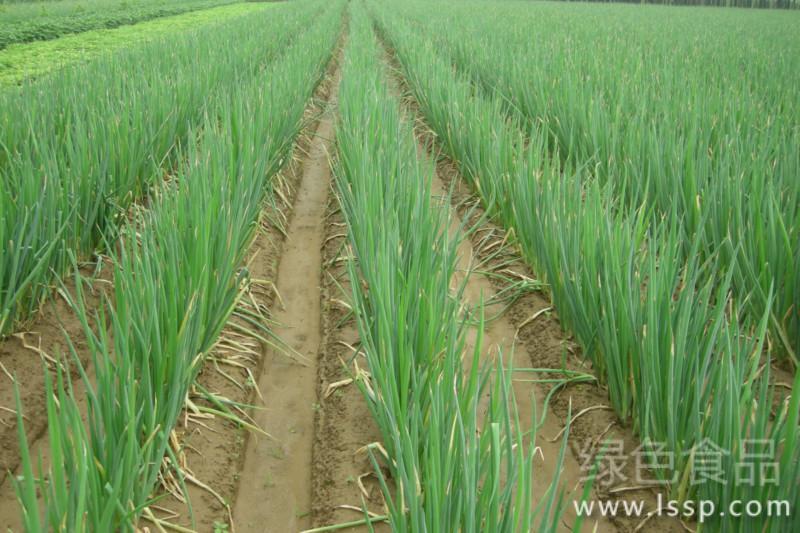
Green onions
Note 1: Timing of hilling.Green onions can only be hilled when they have grown to 30 cm; it must not be done too early, otherwise it will cause the green onions to bend and grow slowly; hilling is best done in the afternoon, because the leaves are tender and hilling can easily damage the leaves of green onions.
Note 2: Reasonable topdressing.During the growth process, green onions generally need to be hilled 3 times. The first is "light hilling", with a hilling thickness of about 5 cm, carried out after the green onions have grown to 30 cm and the white stalk has formed. A balanced fertilizer can be applied, for example 150 jin of soybean meal organic fertilizer combined with 25 jin of 15-15-15 compound fertilizer, to promote deep root growth and meet the nutritional needs of green onions in the early growth stage. The second hilling is carried out when the green onions have grown to 40 to 45 cm, with a hilling thickness of about 10 cm. This topdressing is mainly nitrogen and potassium fertilizer, and 15-5-20 high-nitrogen high-potassium type combined with 250 jin of soybean meal organic fertilizer can be chosen to promote the growth of the pseudostem and leaves of green onions. About 20 days before harvesting the green onions, carry out the third hilling. In order to improve the quality and taste of the white stalk of green onions, with a hilling thickness of about 10 cm, 50 jin of calcium nitrate can be spread. This topdressing does not need to supplement nitrogen fertilizer, otherwise the white stalk of green onions is prone to becoming soft and the taste poor.
Note 3: Hilling method.Take soil from the middle of the rows, and do not take soil over too wide an area, not exceeding one third of the row spacing, so as to avoid damaging the roots; the soil should be patted firm after hilling to prevent it from being washed away by rain or collapsing during watering; hilling is not suitable when the soil is too dry or too wet; the pseudostem of green onions should be kept straight, and hilling should not be too deep, at most burying up to the leaf sheath, otherwise it can easily cause the white stalk part of green onions to bend.
Note 4: Hilling should take season and frequency into account.Hilling is not suitable in high-temperature seasons, and the frequency must not be too high. In high-temperature seasons, the pseudostem of green onions buried too deep in the soil is prone to rotting. Frequent hilling not only increases the workload of vegetable growers, but also inevitably damages the roots and leaves of green onions, affecting the accumulation of nutrients needed for the growth of green onions. Hilling should not be too deep, otherwise it will bury the functional leaves of green onions, and the leaves will very easily rot. The thickness of each hilling is 3 to 4 cm, and the soil should be hilled up to the boundary between the leaf sheath and leaf blade of green onions, that is, only bury the leaf sheath, not the leaf blade.